

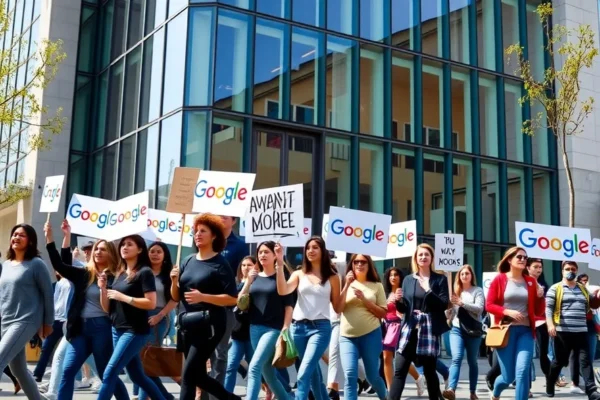
The Day Thousands Walked Out of Google
Imagine working at one of the most famous companies in the world. You have free food, colorful offices, and a level of prestige that most people only dream of. But behind the perks, something was rotting. In November 2018, thousands of Google employees decided they had seen enough. They did not just send an angry email or complain in a private chat. They walked out of their offices in a massive, coordinated protest.
The spark was a report that revealed how the company handled sexual harassment claims. Specifically, it came out that Google gave a massive payout to a high level executive who was accused of misconduct. While the executive left with millions of dollars, the people who suffered the harassment felt ignored. This felt like a betrayal of everything the company claimed to stand for.
This was not a random act of anger. It was a masterclass in employee organizing. Workers used internal forums and secret spreadsheets to coordinate their efforts across the globe. They did not just walk out to make a statement. They came with a specific list of demands. They wanted an end to forced arbitration, a commitment to end pay and opportunity gaps, and a clear process for reporting sexual harassment that actually protected the victim.
Why This Story Still Matters Today
You might wonder why a 2018 protest is still a topic of conversation. The reason is simple. The Google Walkout served as a blueprint for the modern era of workplace activism. For a long time, people thought that working at a big tech company meant you just accepted the corporate rules in exchange for a high salary.
The walkout changed that narrative. It showed that the people who build the technology have a voice. Today, we see employees at various companies speaking up about climate change, AI ethics, and political contributions. All of these movements owe a debt to the courage of the people who stood up in 2018. When people search for this event now, they are usually looking for a way to understand how power dynamics are shifting in the professional world.
It also highlights the ongoing struggle for corporate accountability. We are still debating how much influence workers should have over how a company is run. The walkout was a turning point where the “talent” realized they had more leverage than they ever imagined.
The Breaking Point for Google Employees
To understand why this happened, we have to look at the workplace culture of Silicon Valley at the time. For years, many tech firms operated like a boys club. This “bro culture” often protected powerful men while silencing women and minorities. The #MeToo movement was sweeping across the globe, exposing systemic abuse in Hollywood and politics, and it eventually hit the tech sector.
At Google, the frustration had been building for a while. Employees felt a massive gap between the company’s public image of being “do no evil” and the internal reality of how leadership handled harassment. The discovery that the company spent millions to keep sexual misconduct quiet was the final straw.
The organization behind the walkout was impressive because it was grassroots. It was not led by a union or an outside organization. It was led by the employees themselves. They used their technical skills to organize, creating a global movement in a matter of days. They realized that if they all stood up at once, the company could not simply ignore them or fire a few “troublemakers.” Their strength was in their collective presence.
How a Protest Changed Tech Culture Forever
The immediate impact of the Google Walkout was felt in the company’s policies. Google eventually ended forced arbitration for individual sexual harassment and sexual assault claims. This was a huge win. Forced arbitration is a legal loophole where companies force employees to settle disputes in private meetings instead of going to court. Ending this practice meant that survivors could finally take their cases to a public judge and jury.
But the impact went far beyond one company’s legal policies. It sent a shockwave through the entire industry. Other companies realized that their employees were watching and that the old way of doing things was no longer sustainable. It forced a broader conversation about corporate accountability and the need for transparency.
Here are a few ways the event shifted the landscape:
- Power Shift: It proved that high skill workers could use their importance to the company as a tool for social change.
- Policy Changes: Many other tech firms began reviewing their own harassment policies to avoid a similar public relations disaster.
- Cultural Awareness: It brought the reality of sexual harassment in tech into the mainstream spotlight, making it harder for companies to pretend the problem didn’t exist.
- Organizing Tools: It showed how internal communication tools could be used for activism rather than just productivity.
Where We Go From Here
Looking ahead, the tension between corporate leadership and employee activism is likely to grow. We are seeing a move toward more transparent reporting and a demand for ethical leadership. The days of the “black box” corporate culture, where everything happens behind closed doors, are fading.
We will likely see more employees demanding a say in how their companies impact the world. Whether it is how AI is developed or how a company handles its environmental footprint, the spirit of the Google Walkout lives on. Workers are no longer content to just be cogs in a machine. They want to ensure that the places they work align with their personal values.
The challenge for companies moving forward will be finding a balance. Management will try to maintain control, but employees have tasted the power of collective action. The most successful companies in the future will be those that treat their workers as partners in ethics and culture, rather than just resources to be managed.
Common Questions About the Movement
What exactly triggered the Google Walkout?
The main trigger was a report revealing that Google had paid millions of dollars to executives accused of sexual harassment to help them leave the company quietly. This led Google employees to demand more transparency and fairness.
What were the primary goals of the 2018 protest?
The employees had several key goals. They wanted an end to forced arbitration, a commitment to end pay and opportunity gaps, and a more transparent process for reporting misconduct to ensure corporate accountability.
How did the #MeToo movement influence this event?
The #MeToo movement created a global atmosphere where people felt empowered to share their stories of abuse. It gave the employees the courage to speak out and highlighted that sexual harassment was a systemic issue, not just a series of isolated incidents.
Did the Google Walkout actually lead to any real changes?
Yes. One of the most significant outcomes was the end of forced arbitration for harassment claims. This allowed employees to take their grievances to court, which increased the pressure on the tech company to maintain a safer workplace culture.
Why was employee organizing so effective in this case?
It was effective because it was a collective action. When thousands of people walk out at once, it creates a massive disruption that cannot be ignored. By coordinating globally, they showed that the desire for change was shared across different offices and levels of seniority.











