

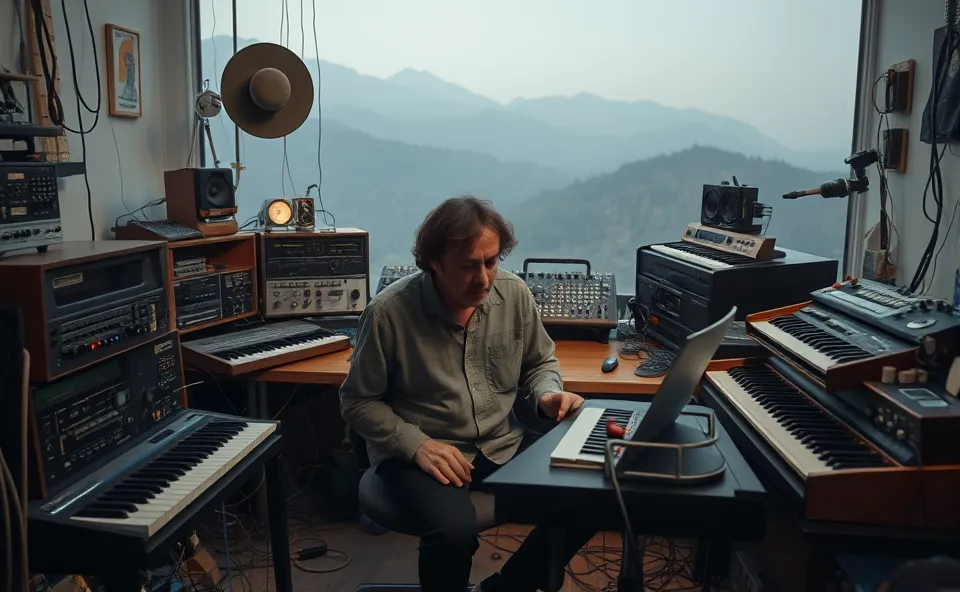
Hainbach’s Gentle Hum: Where Nature Meets Noise
Imagine a world where the hum of laboratory equipment can become a musical instrument, where the vast landscapes of a video game inspire electronic soundscapes, and where a simple multi-tool holds the key to unique sonic textures. This is the creative universe of Hainbach, an experimental musician whose latest album, “Gentle Hum,” is making waves. We sat down with him to explore his fascinating approach to music production, his inspirations, and what makes his work so captivating.
Why Hainbach is Buzzing Right Now
People are diving into Hainbach’s work because he offers something refreshingly different. In a music landscape often focused on polish and predictability, Hainbach champions the raw, the unexpected, and the beautifully odd. His latest release, “Gentle Hum,” is a perfect example, showcasing a remarkable ability to transform everyday sounds and overlooked technologies into compelling musical pieces. This fresh perspective, coupled with his deep dives into the world of synthesis and unique instruments, makes him a compelling figure for anyone interested in the cutting edge of electronic music.
From Lab Bench to Sonic Studio: The Hainbach Story
Hainbach isn’t your typical musician who picked up a guitar as a kid. His journey into sound began with a fascination for the technical, the scientific. He found himself drawn to the sounds of laboratory equipment, the intricate whirring and clicking of machines that most people wouldn’t even notice. This led him down a rabbit hole of exploring older, often obsolete, electronic gear. He views these machines not just as tools, but as characters in his musical narratives. His early experiments involved repurposing these devices, coaxing sounds out of them that they were never originally intended to make. This background in tinkering and understanding the physical nature of electronics has deeply shaped his unique synthesizer techniques.
He often talks about his process as a kind of sonic archaeology, uncovering the hidden musical potential within various pieces of equipment. It’s this hands-on, almost scientific approach that sets him apart. Unlike many electronic music producers who rely heavily on software, Hainbach embraces the tactile world of hardware synthesizers and vintage gear. His studio often resembles a well-equipped laboratory more than a traditional music setup.
The “Gentle Hum” Experience: Unexpected Inspirations
“Gentle Hum” is an album that truly embodies Hainbach’s eclectic tastes. The title itself hints at the subtle, pervasive nature of sound he explores. But what’s truly intriguing are the seemingly disparate sources of inspiration. Yes, the intricate sounds of laboratory equipment are present, but so too are elements inspired by the sprawling, immersive world of the video game “The Legend of Zelda: Breath of the Wild.”
“I was playing a lot of Breath of the Wild,” Hainbach explains, “and I found myself fascinated by its sound design. The way the wind moves through the grass, the subtle cues that tell you about the environment, the ambient sounds that build the atmosphere – it’s incredibly sophisticated. I started thinking about how I could translate that sense of organic, evolving soundscapes into electronic music.”
And then there’s the Swiss Army knife. Not in a literal, percussive way, but as a metaphor for multi-functionality and elegant design. “It’s about having so many different tools, so many possibilities, packed into one compact object,” he muses. “That idea of contained potential, of being able to create a wide range of effects and sounds from a single source, really resonates with me when I’m working with synthesizers. It’s about finding the hidden capabilities within the machines.”
This album isn’t about recreating sounds from these sources directly, but rather about capturing their essence. The feeling of exploration from “Breath of the Wild” translates into expansive sonic journeys, while the multi-faceted nature of the Swiss Army knife influences his approach to layering and manipulating sounds from his diverse hardware collection. He also frequently collaborates with artists like Ah! Kosmos and Stefan Paul Goetsch, further broadening his sonic palette and bringing new perspectives to his music production.
What This Means for Electronic Music and Beyond
Hainbach’s approach has a significant impact on how we think about electronic music and sound design. He demonstrates that creativity isn’t limited by the intended use of an object or by genre conventions. For other musicians, especially those interested in experimental music, his work is a powerful reminder to look beyond the obvious.
- Democratizing Sound: By finding musicality in everyday objects and older technology, Hainbach shows that you don’t need the most cutting-edge gear to create innovative sounds.
- Inspiring New Techniques: His methods encourage musicians to explore unique synthesizer techniques and to experiment with their instruments in unconventional ways.
- Bridging Worlds: The fusion of inspiration from video games and scientific equipment highlights how diverse influences can enrich artistic output, blurring lines between different creative fields.
- Appreciation for the “Unheard”: He elevates the often-ignored sounds of our environment and technology, encouraging listeners to pay closer attention to the sonic tapestry around them.
For businesses in the technology sector, particularly those involved in hardware synthesis or even the design of interactive environments like video games, Hainbach’s work offers a unique perspective on user experience and the potential for sonic integration. His ability to find beauty and complexity in the seemingly mundane is a testament to the power of creative interpretation.
What’s Next on the Sonic Horizon
Looking ahead, Hainbach is likely to continue his explorations into the uncharted territories of sound. We can expect more albums that push the boundaries of electronic music, perhaps delving into even more unexpected sources of inspiration. His commitment to physical instruments and his experimental synthesizer techniques suggest a continued dedication to the tangible aspects of music creation. It’s plausible that he will continue to collaborate with artists who share his experimental spirit, leading to exciting new fusions of sound and style.
The growing interest in “Gentle Hum” indicates a wider audience ready for this kind of sonic exploration. As more people discover his work, it could inspire a new wave of musicians to embrace experimental approaches, incorporating found sounds and unconventional instruments into their own music production. The future for Hainbach seems to be one of continued sonic discovery, bringing the extraordinary out of the ordinary.
Frequently Asked Questions About Hainbach
What is experimental music and how does Hainbach fit in?
Experimental music is a broad genre that pushes the boundaries of what is considered music. It often involves unconventional sounds, structures, and instruments. Hainbach is a prime example, using laboratory equipment and unique instruments to create electronic music that defies traditional categorization.
Can you explain Hainbach’s “Gentle Hum” album and its inspirations?
“Gentle Hum” is an album by Hainbach that explores subtle and pervasive sounds. Its inspirations are diverse, including the ambient soundscapes of the video game “Breath of the Wild” and the multi-functional concept of a Swiss Army knife, translated through his unique approach to synthesis and music production.
What makes Hainbach’s synthesizer techniques unique?
Hainbach’s synthesizer techniques are unique because he heavily relies on repurposing and interacting with physical, often vintage, electronic and laboratory equipment. Instead of solely using software, he coaxes unexpected sounds from hardware, treating each piece as a musical entity.
How does the inspiration from “Breath of the Wild” manifest in Hainbach’s music?
The inspiration from “Breath of the Wild” in Hainbach’s music is not about direct imitation but about capturing the feeling and atmosphere of the game. He translates the sense of organic soundscapes, environmental cues, and ambient textures found in the game into his electronic music compositions.
What is Hainbach’s background in electronic music production?
Hainbach’s background in electronic music production is rooted in a fascination with the technical and scientific. He began by exploring the sounds of laboratory equipment and vintage electronics, which led him to develop a hands-on, experimental approach to sound creation and synthesis.











