

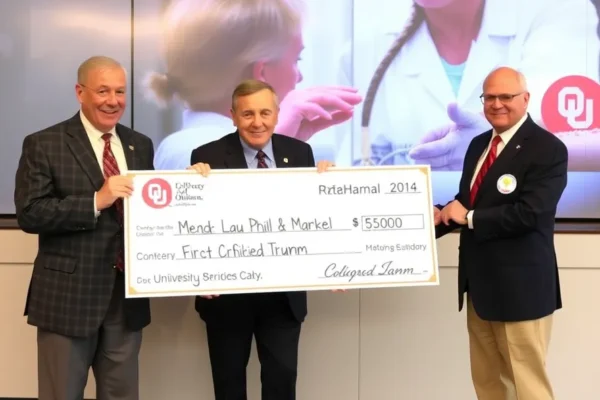
Understanding the impact of significant philanthropic donations, like the one made by Harold Hamm to the University of Oklahoma, sheds light on how large-scale giving can influence research, health, and even the economy. This donation, focused on diabetes research, highlights the power of a major gift to address pressing health challenges.
The Power of Philanthropy in Driving Research
Philanthropy, in simple terms, is the act of donating money, time, or effort to help others, often through charitable organizations. When we talk about a philanthropic donation like Harold Hamm’s, we’re referring to a large sum of money given voluntarily by an individual or group to support a cause they believe in, without expecting a direct financial return.
Think of it like this: Imagine your community has a beloved park that’s falling into disrepair. If a wealthy individual loves that park and decides to donate a significant amount of money to fix it up and add new features, that’s philanthropy in action. It’s about using personal resources to benefit the broader community.
Understanding philanthropy is important because it directly influences the advancement of crucial areas like medical research and public health initiatives. It often supplements government funding, allowing groundbreaking work to happen that might otherwise be delayed or never even start. This allows us to explore new treatments and solutions for diseases that affect millions.
How Harold Hamm’s Donation Works
Harold Hamm, an American oil tycoon and a significant figure in the energy industry, made a historic $150 million donation to the University of Oklahoma (OU). This substantial contribution is specifically earmarked for diabetes research and comprehensive diabetes care within the state of Oklahoma.
Here’s a step-by-step breakdown of how such a donation functions:
- The Donor’s Vision: Harold Hamm identified a critical health issue – diabetes – that has a profound impact on individuals and communities, particularly in Oklahoma. He decided to leverage his wealth to address this challenge.
- The Recipient’s Role: The University of Oklahoma, a major educational and research institution, received the funds. OU has the infrastructure, scientific expertise, and established programs to conduct cutting-edge medical research and deliver healthcare services.
- Fund Allocation: The $150 million is not simply handed over as cash. It is managed by the university and allocated strategically over time to support various aspects of diabetes research and care. This can include:
- Funding research projects by scientists looking for new cures, prevention methods, or improved diabetes treatment.
- Supporting the recruitment of top medical researchers and clinicians.
- Investing in advanced laboratory equipment and technology.
- Expanding patient care programs and outreach services to serve more people affected by diabetes.
- Establishing endowments for long-term sustainability of these efforts.
- Impact on Oklahoma Healthcare: The primary goal is to significantly improve Oklahoma healthcare outcomes related to diabetes, a leading cause of chronic illness in the state.
Imagine if a star player on a sports team decided to personally fund a new, state-of-the-art training facility for their entire league. This donation would provide the resources for better equipment, better coaching, and better player development, ultimately improving the performance of all teams. Hamm’s donation is similar, providing a massive boost to the “team” of researchers and healthcare providers tackling diabetes.
This major gift is one of the largest ever made to the University of Oklahoma and is a testament to the donor’s commitment to addressing a widespread health crisis. It represents a significant investment in scientific discovery and patient well-being.
Why This Donation Matters
This significant philanthropic donation has far-reaching implications, impacting individuals, the state’s health landscape, and even the broader economy.
Personal Impact: For individuals in Oklahoma, especially those living with diabetes or at risk of developing it, this donation offers hope. Enhanced medical research can lead to more effective prevention strategies, earlier diagnosis, and better management of the disease. Improved patient care programs mean more accessible and advanced treatment options. This could translate to better quality of life, fewer complications, and potentially longer lifespans for those affected by this chronic disease.
Economic Impact: While primarily focused on health, such a large investment in medical research and healthcare infrastructure can also have positive economic ripple effects. It can create jobs in research, healthcare, and support services. Advances in diabetes treatment and prevention could also reduce long-term healthcare costs for individuals and the state, freeing up resources for other areas. Furthermore, a stronger healthcare system can make a state more attractive for businesses and skilled workers.
Who Benefits? The most direct beneficiaries are individuals in Oklahoma struggling with diabetes, their families, and the researchers and clinicians at the University of Oklahoma. In the long term, successful advancements in understanding and treating diabetes could benefit people worldwide. The University of Oklahoma itself benefits from increased capacity and enhanced reputation, furthering its mission of education and research. The state’s overall health system performance could see a notable improvement.
Potential Downsides: While overwhelmingly positive, it’s worth noting that large donations can sometimes lead to a concentration of resources in one area, potentially drawing focus away from other equally important health issues. However, the scale and intended impact of this donation aim to address a deeply entrenched problem, making the benefits likely to outweigh such concerns.
Historical and Current Context of Major Philanthropy
The concept of wealthy individuals using their fortunes for public good is not new. Throughout history, figures like Andrew Carnegie and John D. Rockefeller established foundations that funded libraries, medical institutions, and scientific research, profoundly shaping American society. This tradition of large-scale giving, often by titans of industry, continues today.
Harold Hamm, as an oil tycoon, fits within this historical lineage of prominent business leaders directing significant personal wealth towards societal betterment. His donation to the University of Oklahoma for diabetes research is a contemporary example of how private capital can catalyze progress in areas critical to public well-being.
Diabetes, a chronic disease characterized by high blood sugar levels, has become a global epidemic. According to the Centers for Disease Control and Prevention (CDC), as of 2023, over 38 million Americans have diabetes, and nearly 100 million American adults have prediabetes. In Oklahoma, the prevalence is particularly high, contributing to significant healthcare burdens and reduced quality of life for many residents.
The increased awareness of such health disparities, coupled with the growing capacity of research institutions like the University of Oklahoma, has created fertile ground for substantial philanthropic investments aimed at finding solutions. Hamm’s gift is a response to this pressing need, aiming to make a tangible difference in a state that desperately needs improved diabetes treatment and prevention.
Practical Implications and Considerations
For individuals interested in the financial world, understanding large philanthropic gestures like this one offers several practical insights. It demonstrates how wealth can be deployed strategically for societal impact, often complementing or driving progress where public funding may be insufficient.
How to Think About It:
- Impact Investing: While this is not an investment for financial return in the traditional sense, it highlights the concept of investing in causes that matter. Many individuals now look for ways to align their financial decisions with their values, whether through direct donations, impact investing, or supporting organizations that do good work.
- The Role of Institutions: Major universities and research institutions play a vital role in accepting and effectively deploying such large sums of money. Their infrastructure, oversight, and scientific expertise are crucial for maximizing the impact of these donations.
- Addressing Societal Needs: This donation underscores that significant societal challenges, like chronic diseases, often require a combination of public and private efforts. Understanding where major funding is directed can offer clues about areas of societal focus and potential future breakthroughs.
Common Misconceptions:
- Donations are always straightforward: In reality, large donations often come with specific stipulations and are managed with complex financial and legal frameworks to ensure they are used as intended.
- Only the ultra-wealthy can make a difference: While Hamm’s gift is substantial, philanthropy encompasses all levels of giving, and collective action from many smaller donors can also achieve significant results.
What to Watch For: When you see news about major philanthropic gifts, consider the cause, the institution receiving the funds, and the potential long-term impact. It can signal areas where innovation is being heavily supported and where significant societal improvements might be on the horizon.
Connecting to Related Financial Concepts
This significant philanthropic donation connects to several broader financial and economic concepts:
- Wealth Distribution: The act of a wealthy individual giving away a large portion of their assets raises discussions about wealth distribution and its role in addressing societal needs. Understanding how this affects people’s money/financial decisions can be complex, involving tax implications for donors and the economic ripple effects for recipients.
- Non-Profit Sector and Endowments: The University of Oklahoma’s use of the funds, and potentially establishing an endowment, relates to the financial management of non-profit organizations. An endowment is a fund where the principal is invested, and only the earnings are used for the organization’s purposes, providing a sustainable source of funding over time.
- Economic Multiplier Effect: Investments in medical research and healthcare can have a multiplier effect on the economy. Increased spending on research and salaries can lead to more economic activity and job creation.
- Public vs. Private Funding: This highlights the interplay between government funding and private philanthropy in supporting critical sectors like education and healthcare. It prompts questions about the ideal balance and how each can best contribute.
Understanding philanthropic donation dynamics helps paint a clearer picture of how resources are mobilized to tackle large-scale problems, influencing both public well-being and economic activity.
Common Questions About Harold Hamm’s Donation
What is the primary goal of Harold Hamm’s donation to the University of Oklahoma?
The primary goal is to advance diabetes research and improve comprehensive diabetes care within Oklahoma, addressing a significant chronic disease burden in the state.
How does this major gift impact Oklahoma healthcare?
This major gift is expected to significantly enhance Oklahoma healthcare by funding cutting-edge research, attracting top talent, and expanding patient care services, ultimately leading to better health outcomes for residents.
Can individuals directly benefit from this University of Oklahoma donation?
Yes, individuals can benefit through improved diabetes treatment and prevention programs that result from the enhanced medical research and care services funded by this donation.
What is the role of an oil tycoon in such a large philanthropic donation?
An oil tycoon like Harold Hamm uses their substantial financial resources to make a significant philanthropic donation, aiming to address societal issues they care about, such as public health.
How does this donation relate to OU history and its research efforts?
This donation is a landmark moment in OU history, providing unprecedented medical funding for its diabetes research programs, enabling the university to expand its capabilities and make significant advancements in the field.
What are the potential long-term impacts of this focus on diabetes research?
The long-term impacts could include discovering new cures or more effective management strategies for diabetes, reducing the prevalence and impact of this chronic disease, and improving the overall health system performance in the region.
Disclaimer: This article is for educational purposes only and does not constitute financial advice. Financial situations are unique, and consulting with a qualified financial professional is recommended for personalized guidance. The outcomes of philanthropic efforts can vary, and this information does not guarantee specific financial results or impacts.











