

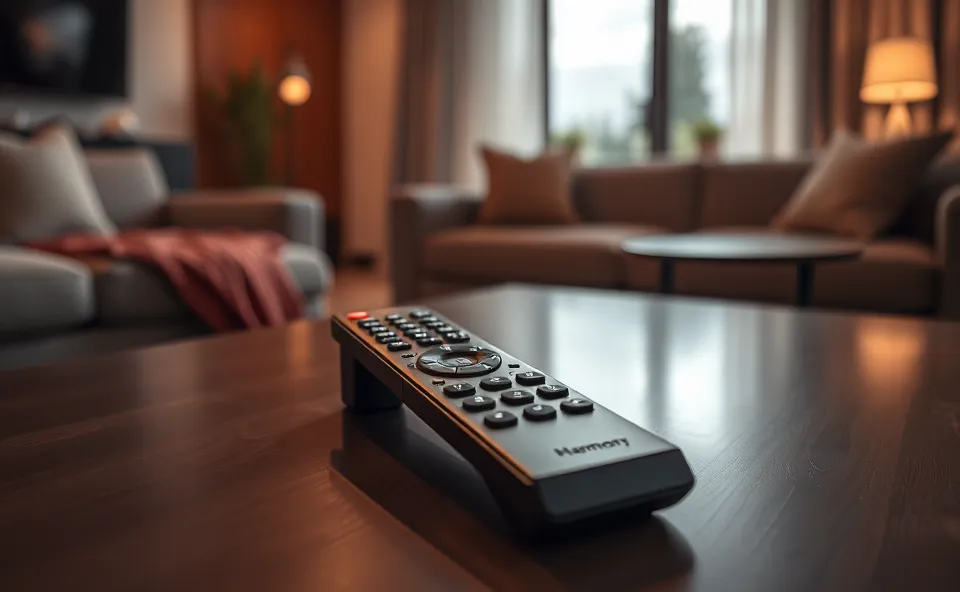
The Rise and Fall of the King of Home Theater Controls
Remember the days when your coffee table was a graveyard of remotes? One for the TV, another for the Blu-ray player, a third for the soundbar, and maybe even a fourth for your satellite box. It was a cluttered, frustrating reality for anyone who loved their home theater. Then came the Harmony universal remote, a beacon of hope promising to tame the chaos. For a while, it was the undisputed champion, the ultimate solution for controlling your entire entertainment setup with a single, elegant device. But like many tech darlings of the past, the Harmony universal remote eventually faded from the spotlight. What happened to this once-essential piece of home theater gear, and why did its category ultimately struggle to survive in the age of streaming?
Why Are We Talking About Harmony Remotes Again?
You might be wondering why we’re digging up the history of the Harmony universal remote now. It’s a classic case of tech nostalgia. Many people who invested in sophisticated home theater systems in the 2000s and early 2010s fondly remember their Harmony remote as the centerpiece of their setup. It represented a simpler, more controlled way to manage technology. As the landscape of home entertainment has drastically shifted with the dominance of streaming, people are reflecting on the devices that defined earlier eras. The Harmony universal remote, with its impressive device integration and ambition to unify home theater controls, holds a special place in the hearts of many tech enthusiasts.
A Time When One Remote Ruled Them All
To understand the Harmony’s reign, we need to go back a bit. Before streaming devices like Apple TV, Roku, and Fire TV became ubiquitous, setting up a home theater was a more hands-on affair. You bought physical media, subscribed to cable, and connected a complex web of boxes and wires. Each device had its own remote, and the experience of switching between them could be clunky. Logitech, the company behind the Harmony brand, saw this pain point. Their solution was brilliant: a single universal remote that could learn and mimic the signals of almost any infrared or even radio frequency device. More than just a simple remote, Harmony offered what they called “activities.” You could program it to do things like “Watch a Movie,” which would automatically turn on your TV, switch to the correct input, power up your Blu-ray player, and set your soundbar to the right mode. It was revolutionary for its time, offering a level of convenience and sophistication that felt futuristic.
The Harmony universal remote wasn’t just about combining buttons; it was about creating a seamless experience. Users could customize their setups extensively. The higher-end models even featured touchscreens, allowing for intuitive navigation and access to device-specific functions. The appeal was undeniable: less clutter, less confusion, and more time enjoying your entertainment. For anyone building a serious home theater, a Harmony remote was practically a requirement.
The Shifting Tides of Entertainment
So, what happened? The biggest factor was, undoubtedly, the seismic shift towards streaming. Streaming devices, with their own sleek, minimalist remotes, began to take over. Suddenly, the need to control a dozen separate boxes diminished. Many modern TVs have built-in smart capabilities, meaning a separate streaming stick might not even be necessary. The complexity that the Harmony universal remote was designed to solve began to simplify, ironically.
Here are some key reasons for the decline:
- The Rise of Smart TVs and Streaming Sticks: These devices often come with their own intuitive remotes and consolidate many functions, reducing the need for a separate universal remote.
- Simplified Connectivity: Technologies like HDMI-CEC allow devices to communicate and control each other more easily, often through the TV’s remote itself.
- App-Based Control: Many devices now have dedicated smartphone apps that can function as remotes, offering a readily available and often free alternative.
- Decreased Device Complexity: As fewer distinct boxes were needed for a comprehensive entertainment experience, the problem the Harmony solved became less prevalent.
- Evolving Smart Home Ecosystems: While Harmony dabbled in smart home control, the broader smart home ecosystem evolved with dedicated hubs and voice assistants that became more central to control.
The Harmony universal remote was built for a world of discrete devices that needed constant attention. The streaming era ushered in an era of integrated, often app-controlled, and voice-activated experiences. The very technology that made Harmony so powerful – its ability to learn and control numerous IR devices – became less relevant as more devices moved to Wi-Fi, Bluetooth, and app-based control. Logitech eventually ceased production of Harmony remotes, a clear signal that the market for such a device had shrunk dramatically.
What This Means for Us and the Tech World
The story of the Harmony universal remote is a cautionary tale in the fast-paced world of consumer electronics. It highlights how quickly user habits and technological paradigms can shift. For users who still rely on older equipment or have highly customized setups, the Harmony remains a valuable tool. For many, however, it represents a past era of technology.
For businesses, it’s a stark reminder that even successful products can become obsolete. The ability to adapt and innovate is paramount. Logitech’s move away from Harmony allowed them to focus resources on other areas, likely in line with current market demands.
From a technological standpoint, the Harmony’s legacy lies in its ambitious approach to unified control. It pushed the boundaries of what a remote could do and paved the way for more integrated smart home experiences, even if its specific form factor didn’t survive. It’s a piece of remote control history that taught us a lot about convenience and the desire for simplicity in a complex tech world.
Looking Ahead: What’s Next for Remote Control?
While the dedicated universal remote category might be largely behind us, the desire for seamless control isn’t going anywhere. The future likely lies in even more intuitive, integrated, and perhaps invisible forms of control. Voice assistants are already a major player, and we can expect them to become even more sophisticated in understanding complex commands.
We might also see further evolution in how our devices communicate with each other through standards like Matter, which aims to make smart home devices from different brands work together seamlessly. The goal remains the same as what the Harmony universal remote strived for: a frictionless way to manage our digital lives. Perhaps the “ultimate solution” will eventually be something we don’t even hold in our hands, but rather something that anticipates our needs.
Frequently Asked Questions about Harmony Universal Remotes
Is the Harmony universal remote still worth buying?
If you have a complex home theater setup with many older, infrared-controlled devices, a Harmony universal remote can still be incredibly useful. However, for most modern setups focused on streaming and smart devices, newer solutions might be more appropriate.
Where can I find a Harmony universal remote now?
Since production has ceased, you’ll primarily find Harmony universal remotes on the used market, such as online auction sites or resale platforms. New old stock might occasionally appear from retailers clearing inventory.
Why did Logitech stop making the Harmony universal remote?
Logitech stopped making Harmony remotes because the market for them significantly shrank with the rise of streaming devices, smart TVs with built-in apps, and simplified connectivity like HDMI-CEC, which reduced the need for a complex universal remote.
Can a Harmony universal remote control smart home devices?
Yes, many higher-end Harmony universal remotes were designed to integrate with and control a range of smart home devices, such as lights, thermostats, and smart locks, making them more than just entertainment controllers.
What replaced the Harmony universal remote in the home theater controls market?
The market has shifted towards simpler, often app-based controls. This includes the remotes that come with streaming devices like Roku and Apple TV, as well as smartphone apps and voice assistants like Amazon Alexa and Google Assistant, which now handle many of the integrated control tasks previously managed by a Harmony universal remote.











