

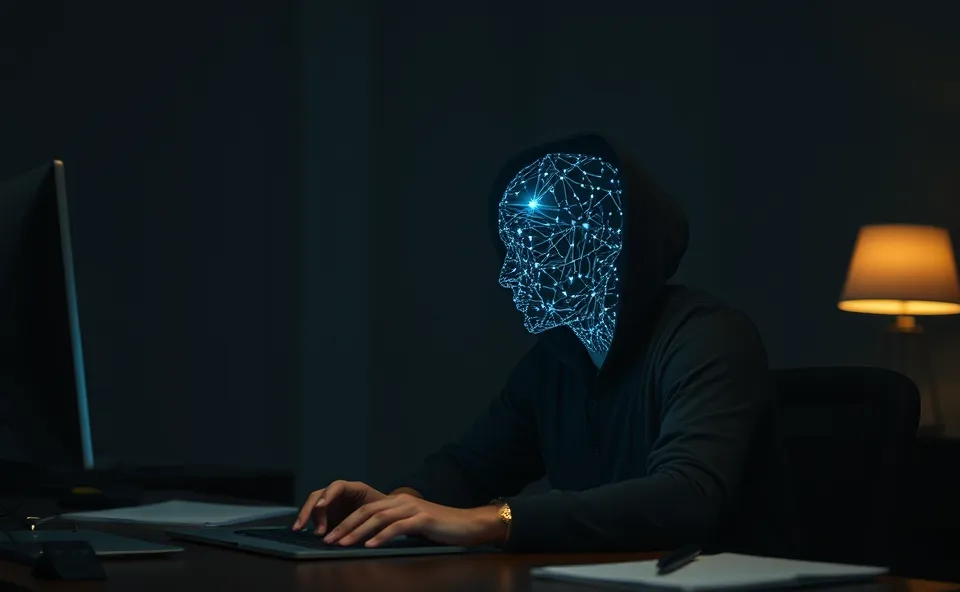
The Pen is Mightier, Even When It’s Typing for AI
It’s a story you might not expect. The very writers who craft the narratives that captivate us, who weave tales of triumph and tragedy on the silver screen, are finding themselves in a new kind of story. Faced with significant job displacement, a surprising number of Hollywood writers are turning to a rather unexpected source for income: training artificial intelligence.
Think about it. These are creative minds, people who understand language, nuance, and storytelling at a profound level. Now, they’re using those very skills to teach machines. It sounds like something out of science fiction, but it’s happening right now. It’s a fascinating, and perhaps a little unsettling, shift in the creative labor market.
Why This Story is Trending Now
The spotlight is on this trend because the entertainment industry is in a period of intense flux. The recent Hollywood writers’ strike brought the issue of AI’s role in creative work to the forefront. Concerns about artificial intelligence replacing human creativity were already simmering, but the strike amplified these anxieties. Suddenly, everyone was talking about generative AI and its potential impact on screenwriters.
As the dust settled from the strike, and with many writers still navigating the job market, the practical reality of earning a living kicked in. AI training work, often categorized within the broader gig economy, offered a tangible way to leverage their linguistic expertise. This practical need, coupled with the ongoing debate about AI in creative fields, is why this story is gaining so much traction.
A Look Back: The Evolution of Creative Work
For decades, Hollywood screenwriters have honed their craft, facing the usual ups and downs of a competitive industry. The path to becoming a successful screenwriter is notoriously challenging, often involving years of writing, rewriting, and networking. It’s a career built on skill, dedication, and often, a touch of luck.
Now, the rise of artificial intelligence, particularly generative AI, has introduced a new variable. These AI platforms are designed to create content, from text to images to music. To get good at this, AI needs to be trained. And that’s where the human element comes in. Data labeling, a crucial step in AI development, involves humans reviewing and categorizing vast amounts of data, essentially teaching the AI what is what. This could involve identifying emotions in text, classifying different types of images, or ensuring the generated content adheres to certain guidelines.
Historically, creative labor has always been about human imagination and skill. But as technology advances, the definition of what constitutes creative work, and who performs it, is evolving. This isn’t the first time technology has changed how creative work is done, but the speed and scale of AI’s potential impact feel different.
The Ripple Effect: What This Means for Everyone
This shift has profound implications for both the entertainment industry and the broader tech landscape. For screenwriters, it represents a complex trade-off. On one hand, it offers a financial lifeline. Their sophisticated understanding of language, context, and storytelling is directly applicable to the intricate task of AI training. This means their valuable skills aren’t going to waste; they’re being repurposed.
On the other hand, there’s an undeniable ethical dimension. Are these writers, who once dreamed of shaping cultural narratives, now in the business of building the very tools that might one day make their original craft obsolete? It raises questions about the future of creative labor. If AI can be trained by humans to generate scripts, what does that mean for the demand for human screenwriters in the long term? It highlights a significant aspect of the gig economy, where specialized skills can be broken down into smaller tasks for AI platforms.
For the AI platforms and the companies developing generative AI, this influx of talented individuals is a boon. They get access to a workforce with a deep understanding of the very material AI is trying to replicate. It’s a practical, if somewhat ironic, solution to a complex development problem. This means the artificial intelligence jobs being created are incredibly nuanced and require a level of human discernment that machines currently lack.
This also points to a potential redefinition of “creative jobs.” While the headline grabbing excitement is around AI writing stories, the behind-the-scenes work of training that AI is creating a new kind of demand for human insight. It’s a testament to the adaptability of the creative workforce, but it also underscores the ongoing job displacement conversation.
Looking Ahead: The Evolving Landscape
The future here is not about AI completely replacing human creativity overnight. Instead, we’re likely to see a period of integration and co-evolution. For Hollywood writers, AI training might become a supplementary income stream, a way to stay engaged with the industry’s technological evolution while continuing to pursue their writing ambitions. It could lead to new collaborative models between humans and AI.
We might also see the development of more specialized AI training roles that specifically leverage the unique insights of seasoned storytellers. These roles could focus on ensuring AI-generated content is not just coherent, but also emotionally resonant and culturally sensitive. The key will be finding a balance where AI tools augment, rather than diminish, human creative potential.
The gig economy will continue to play a role, offering flexible work opportunities in this burgeoning sector. As AI technology matures, the demand for human oversight in its training and refinement will likely persist, creating a sustained, albeit different, form of employment within the broader tech and creative spheres.
Frequently Asked Questions
What are Hollywood writers doing with AI training?
Hollywood writers are using their expertise in language and storytelling to label and categorize data for artificial intelligence platforms. This process helps train generative AI models to understand and produce human-like text, essentially teaching the AI how to write.
Why are screenwriters turning to AI training jobs?
Many screenwriters are seeking AI training jobs due to job displacement in the entertainment industry and the need for alternative income streams. Their strong linguistic skills make them well-suited for the nuanced tasks involved in AI data labeling.
Is data labeling a type of artificial intelligence job?
Yes, data labeling is a critical component of artificial intelligence jobs. It involves humans annotating and organizing data, which is then used to train and improve AI algorithms. This work is essential for the development of AI platforms.
How does generative AI affect the creative labor market?
Generative AI is transforming the creative labor market by automating certain creative tasks. While this can lead to job displacement for some creative professionals, it also creates new opportunities, such as the demand for individuals to train and refine these AI systems.
What are the ethical concerns for Hollywood writers working in AI?
Ethical concerns include the potential for AI to eventually replace human screenwriters, the paradoxical nature of creators training the tools that might supersede them, and the broader implications for the value of human creativity in an increasingly automated world.











