

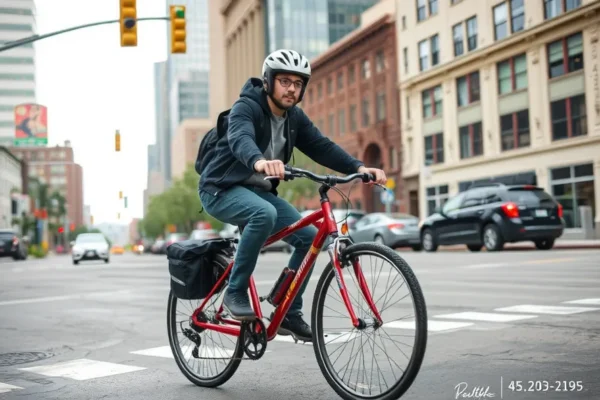
Riding Through Inequality: A Bike’s View on Housing Costs
Imagine this: you’re biking through your city, the wind in your hair, and then a light flashes, a sound chimes. It’s not just a random notification; it’s a signal about something deeply important – how expensive it is to live here. That’s essentially what Brooklyn artist Justin Blinder has created with his innovative bike device called ‘Ground Truth’. This isn’t just another piece of tech; it’s a powerful tool designed to make the often-invisible issue of housing unaffordability and economic inequality incredibly visible, right from your handlebars.
Blinder’s project takes real-time data about housing costs and translates it into a sensory experience. As you pedal through different neighborhoods, the device reacts. It uses GPS to know where you are and then pulls up information about housing prices in that specific area. The visual and auditory cues are designed to make you stop and think about the stark differences you encounter. For example, a vibrant, bustling street might be accompanied by a different set of signals than a quieter, more residential area. This isn’t about just showing numbers; it’s about making you feel the economic landscape around you. It’s a unique approach to understanding urban inequality.
Why This Bike Device is Suddenly Catching Our Eye
It’s no surprise that a project like Justin Blinder’s ‘Ground Truth’ is resonating with people right now. We’re living in a time where the conversation around housing unaffordability is louder than ever. Across many cities, the dream of owning a home, or even finding a reasonably priced rental, feels increasingly out of reach for many. This persistent problem, alongside widening economic disparity, means people are actively seeking new ways to understand and visualize these complex issues.
The rise of data visualization as a tool for social impact is also a key factor. We’re more receptive to understanding complex problems when they’re presented in engaging and accessible formats. Blinder’s bike device taps into this trend by combining everyday technology like a bicycle with serious social commentary. It’s a form of social impact art that doesn’t require you to visit a gallery; you can experience it as part of your daily commute or a leisurely ride. The fact that it uses bike tech, a popular and growing area, also makes it relatable and intriguing. People are searching for solutions, for understanding, and for ways to connect with the realities of their communities, and ‘Ground Truth’ offers a novel perspective.
From Data Points to Bike Paths: The Story Behind Ground Truth
To truly appreciate what Justin Blinder has achieved, it helps to know a bit about the background. Blinder, a Brooklyn artist, has a history of creating works that engage with technology and societal issues. His interest lies in uncovering hidden patterns and making them tangible. The inspiration for ‘Ground Truth’ likely stems from observing the growing chasm between the cost of living and people’s wages, particularly in urban environments.
Cities are magnets for opportunity, but they also concentrate wealth and poverty, leading to significant economic disparity. Affordable housing has become a luxury rather than a basic necessity in many places. Blinder recognized that simply reading statistics about rent or home prices can feel abstract. He wanted to create an experience that would provide an immediate, visceral understanding of these economic realities. By outfitting a bicycle with sensors and data connectivity, he transformed a common mode of urban transportation into a mobile data-reporting platform. This allows for an intimate, ground-level exploration of urban inequality, directly connecting the rider’s movement through the city with the economic data of each location.
More Than Just a Ride: The Real Impact of This Bike Device
The impact of Justin Blinder’s ‘Ground Truth’ project goes far beyond a simple art installation. For individuals, it offers a profound shift in perspective. When you’re cycling and your bike device lights up, signaling that you’ve entered an area where housing prices are astronomically high compared to what locals earn, it’s a personal confrontation with economic inequality. It transforms abstract data into a lived experience, fostering empathy and a deeper understanding of the challenges faced by neighbors. This direct engagement can spark crucial conversations about housing unaffordability and what it means for the fabric of our communities.
For urban planners and policymakers, projects like this can serve as powerful advocacy tools. ‘Ground Truth’ provides a novel way to visualize and communicate the effects of economic policies on different neighborhoods. Instead of relying solely on charts and reports, imagine presenting this sensory data as evidence of disparities. Businesses, particularly those operating in urban areas, can also benefit from a more nuanced understanding of the economic landscape. Being aware of the extent of economic disparity can inform corporate social responsibility initiatives, marketing strategies, and even decisions about where to locate facilities, ensuring they are mindful of the communities they impact.
From a technological standpoint, ‘Ground Truth’ demonstrates the potential of integrating everyday objects with data analysis and sensory feedback. It’s a great example of how bike tech can be repurposed for social good, pushing the boundaries of what we consider a ‘smart’ device. This approach could inspire similar projects in other areas of life, using readily available technology to highlight critical social issues.
What’s Next for Ground Truth and Similar Innovations
Looking ahead, the concept pioneered by Justin Blinder’s ‘Ground Truth’ has exciting potential. We could see the further development and refinement of such bike devices. Imagine them becoming more sophisticated, perhaps integrating data not just on housing costs but also on income levels, job opportunities, or even access to essential services. This would create even richer narratives about urban inequality.
There’s also a strong possibility of this type of technology inspiring similar projects in other cities. As awareness of housing unaffordability and economic disparity grows globally, cities may commission or support artists and technologists to create localized versions of ‘Ground Truth’. This could foster a nationwide or even international dialogue about equitable urban development.
Furthermore, the underlying principles of making data personal and experiential could be applied to other forms of transportation or even public spaces. Think of interactive benches in parks that display local economic data or public transport systems that offer subtle cues about the cost of living in the areas they serve. The key takeaway is the power of using technology to translate complex social issues into understandable, relatable, and impactful experiences. This approach to data visualization has the potential to drive meaningful change by fostering empathy and informing action.
Frequently Asked Questions About Housing Unaffordability and Bike Tech
What exactly is Justin Blinder’s bike device called and what does it do to highlight housing unaffordability?
Justin Blinder’s bike device is called ‘Ground Truth’. It’s designed to visualize housing unaffordability and economic inequality by using GPS data to track your location as you bike. It then accesses information about housing costs in that specific area and translates it into visual and auditory signals, making the disparities tangible for the rider.
How does this bike device help people understand economic inequality?
The bike device helps people understand economic inequality by providing a direct, sensory experience of the differences in housing costs across neighborhoods. Instead of just seeing numbers, riders encounter immediate feedback that connects their physical journey through the city to the economic realities of each location, fostering a more intuitive grasp of urban inequality.
Is this bike device a form of social impact art, and why is it relevant now?
Yes, it is a form of social impact art. It is relevant now because discussions around housing unaffordability and economic disparity are at the forefront of public concern. The project offers an innovative and engaging way to make these complex issues more visible and understandable to a wider audience.
What kind of technology is involved in this project to visualize economic disparity?
The project uses bike tech combined with GPS technology and data connectivity. It accesses real-time or relevant data on housing prices and uses this information to power the device’s sensory output, serving as an effective tool for data visualization of economic disparity.
What is the broader impact of projects like Justin Blinder’s Ground Truth on addressing housing unaffordability?
The broader impact is significant. Projects like ‘Ground Truth’ can raise public awareness, spark conversations, and potentially influence policy by providing compelling, experiential evidence of housing unaffordability and economic inequality. It encourages a more empathetic and informed approach to tackling these critical urban challenges.











