

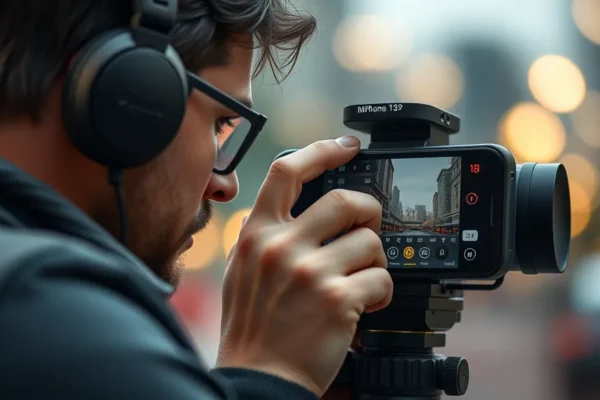
Unlocking Creative Control: How Third-Party Apps Bring Granular Aperture Control to the iPhone 18 Pro
For photographers and videographers, the ability to precisely control the aperture of a lens is fundamental. Aperture, essentially the opening in a lens that lets light in, dictates both the brightness of an image and its depth of field – the area in focus. A wide aperture (low f-number) creates a shallow depth of field, blurring the background and making your subject pop, ideal for portraits. A narrow aperture (high f-number) keeps more of the scene in focus, useful for landscapes. While professional cameras have offered granular aperture control for decades, until recently, iPhones offered only limited, often automatic adjustments. However, with the advent of sophisticated third-party apps, iPhone 18 Pro users can now unlock this powerful creative tool, moving beyond the constraints of native iOS camera settings.
This development addresses a significant gap for mobile content creators who demand more from their devices. The native iPhone camera app, while user-friendly, often prioritizes simplicity over granular control, especially when it comes to aperture. For many creative professionals, this meant their iPhone was a capable point-and-shoot but fell short when nuanced photographic control was required. Innovations in mobile camera SDKs (Software Development Kits) and the ingenuity of app developers have paved the way for applications that tap into deeper camera functionalities, enabling features like manual aperture control on the iPhone 18 Pro.
The Mechanics Behind Expanded Aperture Control
At its core, the iPhone 18 Pro, like its predecessors, has a physically fixed aperture for its primary lenses. Unlike interchangeable lens cameras where you physically swap lenses to change aperture, or even cameras with mechanical irises that can adjust their opening, the iPhone’s lens assembly is built to a specific f-stop, typically a wide one like f/1.5 or f/1.8, for optimal low-light performance. So, how do third-party apps seem to offer “granular aperture control” when the hardware appears fixed?
The answer lies in a combination of clever software algorithms and access to advanced camera hardware controls provided by Apple through their Camera SDK. Think of it like this: imagine a chef has a single, high-quality knife. While they can’t change the knife itself, they can use it in different ways to achieve various culinary effects. Similarly, these apps don’t physically change the lens’s aperture opening. Instead, they leverage the iPhone’s powerful image processing capabilities and sophisticated sensor technology to simulate the effects of aperture control.
This is primarily achieved through two main methods:
- Computational Photography: Modern iPhones employ advanced computational photography techniques. This involves taking multiple images at different exposures and processing them to create a single, optimized photo. Apps can utilize this processing power to simulate depth-of-field effects by analyzing scene depth and selectively blurring areas that would be out of focus at a narrower aperture. This is akin to applying a digital bokeh filter, but with more intelligence informed by the actual scene geometry.
- Sensor and Image Signal Processor (ISP) Manipulation: Apple provides developers with access to more direct controls over the iPhone’s image sensor and its Image Signal Processor (ISP). The ISP is the chip responsible for interpreting raw data from the sensor and turning it into the images you see. By fine-tuning parameters within the ISP, such as how the sensor captures light and how the data is processed, apps can influence characteristics that mimic the results of aperture changes, like exposure and perceived depth of field.
The key here is that these apps are not creating a physical aperture but rather sophisticated digital reconstructions of what those aperture effects would look like. For instance, the Blackmagic Camera app, a professional-grade iOS application, allows users to adjust a “simulated aperture” or “depth of field” slider. This slider doesn’t physically move a diaphragm within the lens; rather, it instructs the app’s algorithms to process the image to achieve a specific depth of field and exposure profile, drawing on the iPhone’s sophisticated understanding of the scene. Similarly, apps like Moment, known for its mobile camera gear and accessories, also explore software solutions that work in tandem with their physical lens attachments, often optimizing for depth-of-field effects through software processing.
Current State and Real-World Applications
The ability for third-party apps to offer granular aperture control on the iPhone 18 Pro is not a hypothetical future; it is a reality available today. Professional videographers, aspiring filmmakers, and serious mobile photographers are already leveraging these tools to enhance their creative output.
Blackmagic Camera app is a prime example. This app is designed for professional filmmaking workflows and offers extensive manual controls, including simulated aperture adjustments, frame rates, and advanced color grading tools. It allows users to achieve cinematic looks on their iPhone that were previously only possible with dedicated cinema cameras. This is crucial for independent filmmakers, YouTubers, and anyone producing high-quality video content on a budget.
Moment’s approach often involves their physical lenses, which can alter the optical characteristics of the iPhone camera. However, their software applications are designed to work in concert with these lenses, providing users with enhanced manual controls and image processing that complement the optical enhancements. While not always offering a direct “aperture control” slider in the same vein as Blackmagic, their photography software aims to give users deeper control over exposure and depth-of-field effects, often working alongside their specialized mobile camera gear.
These applications are currently in a state of advanced adoption within the professional and prosumer mobile content creation space. They are not yet mainstream for the average consumer who prefers the simplicity of the native camera app, but for those who need more control, they are indispensable tools.
The Competitive Landscape
The pursuit of greater manual control on smartphones is a fiercely competitive arena. Apple itself has been gradually increasing the capabilities exposed through its camera SDKs, allowing third-party apps to access more advanced functions. This ongoing development is the bedrock upon which apps like Blackmagic and Moment build.
Beyond these prominent examples, numerous other iOS camera apps offer varying degrees of manual control, including exposure, focus, and white balance. However, the ability to simulate and control aperture effects is a more advanced feature, with fewer apps truly excelling at it. Competitors in this space are primarily other high-end manual camera apps, and their differentiation often lies in the quality of their algorithms, the intuitiveness of their user interface, and the breadth of other professional features they offer.
Blackmagic Camera app stands out due to its deep integration with Blackmagic Design’s professional video ecosystem, offering robust video-centric features. Moment differentiates itself by integrating software control with its line of physical lens accessories, providing a more holistic hardware-software solution for mobile photography. The advantage often goes to the app developer who can best leverage Apple’s latest camera advancements and translate them into an intuitive and powerful user experience.
Implications and Impact
The ability to achieve granular aperture control on the iPhone 18 Pro, even through simulation, has profound implications for the mobile content creation industry and beyond.
Democratization of Cinematic Tools: For years, achieving shallow depth of field and controlled bokeh required expensive DSLR or mirrorless cameras and specialized lenses. Now, with just an iPhone and the right app, users can produce visually stunning content that rivals professional productions. This lowers the barrier to entry for aspiring filmmakers and content creators, fostering a more diverse and vibrant digital media landscape. This can lead to new business models for creators and impact the demand for traditional camera gear in certain segments.
Enhanced Mobile Journalism and Documentaries: Mobile journalism (mojo) has been on the rise, and the ability to capture higher-quality, more visually engaging footage with greater creative control will further accelerate this trend. Documentarians can rely more on their iPhones for capturing compelling shots, making productions more agile and less costly.
Augmented and Virtual Reality Development: While not a direct application of aperture control, the underlying advancements in scene understanding and image processing that enable these simulations are crucial for future AR/VR applications. As AR becomes more integrated into our lives, the ability for devices to accurately understand depth and focus will be paramount.
In the short term, this will primarily benefit independent creators, small businesses, and educational institutions. In the long term, as these technologies become more refined and integrated, they could influence how all consumer cameras are designed and how users interact with them, blurring the lines between professional and consumer-grade imaging capabilities.
Limitations and Challenges
Despite the impressive capabilities, it’s crucial to acknowledge the limitations of simulated aperture control on the iPhone 18 Pro.
Not True Optical Aperture: The most significant limitation is that this is not true optical aperture control. A mechanical aperture changes the physical light path through the lens, affecting not just depth of field but also lens characteristics like diffraction and sharpness across the frame. Simulated aperture is an algorithmic interpretation, and while often convincing, it may not always replicate the subtle nuances of a physical aperture, especially at extreme settings.
Computational Load: Achieving these effects requires significant processing power. Complex algorithms running in real-time can sometimes lead to increased battery drain or slight processing delays, particularly in demanding video capture scenarios. The iPhone 18 Pro’s advanced chipset mitigates this significantly, but it remains a consideration.
Reliance on Software Updates: The capabilities are dependent on Apple’s ongoing support for its Camera SDK and the app developers’ ability to leverage new features. Any changes to Apple’s platform could potentially affect the functionality of these third-party apps.
Learning Curve: While these apps offer powerful control, they also introduce a steeper learning curve for users accustomed to the simplicity of the native camera app. Mastering manual settings and understanding the nuances of depth of field requires practice and knowledge.
Future Trajectory
The trajectory for aperture control and advanced camera features on smartphones is clearly pointed towards greater sophistication and integration. We can expect several key developments:
Improved Simulation Accuracy: As computational photography algorithms become more advanced and AI plays a larger role, the simulation of depth of field and bokeh will become even more realistic and indistinguishable from optical effects. Research into neural rendering and light field capture is already hinting at this future.
Closer Integration with Physical Lenses: Companies like Moment will likely continue to develop mobile camera gear that works in tandem with advanced software, offering more comprehensive optical and digital solutions. This could involve smart lenses that communicate more directly with the phone’s processing unit.
Hardware Advancements: While unlikely in the immediate future, it’s not beyond the realm of possibility that future iPhones could incorporate more advanced optical elements or sensor technologies that allow for a greater degree of physical aperture adjustment, even if it’s a limited range.
Apple’s continued investment in its ARKit and camera technologies suggests a future where the iPhone can capture and understand the world in unprecedented detail, making advanced imaging controls more accessible and more powerful. The current developments with apps like Blackmagic Camera on the iPhone 18 Pro are strong indicators of this exciting future.
Key Questions and Answers
What exactly is “granular aperture control” on the iPhone 18 Pro?
It refers to the ability of third-party apps, like Blackmagic Camera, to simulate and control depth of field and exposure effects that are traditionally managed by adjusting a lens’s aperture. This is achieved through sophisticated software processing, not by physically changing the lens opening.
How do apps like Blackmagic Camera and Moment bypass native iOS limitations for aperture control?
They utilize Apple’s Camera SDK to access deeper hardware controls and leverage advanced computational photography techniques. This allows them to process images in ways that mimic the results of manual aperture adjustments, offering users more creative freedom than the default iOS camera app.
Is this true aperture control, or just a digital effect?
Currently, it is primarily a sophisticated digital effect and simulation. While highly convincing, it doesn’t involve a physical mechanical aperture changing within the iPhone’s lens. The iPhone 18 Pro’s advanced processing power is key to making these simulations appear realistic.
Who benefits most from these third-party camera apps?
Filmmakers, professional photographers, content creators, and anyone who requires precise manual control over their mobile camera for artistic or technical reasons will benefit most. These tools empower them to achieve a more professional look.
When will this technology become mainstream for all iPhone users?
The simulation of aperture control is already available in advanced third-party apps. However, making it a seamlessly integrated and easily understandable feature for the average user within the native iOS camera app will likely be a gradual process, dependent on Apple’s future software updates.
What are the main limitations of this simulated aperture control?
The primary limitations include the fact that it’s not true optical control, potentially lacking some subtle optical nuances, and that it relies on computationally intensive processing which can impact battery life and performance. It also requires users to learn and utilize more complex photography software.
It is important to note that the capabilities described are based on current technological understanding and the features offered by specific third-party applications. As technology evolves, these capabilities may be enhanced or altered. The performance and features within specific apps are subject to their own development cycles and updates.











