

Understanding Agricultural Independence and the Global Seed Supply
The way we produce food is a cornerstone of any economy, and a crucial part of that is the seed. Think of seeds as the initial investment for our food. Just like you might invest in a stock or bond hoping for a return, farmers invest in seeds to grow crops. In today’s world, a significant portion of the global seed supply is controlled by a few large companies, often referred to as the “Big Four” agricultural conglomerates. These are giants like Bayer, Corteva, Syngenta, and BASF. When a small number of entities control a fundamental resource like seeds, it can raise questions about independence and choice, not just for farmers but for entire nations.
This control over seeds impacts what is grown, how it’s grown, and who profits from it. Understanding this dynamic is important because it touches upon food security, the resilience of our food systems, and ultimately, the prices we might pay for food. The concept of seed sovereignty, which is the right of farmers and communities to choose and control their own seeds, is gaining traction as people seek more control over their food sources.
How Italian Farmers are Reclaiming Seed Sovereignty
Imagine a situation where you rely on a single supplier for a vital component of your business. If that supplier raises prices, changes terms, or suddenly stops supplying, your business is in trouble. This is the dilemma many farmers face with modern seed markets. The “Big Four” agricultural conglomerates often develop seeds that are patented, meaning farmers typically cannot legally save seeds from their harvest to replant the next season. Instead, they must purchase new, often expensive, seeds each year.
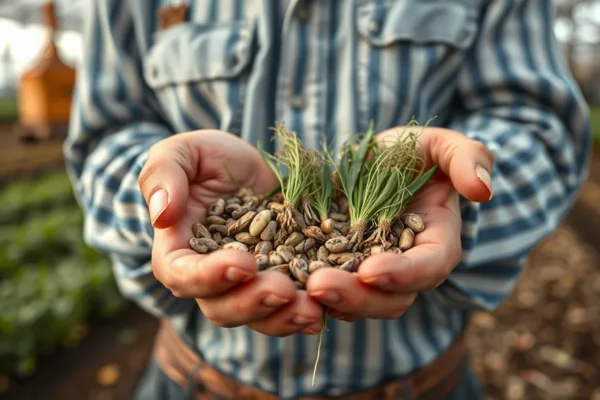
Italian farmers, facing the influence of these large agricultural conglomerates, are turning to age-old practices. They are reviving traditional seed saving techniques. This means that instead of buying new seeds every year from a big company, they are carefully selecting, drying, and storing seeds from their best crops. These seeds are often open-pollinated varieties, meaning they will produce offspring with similar traits, unlike many hybrid seeds that are specifically engineered not to do so.
Once they have a good stock of saved seeds, farmers are also engaging in seed bartering. This is essentially a swap. Farmer A might have an abundance of saved tomato seeds, while Farmer B has excellent bean seeds. They can trade, ensuring both have a diverse range of high-quality seeds for the next planting season without needing to buy from the big companies. This creates a decentralized and community-driven seed supply network. For example, in regions like southern Italy, communities are organizing “seed banks” where farmers can deposit their saved seeds and borrow or exchange others, fostering a shared resource pool. This revival bypasses the need to purchase proprietary seeds year after year.
Why Agricultural Independence Matters for Food Security and Your Wallet
The implications of this shift extend far beyond the farm gate. For farmers, regaining control over their seeds means greater economic freedom. They reduce their dependence on large corporations, lowering their input costs and keeping more of their earnings. This can lead to more stable livelihoods.
For consumers, this movement contributes to greater food security. When a few companies dominate the seed market, any disruption to their operations – whether due to disease, policy changes, or business decisions – can have ripple effects across the entire food system. Diverse, locally controlled seed networks are more resilient. Furthermore, reviving traditional and heirloom seeds often means cultivating varieties that are better suited to local climates and conditions, potentially leading to more robust crops and a wider array of unique food products. This can also mean more sustainable farming practices, as heirloom varieties may require fewer chemical inputs.
From a broader economic perspective, a more decentralized seed supply can foster local economies. Instead of profits flowing to a few global corporations, money stays within farming communities. This can also influence market competition. When these agricultural conglomerates have too much power, they can influence prices and choices. Empowering local seed systems promotes a healthier marketplace.
Historical and Current Context of the Global Seed Supply
For millennia, farmers worldwide practiced seed saving. It was the norm for generations, allowing diverse crop varieties to adapt to different environments and for food traditions to flourish. However, the latter half of the 20th century saw a significant shift. Innovations in biotechnology and the rise of large agricultural corporations led to the development of hybrid and genetically modified seeds. These seeds often came with patents, making it illegal for farmers to save and replant them.
This trend accelerated with mergers and acquisitions, consolidating much of the global seed supply into the hands of a few major players like Bayer (which acquired Monsanto), Corteva (formed from the merger of Dow AgroSciences and DuPont’s agriculture division), Syngenta, and BASF. According to the International Seed Federation, a small number of companies now control a vast percentage of the global commercial seed market. This has led to concerns about farmer dependency and the loss of traditional crop varieties. The current interest in seed saving and bartering is a direct response to this concentration of power and a desire to return to more autonomous food production models.
Practical Implications of Seed Sovereignty Movements
For individuals, understanding this trend is about recognizing the underlying forces that shape our food systems. It highlights how market concentration in any sector, especially one as fundamental as food production, can have significant consequences. When you see news about mergers in the agricultural sector, it’s helpful to consider the potential impact on farmer choice and the diversity of our food supply.
A common misconception is that modern, patented seeds are inherently superior. While they can offer specific advantages like higher yields or resistance to certain pests, traditional and heirloom seeds also possess valuable traits, including nutritional content, flavor, and adaptability to local conditions, often with less reliance on chemical inputs. Another point to consider is that while seed saving and bartering offer benefits, they also require knowledge and effort. Maintaining seed quality and purity takes skill, and developing robust community exchange networks requires organization.
When this topic appears in the news, think about the balance between innovation and tradition, and the importance of choice for producers. An actionable insight for consumers is to support local farmers who may be participating in these seed saving initiatives, perhaps by seeking out farmers’ markets or community-supported agriculture (CSA) programs that emphasize diverse, locally adapted varieties.
Related Concepts in Finance and Economics
The movement towards seed sovereignty is closely linked to several other economic and financial concepts. Market concentration, or the extent to which a few companies dominate an industry, is a primary concern here. Understanding how monopolies or oligopolies (markets dominated by a few sellers) can affect prices and innovation is crucial. It also connects to the idea of supply chains; the seed supply is a critical upstream component of the entire global food supply chain.
Furthermore, the concept of intellectual property rights, particularly patents on seeds, is central to the debate. This relates to how companies protect their innovations and the economic implications of those protections. Exploring these related topics helps build a more comprehensive picture of the economic landscape surrounding agriculture and food production.
Common Questions About the Global Seed Supply and Seed Sovereignty
Here are some common questions people ask about this topic:
- How does the concentration of the global seed supply affect food prices?
When a few companies control essential agricultural inputs like seeds, they can potentially influence prices. Less competition can lead to higher costs for farmers, which may then be passed on to consumers in the form of higher food prices.
- Can individuals participate in seed saving and bartering?
Yes, individuals can start by saving seeds from their own garden plants. Participating in local gardening clubs or community seed swaps can connect you with others practicing seed saving and bartering, contributing to a more diverse local seed supply.
- What are the risks of relying on traditional seed saving systems?
Risks include the potential for lower yields compared to some high-tech hybrid seeds, the need for more knowledge and labor to maintain seed quality, and the possibility of seed-borne diseases if proper storage and selection practices are not followed.
- How does seed sovereignty relate to food security?
Seed sovereignty enhances food security by ensuring that farmers have access to a diverse and reliable supply of seeds, reducing dependence on a few powerful corporations. This resilience is crucial for stable food production in the face of environmental or economic challenges.
- What is the difference between hybrid seeds and heirloom seeds in terms of saving them?
Hybrid seeds are often bred so that their offspring (seeds saved from the plant) will not have the same desirable traits. Heirloom seeds, on the other hand, are open-pollinated varieties that will breed true to type, meaning seeds saved from them can be replanted year after year with predictable results.
- Are agricultural conglomerates like Bayer, Corteva, Syngenta, and BASF bad for farmers?
These companies offer innovative products and services that can benefit farmers, such as disease-resistant crops. However, their market dominance raises concerns about farmer dependency, cost of seeds, and the reduction of seed diversity. The debate involves balancing the benefits of their technologies with the importance of farmer autonomy and a robust, diverse seed supply.
This educational content is for informational purposes only and does not constitute financial advice. Financial situations vary greatly from person to person. You should consult with a qualified financial professional for personalized advice tailored to your specific circumstances and goals. Investing and financial decisions involve risks, and past performance is not indicative of future results.











