

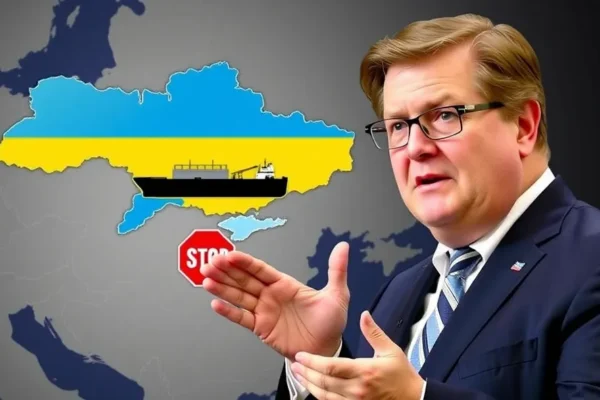
A US Senator’s Plea on Ukraine’s Sea Attacks
So, there’s this thing going on with Ukraine’s attacks on ships near Russian ports, and it’s getting attention. US Senator JD Vance has spoken out, asking Ukraine to dial back its strikes on tankers that are carrying oil from Russian ports. This isn’t just a small issue; it’s catching the eye of Washington too, especially because Ukraine’s campaign is also targeting vessels collecting Kazakh oil from Novorossiysk. It’s a complicated dance with real-world consequences.
Why Is Everyone Talking About This Now?
The reason this is buzzing right now is because it touches on several really important and intertwined issues. First, there’s the ongoing conflict between Russia and Ukraine, which everyone is watching closely. But this specific situation adds a new layer: the potential economic ripple effects and the concerns of international maritime trade. When a US Senator brings this up, it signals that the issue has reached a level where it’s causing significant debate and concern at the highest levels of government. Washington’s watchful eye means this isn’t likely to fade away quietly. It’s the intersection of war, economics, and global stability that’s making people search and discuss this topic.
A Look Back: The Tensions in the Black Sea
To really get what’s happening, we need a little background. The Black Sea has become a crucial, and frankly tense, area since Russia’s full-scale invasion of Ukraine. Both sides have been trying to gain the upper hand, and that includes naval actions. Ukraine, for its part, has been developing ways to strike at Russian military and economic assets, and attacking shipping lanes connected to Russia has become a part of that strategy. They see it as a way to hurt Russia’s ability to fund its war effort. Russia, of course, has its own security concerns and patrols in the region. What’s new is the focus on tankers carrying oil that might not be directly Russian but are using Russian ports, like Novorossiysk, which is a major hub. This creates a tangled web where the lines between direct conflict and broader economic disruption become blurred.
The Ripple Effect: What This Means for Us All
This situation, involving JD Vance’s concerns about Ukraine’s tanker strikes and Washington’s worries about the broader impact, has several significant implications. For starters, it affects maritime trade. When shipping lanes become more dangerous or unpredictable, insurance costs can go up, and shipping companies might reroute, leading to longer transit times and higher costs for goods. This economic impact can spread globally, influencing energy prices and supply chains. Think about it: if oil shipments are disrupted, it can affect how much we all pay for gas or heating.
For Washington, it raises questions about US policy and its influence. The US wants to support Ukraine, but it also has an interest in maintaining global economic stability and ensuring the free flow of trade. These tanker strikes, even if effective in targeting Russia, could inadvertently create a backlash or unintended economic consequences that the US has to help manage. It puts the US in a position of balancing support for Ukraine’s defensive actions with its own broader economic and geopolitical interests.
Furthermore, this highlights the growing complexities of sanctions and economic warfare. While targeting Russian oil is a key part of pressuring Russia, the methods used and the potential collateral damage are becoming a point of contention. The involvement of Kazakh oil shipped through Novorossiysk shows how interconnected the global energy market is, and how actions in one region can have far-reaching effects. It’s a reminder that geopolitical tensions often play out on economic battlefields, impacting not just the countries directly involved but the entire global financial system.
What Could Happen Next?
Looking ahead, it’s unlikely this issue will be resolved overnight. JD Vance’s call for Ukraine to cease some of its tanker strikes, coupled with Washington’s concerns, suggests there will be ongoing discussions and diplomatic efforts. We might see intensified dialogue behind the scenes, with the US potentially trying to mediate or offer alternative strategies for Ukraine to exert pressure on Russia without escalating broader economic risks.
Ukraine will likely weigh these concerns against its strategic goals. They are in a fight for survival, and disrupting Russia’s economic capabilities is a major part of their strategy. However, the potential for alienating key international partners or causing significant global economic instability could influence their decisions. They might look for ways to refine their targeting to minimize broader economic fallout or focus on different types of Russian assets.
The situation in the Black Sea remains a critical flashpoint. Any shifts in policy or action from Ukraine, Russia, or their international partners could lead to changes in maritime security and, consequently, global energy markets. It’s a delicate balancing act, and the coming weeks and months will likely reveal how these competing interests play out.
Frequently Asked Questions
What is JD Vance’s main concern regarding Ukraine’s attacks?
US Senator JD Vance is primarily concerned about Ukraine’s campaign of tanker strikes on vessels utilizing Russian ports, including those collecting Kazakh oil from Novorossiysk. He has publicly called for Ukraine to cease these attacks.
Why is Washington paying attention to Ukraine’s tanker strikes?
Washington is concerned because Ukraine’s campaign targeting vessels near Russian ports, particularly those involved in oil shipments, could have significant economic impacts on global maritime trade and energy markets. It also raises questions about the broader geopolitical implications of these actions.
How do the tanker strikes by Ukraine affect Russia?
Ukraine’s goal with these strikes is to disrupt Russia’s ability to export oil and generate revenue, thereby hindering its capacity to fund the ongoing conflict. By targeting tankers and port infrastructure, Ukraine aims to increase the cost and risk associated with Russian energy exports.
What is the significance of Novorossiysk in this context?
Novorossiysk is a major Russian port on the Black Sea and a crucial hub for oil exports, including oil from Kazakhstan. Attacks on tankers using this port directly target the flow of oil, which is a key component of Russia’s economy and a source of funding for its military operations.
What are the potential economic consequences of Ukraine’s tanker strikes on maritime trade?
These strikes can lead to increased risks and costs for maritime trade, potentially causing higher insurance premiums for ships, rerouting of vessels, and disruptions to global oil supplies. This can, in turn, affect energy prices and the overall stability of the international economy.











