

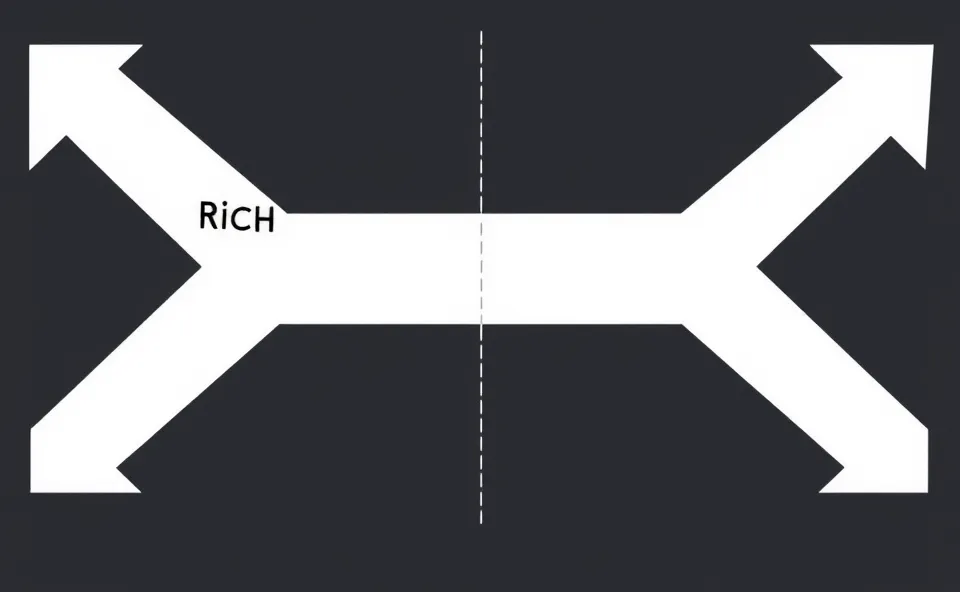
The US Economy: A Tale of Two Spending Habits
You’ve probably heard a lot about the US economy bouncing back after the pandemic. But have you noticed that for some people, things seem to be booming, while for others, it’s still a struggle? This is what we’re talking about when we describe a K-shaped economy. It’s not just about how much money people earn, but more importantly, how they are spending it. We’re seeing a significant gap emerging between the top 10 percent of earners and the bottom 70 percent when it comes to consumer spending. This divide is shaping how our post-pandemic economy is evolving, and it’s a trend worth understanding.
Why This Economic Split is Suddenly a Hot Topic
Why is everyone talking about this K-shaped economy and the widening spending gap now? It’s because we’re seeing concrete data that shows this trend is more than just a feeling. Recent analyses, like those from Bank of America, are highlighting just how much the spending habits of the wealthy have diverged from everyone else. As the economy has moved past the initial shocks of recent years, these differences in household spending have become starkly apparent. People are searching for this topic because they want to understand if the economic recovery is truly reaching everyone, or if it’s leaving a large portion of the population behind. It’s a core question about fairness and the health of our overall US economy.
A Look Back: Setting the Stage for Economic Disparity
To truly grasp the K-shaped economy, we need to look back a bit. For years, the US has grappled with income inequality and a growing wealth gap. The pandemic, however, acted like an accelerant. While many industries and individuals faced severe challenges, others, particularly those in technology and finance, thrived. This meant that the top 10 percent, who often hold a significant portion of wealth and investments, saw their assets grow even further. Meanwhile, those in lower-paying service jobs or who experienced job losses found themselves in a much more precarious financial situation. This pre-existing tension, amplified by the unique circumstances of the past few years, has created the current landscape of vastly different consumer spending patterns.
What This Spending Divide Means for All of Us
So, what does this K-shaped economy and the spending gap really mean? It has wide-ranging impacts. For businesses, it means a split in their customer base. Luxury brands and high-end services are likely seeing robust demand from the top 10 percent, while businesses catering to more budget-conscious consumers might be struggling. Technology plays a role here too. Companies enabling remote work and digital services have benefited greatly, further empowering those already in a strong economic position. For the bottom 70 percent, it means a continued focus on essential spending and perhaps less discretionary income for things like travel, entertainment, or new goods. This economic disparity can affect everything from hiring trends to the types of innovations we see. It highlights how different segments of the US economy are experiencing the post-pandemic recovery in very different ways. The implications for household spending are profound, affecting daily life and long-term financial security.
What’s Next on the Economic Horizon?
Looking ahead, the K-shaped economy suggests that the spending divide might persist, at least in the short to medium term. The wealth gap and income inequality are deep-rooted issues that won’t disappear overnight. We could continue to see strong consumer spending in luxury markets, while mainstream markets might see more cautious household spending. Technology will likely continue to be a key factor, with advancements potentially benefiting those who can invest in them or adapt their skills quickly. The government and businesses will face ongoing questions about how to address this economic disparity. Will there be policies aimed at broader wealth redistribution, or will the focus remain on stimulating general economic growth? The trajectory of the US economy will largely depend on how these fundamental issues of income inequality and the wealth gap are navigated. Understanding these spending habits is crucial for anyone trying to make sense of where our economy is heading.
Frequently Asked Questions About the K-Shaped Economy
What exactly is the K-shaped economy?
The K-shaped economy describes a situation where different segments of the US economy recover and grow in vastly different ways, much like the shape of a letter K. One part of the economy shoots upwards, while another part stagnates or declines, leading to significant economic disparity and a widening wealth gap.
Why is there such a difference in household spending between the top 10 percent and the rest?
This spending gap is often due to differences in income, existing wealth, and job security. The top 10 percent typically have more disposable income, greater investment opportunities that have grown significantly, and often hold jobs that were less affected or even benefited from recent economic shifts, allowing for more robust consumer spending.
How does income inequality contribute to a K-shaped US economy?
High levels of income inequality mean that wealth is concentrated in fewer hands. This allows the wealthier segment to increase their spending significantly, driving certain sectors of the economy, while the majority of the population, with less income and fewer assets, have limited capacity for consumer spending, thus reinforcing the K-shaped trend.
What does the Bank of America analysis reveal about the K-shaped economy?
Bank of America’s analysis has provided data showing distinct patterns in consumer spending. It highlights that while spending on luxury goods and services has increased for the affluent, the spending habits of the broader population have been more constrained, underscoring the economic disparity and the challenges in the post-pandemic economy for many households.
What are the long-term implications of this K-shaped economy for the US?
The long-term implications include a potential for increased social and economic division, challenges in achieving broad-based economic growth, and potential shifts in market demand. Addressing the wealth gap and fostering more equitable recovery will be key to mitigating some of these risks for the future of the US economy.











