

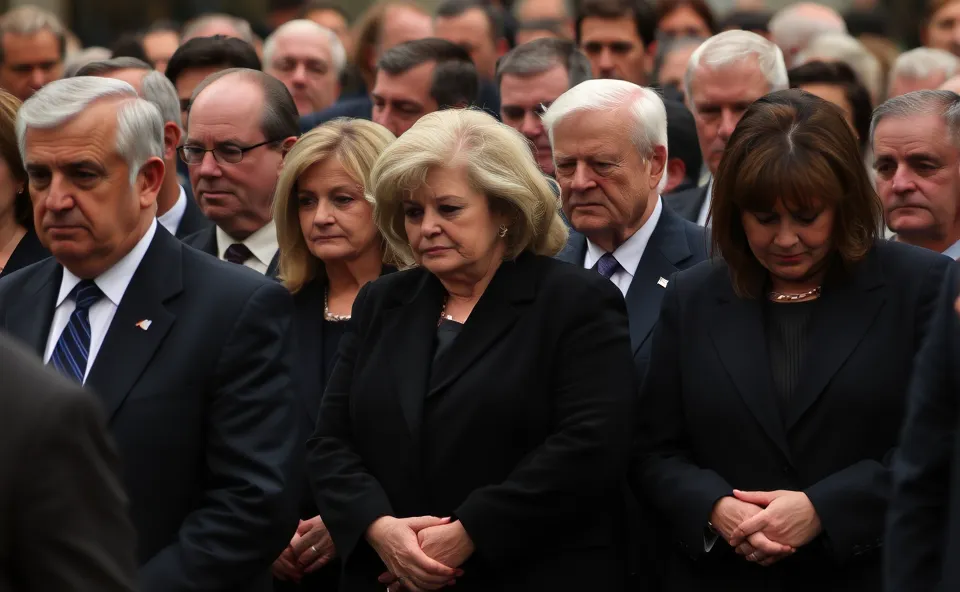
A Quiet Presence at a Solemn Gathering
Imagine a significant event, a funeral for someone important, where you’d expect all the key players to be. Recently, in Iran, a funeral for a prominent cleric took place. What caught the attention of many wasn’t just the mourning, but who was there and, perhaps more importantly, who wasn’t. We saw the sons of Supreme Leader Ali Khamenei present, showing their support and participation. This is normal enough, as family members often attend such events. However, what sparked discussions was the absence of someone who many consider the frontrunner for the top leadership role in Iran, the successor to Khamenei himself.
Why the Fuss Now?
You might be wondering why this particular funeral attendance, or lack thereof, is suddenly a hot topic. Well, in the complex world of Iran politics, every move, every presence, and every absence carries weight. The succession of Ali Khamenei is a subject of immense interest and speculation, both within Iran and internationally. When individuals who are seen as having a stake in future leadership, or who are closely connected to potential successors, make public appearances or remain absent from significant events, it’s naturally interpreted as a sign of shifting dynamics or strategic positioning. This funeral became a focal point because it provided a visual representation of the people being discussed in the context of Iran’s political succession.
Reading Between the Lines: A Look Back
To understand the significance of this recent event, it helps to have a little background. Ali Khamenei has been the Supreme Leader of Iran for a long time, since 1989. He holds the ultimate authority in the country. As he ages, the question of who will take his place is constantly on people’s minds. This isn’t just about finding a new leader; it’s about the future direction of Iran itself. The process of selecting a successor is intricate and involves powerful religious and political figures. There isn’t a simple election like in some democracies. Instead, a special assembly, the Assembly of Experts, plays a crucial role. Over the years, various names have surfaced as potential successors, and observing who is visible and who is not during important moments can offer clues about the ongoing internal discussions and power plays related to this critical leadership transition.
The Ripples of Absence
So, what does this funeral attendance, or the lack of it from a key figure, mean for us, whether we’re watching from afar or living within the system? For businesses and global markets, Iran’s political stability and leadership continuity are always factors to consider. Any indication of uncertainty or shifts in power dynamics can influence investor confidence and international relations. For those closely following Iran politics, the presence of Khamenei’s sons can be seen as a sign of familial involvement and perhaps a display of established influence. The absence of the presumed successor, however, could be interpreted in several ways. It might suggest that the individual is maintaining a lower profile to avoid appearing presumptuous, or it could indicate a lack of clear endorsement from the current establishment for their direct involvement at such an event. It fuels the ongoing narrative and speculation about the ongoing competition and the discreet maneuvering that often characterizes political succession in Iran. This kind of subtle messaging can have a real impact on how different factions within Iran perceive the landscape and how external observers gauge the direction of the country.
What Lies Ahead?
Looking forward, the situation surrounding the succession of Ali Khamenei remains a key area of focus for anyone interested in Iran. We can expect continued scrutiny of public appearances, private meetings, and official statements from key figures. The absence or presence at events like this funeral will likely continue to be analyzed for hidden meanings and implications. It’s unlikely that a single event will definitively reveal the future leader, but rather, it’s a piece of a much larger, ongoing puzzle. The political climate in Iran is dynamic, and understanding these subtle cues is essential for grasping the country’s trajectory. The Assembly of Experts will eventually have its say, but until then, the whispers and the sightings, like those at this recent funeral, will continue to shape the conversation about who will eventually lead Iran.
Frequently Asked Questions
Who are the sons of Khamenei?
Ali Khamenei has several sons, two of whom, Mojtaba and Mostafa, are often mentioned in discussions related to Iran politics and potential future leadership roles. Their presence at significant events is always noteworthy.
Why is the successor to Khamenei so important?
The Supreme Leader is the highest political and religious authority in Iran. Therefore, the succession of Ali Khamenei is crucial because the successor will wield immense power and influence the country’s domestic and foreign policies for years to come.
How is a successor chosen in Iran?
The process involves the Assembly of Experts, a body elected by the people, which is responsible for selecting and overseeing the Supreme Leader. They will ultimately choose the next Supreme Leader when the time comes.
What does the absence of a potential successor at a funeral signify in Iran politics?
In the context of Iran politics, the absence of a key figure, especially one considered a potential successor to Khamenei, at a significant funeral can be interpreted in various ways. It might suggest strategic discretion, a lack of overt backing, or simply a personal decision, all of which contribute to the ongoing speculation surrounding political succession.
What are the implications of leadership changes for Iran?
Leadership changes in Iran have significant implications, affecting the country’s internal social and economic policies, its approach to international relations, its nuclear program, and regional stability. The choice of Khamenei’s successor will undoubtedly shape these aspects.











