

A Bold Proposal for Middle East Strategy
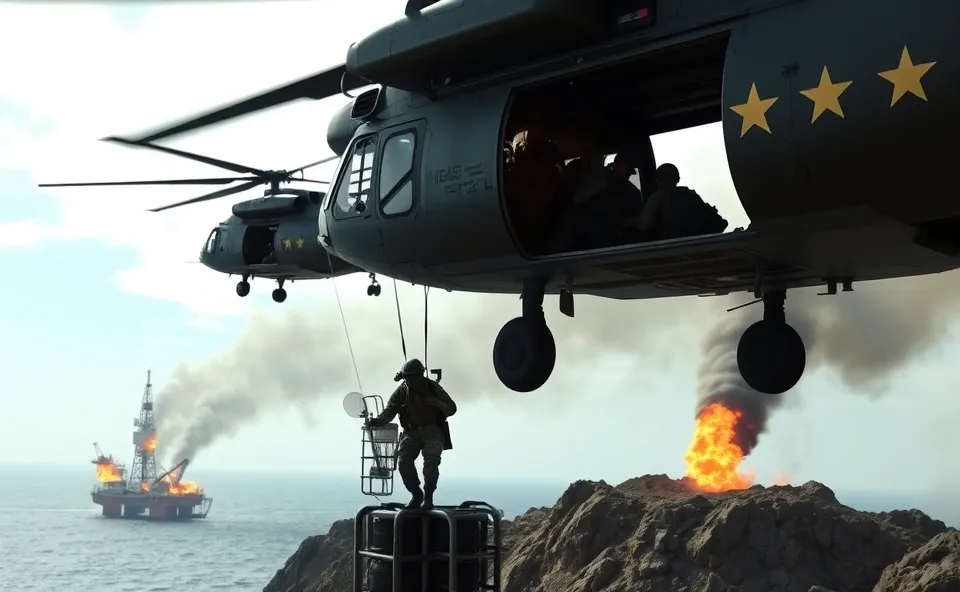
You might have heard some pretty intense discussions lately regarding the ongoing tensions in the Middle East. Recently, Larry Kudlow made a statement that has certainly stirred the pot. He suggested that the US Marines should step in and seize Kharg Island. While that might sound like a plot from a Hollywood movie, the reasoning behind it is rooted in hard economic reality. The core idea is simple: if you want to stop the flow of money to a regime, you have to stop the flow of their most important product. In this case, that product is oil.
Larry Kudlow is not just talking about a random military move. He is pointing toward a very specific target that acts as the heartbeat of the Iran economy. By suggesting that the US Marines take control of this single location, he is highlighting how a very focused military action could potentially dismantle the financial foundations of the country. It is a high stakes suggestion that moves the conversation from mere political debates to the realm of direct economic warfare.
When we talk about these kinds of moves, we are talking about more than just soldiers on the ground. We are talking about the ability to cut off the primary source of revenue that keeps a nation running. For Iran, that source is almost entirely dependent on its ability to move oil through specific channels. Kharg Island is the most important of those channels. If that tap is turned off, the economic consequences would be immediate and massive.
The Logic of Targeted Pressure
The strategy being discussed is essentially about finding the most efficient way to apply pressure. Instead of broad, sweeping actions that might take years to show results, the idea is to hit a single, critical point. This is what experts often call a strategic choke point. If a nation relies on one specific port or island to send its goods to the rest of the world, that location becomes its greatest vulnerability. Larry Kudlow is essentially calling for the US to exploit that specific weakness.
Why This Conversation Is Trending Now
You might be wondering why this suddenly feels like the biggest topic in the business and geopolitical world. The truth is that the world is currently feeling very sensitive to energy security. Every time there is a hint of conflict in the Middle East, people immediately start thinking about the price of gas at the pump and the cost of shipping goods across the ocean. Because of this, any talk of military action involving major oil hubs becomes an instant headline.
There are a few reasons why this specific idea is gaining so much traction in searches and discussions:
- Rising Energy Volatility: With global markets constantly shifting, investors are looking for any sign of what might cause a sudden spike in oil prices.
- Heightened Geopolitical Tensions: The relationship between the US and Iran has been tense for a long time, and new suggestions of military action act like fuel on a fire.
- Focus on Economic Sanctions: Most people know that sanctions are a primary tool for modern diplomacy, but the discussion is shifting toward how those sanctions can be made even more effective through direct action.
People are not just searching for this because they like military news. They are searching because they want to know how these massive shifts in power might affect their own pockets. When a commentator like Larry Kudlow mentions a move that could fundamentally alter the Iran economy, it sends a ripple through the financial markets. Business leaders and everyday consumers alike are trying to figure out if we are entering a new phase of much more direct confrontation.
The Deep History of Kharg Island
To understand why this is such a big deal, we have to look at what Kharg Island actually is. It is not just a piece of land in the Persian Gulf. It is a massive strategic asset that serves as the primary terminal for Iran’s oil exports. For decades, this island has been the gateway through which the majority of the country’s oil moves out to the global market. Without Kharg Island, the ability of the country to generate hard currency through energy sales would be almost completely paralyzed.
For a long time, the international community has used sanctions to try and limit this revenue. Sanctions are like a slow squeeze. They make it harder to sell oil, they make it more expensive to move it, and they create a lot of red tape. However, even with sanctions in place, the country has found ways to keep its economy moving by finding alternative routes or partners. This is why the suggestion of a more direct military action is so significant. It moves past the slow squeeze and goes straight for the source.
Historically, the Persian Gulf has always been one of the most sensitive regions in the world for global trade. The geography of the area means that a huge amount of the world’s energy moves through very narrow lanes. Kharg Island sits right in the middle of this delicate balance. It has been a focal point for regional power struggles for years, making it a permanent fixture in any discussion about Middle East stability.
The Massive Impact on Global Markets
If a suggestion like this were to move from a comment to an actual plan, the impact would be felt far beyond the borders of the Middle East. We are talking about a potential shockwave that would hit almost every sector of the global economy. For businesses, this is not just about politics; it is about survival and planning.
First, let’s talk about the energy sector. The most obvious result of a military action around Kharg Island would be a massive spike in oil prices. When the market senses that a major supply source is at risk, the price of oil goes up almost instantly. This is not just a problem for oil companies. It is a problem for every single business that relies on transportation. From airlines to trucking companies to local grocery stores, everyone pays more when energy costs rise. This can lead to higher inflation, which means everything from your morning coffee to your monthly rent could become more expensive.
Second, there is the issue of supply chain stability. Modern business relies on the ability to predict costs and delivery times. Geopolitical instability creates a massive amount of uncertainty. When a region becomes a zone of potential military action, shipping companies often increase their insurance rates or avoid the area altogether. This can cause delays in goods moving across the globe, creating a domino effect of shortages and price hikes.
Here are some of the key areas that would see immediate changes:
- Commodity Markets: Crude oil and natural gas would likely see extreme price volatility.
- Shipping and Logistics: Increased insurance premiums and changes in maritime routes would raise the cost of moving goods.
- Investor Sentiment: Markets generally dislike uncertainty. A sudden move toward military action could lead to a flight toward safer assets like gold.
- Inflation Rates: Higher energy costs often translate directly into higher prices for consumer goods.
For business leaders, the lesson here is that geopolitical risk is a real, measurable cost. Watching how leaders like Larry Kudlow discuss these strategies is a way to gauge the level of risk that might be coming down the pipeline.
What to Watch for in the Future
So, what happens next? It is unlikely that we will see a sudden invasion tomorrow, but we are clearly in a period where the language being used is becoming much more aggressive. We are moving away from the language of quiet diplomacy and moving toward the language of direct, decisive action. This shift in tone is itself a signal that the current status quo might not last much longer.
In the near future, we should keep a close eye on two main things. First, watch the diplomatic efforts. Even as people call for military action, the actual governments are often trying to find other ways to apply pressure through even stricter sanctions or new international agreements. The tension between these two paths—military pressure versus economic pressure—is where the real story lies.
Second, keep an eye on energy market trends. If you see oil prices starting to climb steadily even without a direct conflict, it might mean that the markets are already pricing in the risk of a larger confrontation. The way the world reacts to these bold statements is often just as important as the statements themselves. We are watching a high stakes game of chicken, where the players are not just nations, but the entire global economy.
Common Questions About This Situation
How does Kharg Island affect the Iran economy?
Kharg Island is a vital piece of infrastructure that handles the vast majority of the country’s oil exports. Because oil sales provide the main source of revenue for the government, the island acts as a financial lifeline. If access to this island is restricted, it could lead to a severe economic crisis by cutting off the primary way the country earns foreign currency.
Why did Larry Kudlow mention the US Marines?
Larry Kudlow made the suggestion as a way to highlight how much damage could be done to the Iran economy through a targeted military action. By suggesting the US Marines take control of a key strategic asset, he is emphasizing that the most effective way to stop the revenue flow is to control the physical points where that revenue is generated.
What makes Kharg Island a strategic asset?
It is considered a strategic asset because of its unique location and its role in the global energy supply. It is one of the few places where a massive amount of oil can be stored and shipped out of the region. This makes it a central point in the geopolitical landscape of the Middle East.
How do sanctions influence the Iran economy?
Sanctions are designed to make it difficult and expensive for the country to trade its oil on the global market. While they have caused significant stress on the Iran economy, they have not completely stopped the flow of money. This is why some analysts are now discussing more direct methods of intervention.
Can military action impact global oil prices?
Yes, military action in a major oil producing region can cause prices to skyrocket. When there is a threat to the stability of energy supply routes, markets react quickly by driving up the cost of oil. This can have a ripple effect, increasing costs for consumers and businesses all over the world.











