

The Unexpected Social Hub Podcast Comment Sections
In the ever-evolving landscape of digital socialization, a surprising trend has emerged among middle schoolers: the creative repurposing of niche podcast comment sections as clandestine social platforms. This phenomenon offers a fascinating glimpse into how young people navigate the digital world, especially when faced with parental controls and the limitations of mainstream social media. For many digital natives, these seemingly obscure corners of the internet have become vital spaces for online socialization, offering a unique alternative to more heavily monitored platforms.
How Kids Are Turning Podcasts into Social Spots
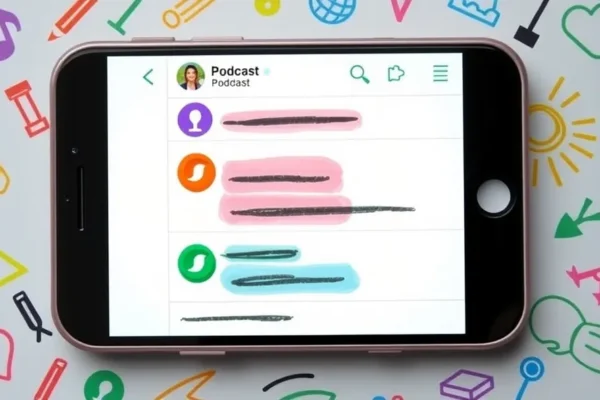
At its core, this innovation isn’t about the podcasts themselves, but about the interactive spaces they foster. When a podcast, especially one with a dedicated and engaged audience like a show on NPR’s “This American Life” or a niche history podcast, allows for comments below each episode, it creates a public forum. For middle schoolers, these comment sections function much like the early days of internet forums or message boards. Think of it like finding a secret clubhouse in a public park; the space is accessible, but the interactions within can be private and exclusive to those who know where to look and how to participate.
The mechanism is simple yet effective. Kids discover a podcast that resonates with their interests, perhaps a show discussing video games, fantasy novels, or even science facts. They then gravitate to the comment section, not necessarily to discuss the episode’s content in depth, but to find and connect with other listeners their age. They might use pseudonyms, reference inside jokes related to the podcast, or even develop a unique shorthand. This creates a sense of community that is invisible to casual observers, including parents who might be monitoring more obvious social media apps. The “secret” aspect is key; it provides a sense of autonomy and privacy.
Podcast Comments as a New Frontier for Online Socialization
The real-world application of this trend is already in full swing, though it remains largely under the radar. Parents, often focused on blocking sites like TikTok, Instagram, or Snapchat, may not consider that their children are finding ways to connect on platforms that seem entirely unrelated to traditional social media. Niche podcasts, often supported by public radio stations like NPR or independent creators, are experiencing this organic community building in their comment sections. The maturity level of this trend is still early adoption, existing as a grassroots behavior rather than a deliberate platform feature. It’s available now to anyone with internet access and an interest in specific podcasts.
The Competitive Landscape of Kids’ Online Spaces
This trend highlights the ingenuity of young users in finding social media alternatives. It stands in stark contrast to the heavily curated and algorithm-driven environments of mainstream social media. While platforms like Discord offer more structured communities, and platforms like Roblox allow for in-game socialization, the podcast comment section offers a more ephemeral and less structured form of interaction. There isn’t a direct competitor in the sense of a company actively trying to replicate this specific behavior, but the broader landscape includes any platform that facilitates group communication, from gaming chats to online forums. The advantage of the podcast comment section lies in its obscurity and its perceived innocence, making it less likely to trigger parental controls.
Implications for Digital Behavior and Internet Safety
The implications of this trend are significant for understanding modern digital behavior. It demonstrates that children are adept at circumventing platform restrictions and parental controls when driven by the fundamental human need for social connection. This can be seen as a positive development, showcasing creative communication and a desire for community. However, it also raises important questions about internet safety. While these platforms might seem innocuous, they are still public forums, and the anonymity they offer can, in some cases, be exploited. The long-term impact could lead to a greater demand for more nuanced digital literacy education that addresses these less obvious online spaces.
Limitations and Challenges of Podcast-Based Socializing
Despite its creative appeal, this method of online socialization has inherent limitations. The primary challenge is the lack of dedicated features for social interaction. There are no profiles, direct messaging, or friend lists in the traditional sense. Communication is confined to replies within a comment thread, making it difficult to build deep connections. The limited character count on some platforms can also hinder complex conversations. Furthermore, the discoverability of like-minded individuals is purely coincidental, relying on shared podcast interests. The ephemeral nature of comment sections, where older posts are often buried, means these communities can be fleeting. There are also no built-in moderation tools designed for youth social interaction, leaving users vulnerable to inappropriate content or interactions.
The Future Trajectory of Unconventional Social Platforms
Looking ahead, it’s unlikely that podcast comment sections will evolve into formal social media platforms. Instead, this trend might inspire creators of niche content to consider building more robust community features. We might see more independent creators developing private forums or Discord servers linked to their podcasts, offering a middle ground between public comments and dedicated social apps. The current trajectory suggests that digital natives will continue to be innovative in their use of existing digital infrastructure for social purposes, pushing the boundaries of what we consider “social media.” The next developments to watch will be how podcast creators respond to this emergent behavior and whether other overlooked digital spaces are similarly repurposed.
Key Questions and Answers About Kids and Podcast Comments
What exactly are “podcast comment sections” being used for by middle schoolers?
Podcast comment sections are being used as informal, secret social platforms where kids connect with each other based on shared interests in specific podcasts, bypassing traditional social media and parental controls.
Why are kids choosing these niche spaces instead of mainstream social media?
Kids are choosing these spaces to gain more privacy, autonomy, and to avoid the strict parental controls and algorithmic pressures often found on mainstream kids social media platforms.
What are the risks associated with this type of online socialization?
The risks include potential exposure to inappropriate content or interactions, as these are public forums with less moderation than dedicated social platforms, and the anonymity can sometimes be exploited.
How does this compare to other social media alternatives like Discord or gaming platforms?
Unlike Discord or gaming platforms, podcast comment sections are less structured and more ephemeral, offering a spontaneous and less supervised form of online socialization.
Is this a widespread phenomenon, or just a small trend?
While exact numbers are difficult to ascertain, anecdotal evidence suggests this is a growing trend among digitally savvy middle schoolers looking for alternative ways to connect online.
What is the future outlook for this type of digital behavior?
This behavior highlights a growing demand for more private and less curated online social spaces, potentially influencing how content creators build communities around their work in the future.
This article explores a nascent trend in digital behavior. Further research is needed to fully understand the scope and long-term implications of middle schoolers using niche podcast comment sections as social platforms.











