

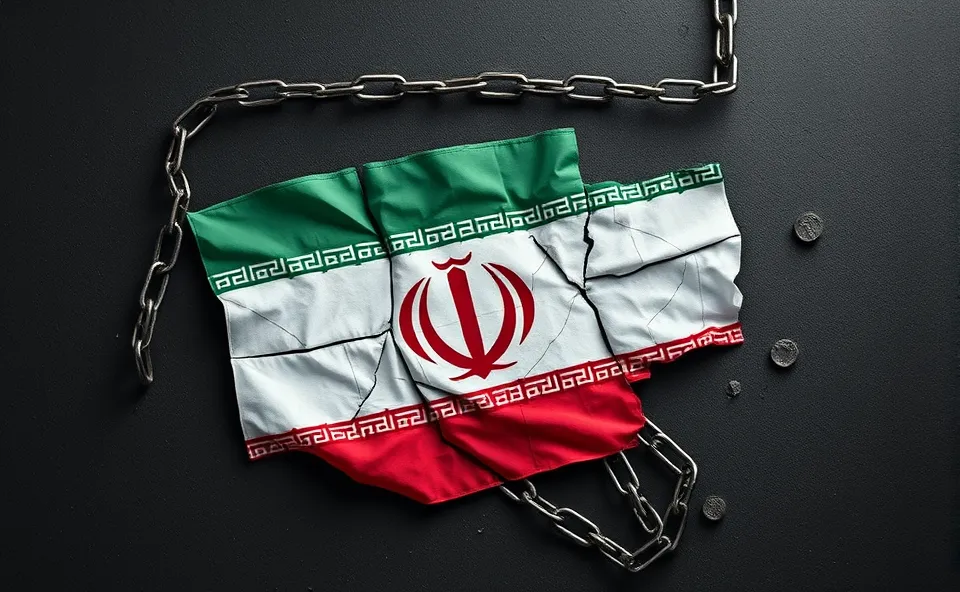
Larry Kudlow’s Bold Stance on Iran
Imagine a high-stakes negotiation where one side declares there’s only one acceptable outcome: complete surrender. That’s essentially the perspective Larry Kudlow, a prominent voice in business and economics, has articulated regarding Iran. Kudlow made a striking statement, saying, “there’s no such thing as an agreement, other than unconditional surrender.” This isn’t just strong rhetoric; it outlines a distinct approach to foreign policy, one that views traditional diplomatic compromises as insufficient when dealing with the Iranian regime. For Kudlow, the path to resolving issues with Iran doesn’t involve carefully crafted treaties or concessions. Instead, it demands that Iran capitulate entirely to international demands, driven by relentless economic pressure.
This viewpoint is rooted in the belief that Iran’s current leadership cannot be trusted to uphold negotiated agreements. From this angle, any “deal” that falls short of total submission merely offers a temporary reprieve, allowing the regime to regroup or continue activities deemed unacceptable by the international community. It suggests that the only way to genuinely alter Iran’s behavior and ensure long-term stability is to apply such immense pressure that the country has no choice but to concede on all fronts. This idea of forcing an “unconditional surrender” through tough Iran sanctions is a stark departure from the more common diplomatic efforts aimed at finding common ground.
Why Everyone’s Talking About “Unconditional Surrender” Now
You might wonder why such a hardline stance, particularly one invoking the concept of “unconditional surrender,” is gaining traction or at least sparking conversation today. The simple truth is that traditional diplomatic efforts with Iran have often been fraught with challenges. Past agreements, like the Joint Comprehensive Plan of Action (JCPOA), have seen nations withdraw or express deep dissatisfaction with their outcomes. This history has left many feeling that conventional negotiations are ineffective in truly changing Iran’s trajectory on issues like its nuclear program, regional influence, or human rights record.
In this context, Kudlow’s perspective offers an alternative, albeit controversial, strategy. It speaks to a growing frustration among some policymakers and the public who believe that Iran consistently pushes boundaries and exploits diplomatic openings. When dealing with complex geopolitical strategy, the idea of applying maximum economic pressure to achieve a decisive outcome can appeal to those who seek a more definitive resolution. The ongoing geopolitical tensions in the Middle East, coupled with persistent questions about Iran’s intentions, keep discussions around the effectiveness of various Iran policy approaches, including the push for “unconditional surrender,” very much alive in current international relations debates.
A Look Back at Iran’s Economic Journey and Sanctions
To really grasp Kudlow’s argument, it helps to understand the long and complicated history of economic pressure on Iran. For decades, Iran has faced various forms of international sanctions, aiming to curb its nuclear ambitions, support for regional proxies, and human rights abuses. These measures have ranged from restrictions on oil exports and financial transactions to bans on specific technologies.
Think back to the early 2010s, when a concerted international effort saw crippling sanctions significantly impact Iran’s economy. These measures brought Iran to the negotiating table, eventually leading to the JCPOA in 2015. This agreement aimed to limit Iran’s nuclear program in exchange for sanctions relief. However, the deal proved contentious, and the U.S. later withdrew, reimposing and even expanding its sanctions. The argument from figures like Kudlow is that even the JCPOA didn’t achieve a true shift in Iran’s core behavior; it was a temporary agreement, not a fundamental change of heart or direction. From this viewpoint, past diplomatic attempts failed to secure a lasting shift because they didn’t push for the ultimate goal of “unconditional surrender.” Instead, they offered pathways for Iran to potentially re-emerge stronger without fundamentally altering its long-term foreign policy and Middle East economics strategy.
The history shows a pattern: Iran faces severe economic pressure, its economy struggles, and then there’s a period of negotiation or potential relief. Kudlow’s stance suggests breaking this cycle by maintaining or intensifying economic pressure until there’s a complete capitulation, leaving no room for future re-negotiations that might be seen as mere delays or half-measures.
The Real-World Weight of Economic Starvation on Iran Policy
The concept of achieving “unconditional surrender” through sanctions isn’t just a theoretical foreign policy idea; it has profound real-world implications, especially when it involves “economic starvation.” When a nation faces severe economic pressure, it’s not just the government that feels the pinch. The effects ripple through every layer of society.
- Impact on ordinary citizens: Sanctions often lead to inflation, shortages of goods, a devaluation of currency, and limited access to essential medicines or technology. Daily life becomes a struggle, with reduced opportunities and widespread hardship. This creates internal pressure on the government, but it also means immense suffering for innocent people.
- Businesses and markets: For international businesses, Iran sanctions create a highly challenging environment. The risk of violating sanctions, even inadvertently, can lead to massive fines and reputational damage. This effectively isolates Iran from global markets, stifling trade, investment, and technological exchange. Even businesses within Iran struggle with supply chain issues, capital shortages, and declining consumer demand.
- Geopolitical instability: While the goal of “economic starvation” is to force a change, it can also lead to unintended consequences. Extreme pressure might push a regime to double down, seek alternative alliances, or even escalate regional tensions in desperate attempts to alleviate the burden or project strength. It also raises humanitarian concerns and can spark internal unrest, which might not always lead to the desired political outcome.
Kudlow’s strategy banks on the idea that the pain of economic isolation will eventually become unbearable enough to force a fundamental change in Iran’s policy direction. However, the path to “unconditional surrender” through such extreme economic measures is often long, arduous, and carries significant ethical and practical dilemmas regarding its broader impact on stability and human welfare.
What’s Next for Iran and International Relations
So, if a powerful voice like Larry Kudlow is advocating for “unconditional surrender” through severe Iran sanctions, what does that mean for what could happen next? It certainly points towards a continuation, and potentially an intensification, of economic pressure as a primary tool of foreign policy. We might see a sustained effort to tighten existing sanctions, target new sectors of the Iranian economy, and work to deter any country or company from doing business with Iran.
The challenge with such an approach is predicting how Iran will react. Will the pressure eventually lead to the capitulation Kudlow envisions? Or will it solidify the regime’s resolve, push it closer to rival powers, or even spark internal instability with unpredictable outcomes? A strategy focused on “unconditional surrender” fundamentally reduces the space for traditional diplomacy. It means that any future engagement would likely occur only after Iran has significantly altered its stance, rather than through a process of give-and-take negotiations.
For international relations, this approach could mean prolonged periods of tension in the Middle East. It suggests that any future “agreement” would look drastically different from past deals, with much higher demands placed on Iran from the outset. While the goal is to achieve a decisive shift, the path is fraught with potential for escalation and continued economic hardship for millions. The global community will watch closely to see if this hardline stance can truly reshape Iran’s future without creating further instability.
Answering Your Questions About Iran Sanctions and Strategy
What exactly does Larry Kudlow mean by “unconditional surrender” regarding Iran?
Larry Kudlow’s statement implies that any resolution with Iran should not involve a negotiated agreement where both sides make concessions. Instead, he believes that Iran must completely give in to international demands, particularly concerning its nuclear program, regional influence, and internal policies, without any reciprocal concessions from other nations. He sees this “unconditional surrender” as the only path to a lasting and trustworthy outcome, driven by intense Iran sanctions.
How effective have Iran sanctions been historically?
Historically, Iran sanctions have proven to be a powerful tool for exerting economic pressure and influencing Iran’s behavior. In the early 2010s, stringent sanctions significantly crippled Iran’s economy, leading to a period of negotiation that resulted in the JCPOA. However, while sanctions have forced Iran to the table and limited certain activities, they haven’t always led to a complete change in its fundamental foreign policy or an “unconditional surrender,” often prompting a cycle of negotiation and renewed pressure.
What are the main challenges in applying a strategy of “economic starvation” to Iran?
Applying a strategy of “economic starvation” presents several challenges. It can lead to severe humanitarian consequences for ordinary citizens, creating widespread hardship and potentially fueling anti-Western sentiment. Politically, it might strengthen hardliners within Iran who blame external forces, making the regime more resistant to change. There’s also the risk of driving Iran closer to other global powers not aligned with sanctioning nations, complicating geopolitical strategy and international relations.
How does this approach differ from traditional international relations diplomacy?
Traditional international relations diplomacy usually involves negotiation, compromise, and finding mutually acceptable solutions where both parties make some concessions. Larry Kudlow’s “unconditional surrender” approach, however, rejects this give-and-take. It demands a one-sided capitulation from Iran, viewing any negotiated agreement as inherently flawed or insufficient. This strategy relies almost entirely on overwhelming economic pressure rather than dialogue or incentive-based persuasion to achieve its foreign policy goals.
What are the potential broader impacts of such an approach on Middle East economics?
A strategy pushing for “unconditional surrender” through intense economic pressure could have significant broader impacts on Middle East economics. Prolonged isolation of Iran would disrupt regional trade networks, energy markets, and investment flows. It might increase instability if Iran retaliates or if internal unrest erupts. Neighboring countries could also be affected by refugee flows, changes in energy prices, or shifts in regional power dynamics, all contributing to a complex and potentially volatile economic landscape in the region.











