

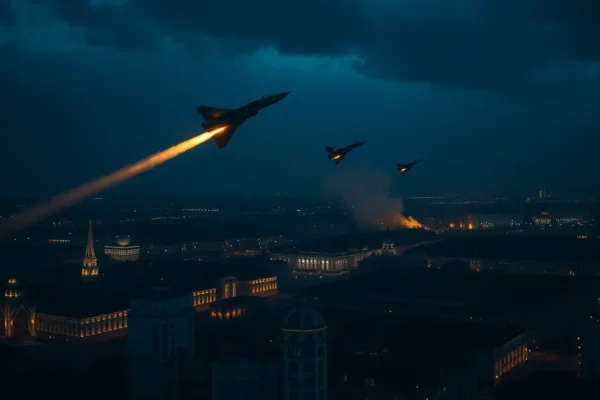
A Dark Day Over Kyiv
The city of Kyiv is facing one of its most difficult moments in recent memory. A massive Russian bombardment recently tore through the capital, leaving a trail of destruction and grief in its wake. This latest strike was not just another exchange of fire; it was a heavy blow that resulted in the deaths of 17 people. For the residents living through this, the sound of sirens and explosions has become a terrifying part of daily life, but the scale of this specific attack has sent shockwaves through the international community.
The damage goes beyond the immediate casualties. The strikes targeted critical infrastructure, causing power disruptions and leaving many families in the dark. When we talk about the human cost of the Ukraine war, these numbers represent real lives, families, and the sudden loss of safety in what should be a protected space. The intensity of the strikes shows that the air battles are not slowing down. Instead, they are becoming more frequent and more dangerous for those on the ground.
What makes this particular event so significant is not just the loss of life, but what it reveals about the current state of air defense. As the smoke clears, a much larger and more systemic problem is coming to light. The city is fighting a constant battle to keep its skies clear, but that battle is becoming harder to win every single day.
Why the World is Watching Missile Stocks
If you have been following the news, you might notice that the conversation has shifted. It is no longer just about where the front lines are located. Instead, the focus is moving toward a critical resource: interceptor missiles. People are searching for information about the Kyiv bombing and the status of air defense because there is a growing fear that the shield protecting the city is thinning out.
The reason this is trending is simple. Ukraine has issued a dire warning about its dwindling supplies of Patriot missiles. These are not just any defense systems; they are the gold standard for protecting major cities from advanced aerial threats. When a country runs low on these interceptors, the entire security of the region feels much more fragile. The news is creating a sense of urgency because the ability to stop a missile in mid-air is the only thing standing between a target and total destruction.
Investors and policy analysts are also paying close attention. The depletion of these high-tech supplies isn’t just a military issue; it is a massive logistical and economic challenge. The world is watching to see if the current pace of military supplies can keep up with the relentless pressure of the ongoing air campaign. It is a race against time, and right now, the clock is ticking loudly.
The Weight of a Forty Day Air Campaign
To understand why the missile stocks are so low, we have to look back at the last few weeks. For the past 40 days, Ukraine has been subjected to a relentless air campaign. This has not been a series of isolated incidents. Instead, it has been a sustained, heavy-pressure tactic designed to exhaust the enemy’s defenses.
Think of it like a marathon where one side is trying to force the other to run out of breath. The Russian bombardment has utilized a mix of long-range missiles and cheaper, slower drones. This is a deliberate strategy. By launching waves of cheap drones, they can force Ukraine to use its most expensive and limited resources, like the Patriot missiles, to intercept them. It is a high-stakes game of economic and military attrition.
Over these 40 days, the cumulative effect has been massive. Every time a Patriot missile is launched to save a building or a neighborhood, that is one less missile in the warehouse. The sheer volume of the attacks has outpaced the speed at which new defense systems can be delivered and replenished. This constant cycle of retaliatory attacks and defensive responses has pushed the available military supplies to a breaking point.
The Economic and Strategic Impact of Defense Depletion
While the immediate concern is the safety of Kyiv, the broader implications of this situation reach into the world of finance and global industry. The demand for advanced defense systems is currently at an all-time high, creating a complex landscape for technology and manufacturing companies. When we look at the impact of this shortage, several key areas stand out:
- Defense Industry Demand: Companies that manufacture Patriot missiles and other high-end air defense technology are seeing unprecedented orders. This creates a massive surge in the valuation of defense contractors, but it also highlights a massive bottleneck in global manufacturing.
- Supply Chain Pressures: The ability to produce complex missile systems requires rare materials and highly specialized components. The current crisis is testing the limits of the global defense supply chain, proving that even the most advanced nations cannot pivot their production overnight.
- Market Volatility: News of dwindling missile stocks often leads to uncertainty in energy and commodity markets. When the stability of a major European nation is in question, markets react to the potential for wider conflict or shifts in energy security.
- The Cost of Attrition: There is a massive economic imbalance in this conflict. Using a multi-million dollar interceptor to take down a low-cost drone is a strategy that favors the side with more resources. This creates a long-term financial strain on the countries providing the aid.
For businesses and investors, this situation serves as a reminder of how geopolitical instability can directly impact the technology and manufacturing sectors. The struggle for air superiority is not just being fought in the skies; it is being fought in the factories and on the stock exchanges.
Looking Ahead at the Defense Supply Chain
What happens next? The immediate future depends heavily on the speed of international cooperation and industrial scaling. We are likely to see a much more intense focus on increasing the production capacity of Western defense systems. It is no longer enough to just provide the technology; the world must now figure out how to mass-produce it at a pace that matches the intensity of the air campaign.
We might also see a shift in how air defense is structured. Instead of relying solely on a few high-cost systems like the Patriot missiles, there may be a push to integrate more diverse and cost-effective layers of protection. This could involve more automated systems, smaller interceptors, and better ways to use electronic warfare to neutralize drones before they even reach their targets.
Ultimately, the stability of Kyiv and the surrounding regions will rely on whether the supply chain can bridge the gap between current stocks and the demands of a high-intensity conflict. The next few months will be a true test of global industrial willpower and the ability of modern technology to meet the most extreme challenges.
Frequently Asked Questions
How does the Kyiv bombing affect the local economy?
The recent Kyiv bombing causes significant damage to infrastructure, which leads to higher costs for repairing power grids, water systems, and transport networks. This instability can also disrupt local business operations and affect long-term investment in the region.
Why are Patriot missiles so important for air defense?
Patriot missiles are essential because they are highly effective at intercepting a wide range of threats, including ballistic missiles and advanced aircraft. They provide a critical layer of protection for major cities and high-value targets during the Ukraine war.
Will more military supplies arrive to replenish the missile stocks?
There is ongoing international discussion regarding the delivery of more military supplies. The goal is to replenish the depleted missile stocks to ensure that the air defense remains strong enough to counter continued Russian bombardment.
What is the significance of the 40 day air campaign?
The 40 day air campaign represents a period of intense, continuous attacks designed to wear down the target’s resources. This constant pressure has been a major factor in the current shortage of defense systems and interceptor missiles.
How do retaliatory attacks influence the availability of defense systems?
Retaliatory attacks often involve large numbers of drones and missiles. Each time these threats are intercepted, it uses up a portion of the available missile stocks, making it difficult for the air defense to maintain long-term coverage without constant replenishment.











