

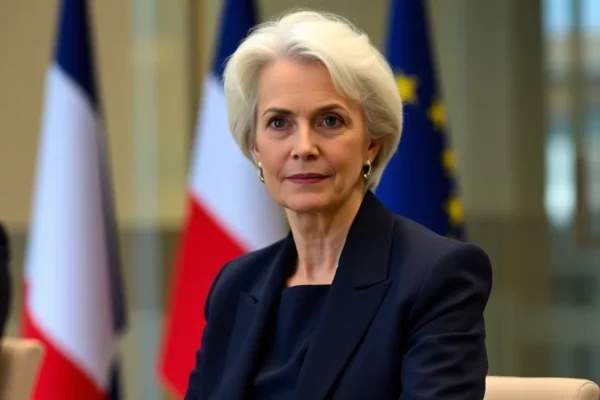
Lagarde’s French Election Stir and ECB Exit Speculation
The European Central Bank (ECB), the institution responsible for setting monetary policy for the eurozone, is facing an unusual confluence of attention following its President, Christine Lagarde,’s increasingly visible presence in the French election debate. This has ignited considerable speculation about a potential exit from her ECB role, a move that carries significant implications for both the ECB’s operational stability and the broader financial landscape of Europe.
Lagarde, a former French finance minister and head of the International Monetary Fund (IMF), has been a prominent figure at the helm of the ECB since November 2019. Recently, her public statements and engagement with pressing economic issues facing France have intensified, leading many to interpret these actions as a potential prelude to a departure from her current post. While there has been no official announcement from the ECB or Lagarde herself regarding her future, the sheer volume of political speculation, widely reported in outlets like the Financial Times and Reuters, has created a narrative of impending change. The trigger for this increased speculation appears to be the upcoming French presidential election and the perceived need for strong economic leadership domestically, coupled with the ongoing challenges of inflation and economic growth within the eurozone.
Strategic Rationale Behind the Speculation
The strategic rationale behind Christine Lagarde’s increased engagement with the French election debate, and the subsequent ECB exit speculation, is multifaceted. From a political perspective within France, a figure of Lagarde’s stature, with deep economic expertise, can be seen as a potential asset for President Macron’s administration, especially in navigating complex economic policy discussions during an election cycle. For Lagarde herself, the heightened public profile and engagement could serve to reinforce her credentials as a capable leader in times of economic uncertainty, a quality valued in any high-stakes role. However, the core strategic tension lies in balancing her commitment to the ECB’s mandate with potential domestic political aspirations or perceived obligations.
The ECB’s mandate is clear: maintain price stability in the eurozone. Lagarde’s leadership has been tested by unprecedented inflation surges and the economic fallout from geopolitical events. If she were to consider leaving the ECB prematurely, it would likely be driven by a strategic decision that either aims to leverage her expertise in a different, perhaps more direct, policy-making capacity, or a recognition that her current role is nearing its natural conclusion given the evolving economic and political climate. The opportunity she might be pursuing could be the chance to influence French economic policy more directly, especially if she perceives a significant challenge or a unique window of opportunity. Conversely, a perceived lack of continued strategic direction or significant policy levers at the ECB could also prompt a search for new avenues of influence. The market pressure to maintain confidence in the ECB’s stability during inflationary periods makes any hint of leadership instability a critical development.
Competitive Context and Market Positioning
The speculation surrounding Christine Lagarde’s potential exit from the ECB places the institution within a broader competitive context of global central banking and European economic leadership. Competitors in this space are not other central banks in a direct sense, but rather the various economic actors and political forces vying for influence over Europe’s financial future. The ECB’s primary competition is against the forces of inflation and economic stagnation that threaten the stability of the eurozone. If Lagarde were to depart, it would create an opening for other potential leaders within the ECB or the broader European financial system to step into the spotlight.
Who gains advantage from this situation is complex. For French political parties, a strong economic voice like Lagarde’s, whether involved directly or indirectly, can be a strategic asset in shaping public perception. For the markets, clarity and stability at the ECB are paramount. Thus, prolonged speculation itself can be disadvantageous, creating uncertainty. If a successor is perceived as equally capable and committed to price stability, the competitive positioning of the ECB might be maintained. However, if the transition is rocky or the successor is seen as less experienced or politically aligned in a way that could compromise the ECB’s independence, then the institution’s credibility could be threatened, potentially benefiting those who advocate for alternative economic models or policies.
Industry Implications and Sector-Wide Impact
The potential departure of Christine Lagarde from the ECB, fueled by her involvement in the French election debate, carries significant implications for the broader financial services industry and the European economic landscape. This development signals a period of potential leadership transition at a critical juncture for the eurozone’s monetary policy. Industry peers, including commercial banks, investment firms, and other financial institutions operating within the eurozone, will be closely monitoring any confirmed moves. The central bank’s stability and policy consistency are foundational to their own risk management and strategic planning.
If Lagarde were to leave, it would trigger a significant leadership change at the European Central Bank, potentially leading to shifts in monetary policy direction or communication. This could reshape the competitive landscape by influencing interest rate expectations, inflation targets, and the overall cost of capital for businesses across the eurozone. Industry participants will be assessing the likely candidates for succession and their potential economic philosophies. The broader impact could include increased volatility in financial markets as investors adjust their portfolios based on perceived changes in ECB leadership and policy. Peers will likely be evaluating their exposure to eurozone assets and considering how any potential policy shifts might affect their profitability and operational strategies. This situation underscores the interconnectedness of monetary policy, political developments, and the health of the financial sector.
Financial and Operational Impact
The financial and operational impact of Christine Lagarde’s potential exit from the ECB is primarily centered on market confidence and the continuity of monetary policy. While there are no immediate revenue or direct cost impacts for the ECB itself from a leadership change, the indirect financial consequences could be substantial. The ECB’s primary operational role is to manage the eurozone’s monetary policy, which influences inflation, interest rates, and economic growth across member states. A perceived instability or uncertainty in leadership could lead to increased market volatility. For instance, if markets interpret a change in leadership as a precursor to a significant shift in monetary policy, it could lead to fluctuations in bond yields, currency exchange rates, and equity markets. According to data from market analysis firms, periods of central bank leadership uncertainty have historically correlated with increased trading volumes and price swings in financial instruments related to the affected currency bloc.
Operationally, the ECB’s day-to-day functions would continue uninterrupted. However, the strategic direction and the approach to tackling complex economic challenges like inflation and potential recessionary pressures would be subject to the philosophy of the new president and the governing council. In the short term, the focus would be on ensuring a smooth transition and maintaining clear communication to reassure markets. In the long term, the financial and economic trajectory of the eurozone could be influenced by the new leadership’s policy decisions. For example, a more hawkish stance (focused on tightening monetary policy to control inflation) versus a more dovish stance (focused on stimulating economic growth) would have diverging impacts on borrowing costs for businesses and governments.
Execution Risks and Challenges
The execution risks and challenges associated with Christine Lagarde’s potential departure from the ECB are significant, primarily revolving around the potential for leadership vacuum and policy discontinuity. The ECB operates on a principle of independence, and any perceived political interference or an abrupt exit could undermine this crucial aspect of its credibility. Historically, leadership transitions at major central banks require careful management to avoid market jitters. For instance, the departure of a long-serving Federal Reserve chair has often been accompanied by heightened market attention to successor speculation and potential policy shifts, which can introduce uncertainty.
The primary organizational challenge would be selecting a successor who is widely respected, possesses deep economic expertise, and is committed to the ECB’s mandate of price stability. The political landscape within the eurozone is diverse, and reaching consensus on a candidate could be a complex and lengthy process. Market risks include the potential for increased volatility if the transition is not handled smoothly or if the chosen successor is perceived as less capable of steering the eurozone through its current economic challenges. Regulatory risks are less direct but could emerge if a new leader’s policies are seen to disproportionately favor certain member states, potentially leading to friction within the eurozone. The realism here is that any change in leadership at such a pivotal institution carries inherent risks that require meticulous navigation to safeguard financial stability.
Stakeholder Implications and Shifting Dynamics
The speculation surrounding Christine Lagarde’s potential exit from the ECB has a wide range of stakeholder implications, affecting employees, customers (the citizens of the eurozone), partners, and investors. For ECB employees, a leadership transition can create uncertainty about future direction and management style, though the institution’s operational framework is robust. For the citizens of the eurozone, who are the ultimate “customers” of the ECB’s monetary policy, the key concern is the continued stability of the euro and the effectiveness of policies aimed at managing inflation and fostering economic growth. Investor sentiment, both domestic and international, is heavily influenced by central bank leadership. Uncertainty can lead to cautious investment, while clarity and confidence can foster economic activity.
Culturally, the ECB strives for neutrality and expertise. A highly public political engagement by its president, even if tangential, can raise questions about this perceived independence, potentially impacting trust. For investors, the primary implication is the need to closely monitor any indications of policy shifts. A perceived move towards more nationalistic economic policies, or a less independent stance, could lead to a reassessment of eurozone assets. Market sentiment can shift rapidly based on news from the ECB, underscoring the importance of predictable and credible leadership. The current situation, with its blend of political intrigue and economic gravity, demands that all stakeholders remain vigilant.
Outlook and Next Steps for the ECB
If the speculation regarding Christine Lagarde’s potential exit from the ECB were to materialize, the outlook would involve a critical leadership transition and a renewed focus on the future of eurozone monetary policy. The key milestones to watch would be any official announcement from Lagarde or the ECB, the subsequent nomination and confirmation process for a successor, and the initial policy pronouncements of the new president. Indicators to monitor for success would include continued price stability, sustained economic growth within the eurozone, and the absence of significant market volatility attributed to the leadership change. If the transition is managed smoothly, with a highly qualified and respected successor, the ECB’s standing and effectiveness could be maintained or even enhanced.
In the short term, the focus will likely remain on existing monetary policy frameworks and clear communication to quell any market anxieties. The medium-term outlook will depend on the new leadership’s strategic approach to ongoing economic challenges, such as persistent inflation, the energy crisis, and the need for fiscal coordination among member states. A successful outcome would see the eurozone navigate these challenges with continued financial stability and robust economic performance. Conversely, a poorly managed transition or a perceived policy misstep by the new leadership could lead to prolonged economic headwinds. Measurable outcomes would include inflation rates returning to the ECB’s target, unemployment figures remaining stable or declining, and the overall GDP growth of the eurozone showing a positive trajectory.
Key Questions and Answers
Will Christine Lagarde exit the ECB to focus on French politics?
The current speculation suggests this is a possibility, driven by her increased visibility in the French election debate. However, there has been no official confirmation from Christine Lagarde or the European Central Bank. Her decision will likely depend on her assessment of future opportunities and her commitment to her ECB mandate.
What are the potential economic implications of Lagarde leaving the ECB?
A departure could lead to uncertainty in monetary policy direction, potentially impacting interest rates, inflation control, and overall eurozone economic stability. Market sentiment could shift depending on the perceived capabilities and policy leanings of her successor.
Why is Christine Lagarde’s involvement in the French election debate notable?
As President of the ECB, Lagarde is expected to maintain a high degree of political neutrality. Her active engagement in national election discussions is unusual for the head of a supranational monetary authority and has fueled speculation about her future intentions.
How might a new ECB President impact eurozone monetary policy?
A new president could bring a different perspective on managing inflation and economic growth, potentially altering the pace of interest rate changes or the focus of quantitative easing/tightening programs. This could have ripple effects on borrowing costs for businesses and consumers.
What are the risks to financial stability if Lagarde departs the ECB?
The primary risk lies in market perception and potential policy shifts. If the transition is perceived as weak or if the successor is seen as less equipped to handle economic challenges, it could lead to increased volatility and reduced investor confidence in the eurozone.
When might we see a definitive answer about Lagarde’s future at the ECB?
Given the timing of political cycles and central bank leadership mandates, a clearer picture might emerge in the coming months. Official announcements from the ECB or relevant political figures will be the definitive sources of information.
Business outcomes are subject to execution risk and market dynamics.











