

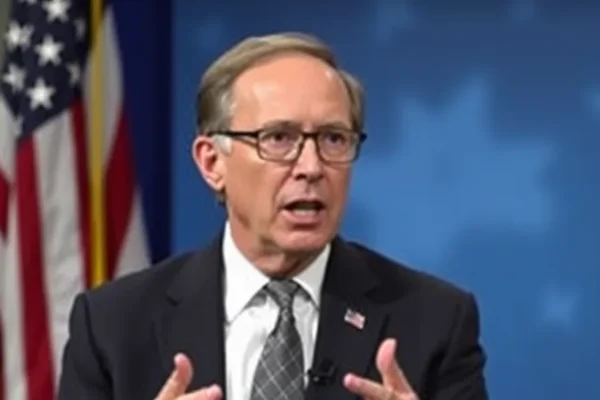
A Strategic Pivot for the Republican Party
In recent months, political analyst and former economic advisor Larry Kudlow has championed a specific strategic shift for the Republican Party. Kudlow argues that the GOP can overcome unfavorable midterm polls by pivoting away from internal friction and focusing exclusively on a platform of conservative economic policy. His thesis posits that the current election message of the party is too fragmented and that only a unified, disciplined focus on inflation, energy independence, and tax reform will resonate with a frustrated electorate.
The Rationale Behind a Unified Economic Message
The core objective of this strategic pivot is to move the party beyond polarizing internal debates and toward a value proposition that directly addresses voter sentiment. By emphasizing conservative economic policy, the GOP aims to position itself as the primary solution to the “cost of living crisis.” Kudlow contends that when the messaging becomes erratic, the party loses its ability to capture the moderate or undecided vote. The strategic goal here is to achieve message discipline—a management technique where an organization ensures every public communication reinforces a single, primary brand promise.
Competitive Positioning and the Donald Trump Factor
In the landscape of political competition, the GOP faces a unique challenge regarding brand identity. Donald Trump remains a dominant force within the party, serving as a primary brand driver but also as a source of market volatility. Kudlow’s strategy suggests that while Donald Trump is an essential component of the party base, the overall GOP midterm elections strategy must broaden its appeal. The competitive advantage sought here is a “big tent” approach where conservative economic tenets provide the foundation, while individual candidate styles provide the secondary outreach needed to win in swing districts.
Industry Trends in Political Marketing
The broader trend across political organizations is the transition toward data-driven, hyper-targeted messaging. Much like firms in the retail or technology sectors, political parties are increasingly using polling data to conduct sentiment analysis. The current industry trend suggests that the party which effectively dominates the narrative around economic stability tends to see higher voter engagement. The GOP’s move toward a cohesive economic message reflects a response to the competitive pressure of maintaining relevance during cycles of high inflation and supply chain volatility.
Financial and Operational Realities of Election Cycles
While political parties do not report quarterly earnings, they do operate under strict resource constraints. Capital allocation in this context refers to where the Republican party directs its limited campaign funds—specifically toward advertising, grassroots outreach, and digital strategy. A cohesive election message reduces “marketing waste.” When every state-level campaign repeats the same core economic talking points, the party gains cost efficiencies in message delivery. Fragmented messaging, by contrast, forces the party to spend more capital on mitigating conflicting narratives.
Execution Risks and Potential Challenges
The primary risk to Kudlow’s strategy is the “execution gap”—the space between a well-conceived strategy and the ability of a decentralized organization to implement it. The Republican Party is not a single corporation with a top-down hierarchy; it is a collection of autonomous local entities and independent candidates. If individual candidates prioritize local issues or personal brand over the national economic message, the party’s overall value proposition becomes diluted. Historically, attempts to impose a centralized election message often fail because they ignore the unique competitive dynamics of specific local markets.
Stakeholder Impacts and Organizational Shifts
For the average party member, donor, and voter, this shift represents a move toward institutional discipline. Donors, who act as the “investors” in the political marketplace, typically reward clarity and predictability. If the GOP fails to present a clear, consistent platform, investor confidence may wane, leading to a decrease in fundraising. Culturally, this requires a shift from a personality-driven model to an issue-driven model, which can cause friction among long-term stakeholders who feel the party is drifting from its established identity.
Outlook and Success Metrics
The success of the GOP midterm elections strategy will be measured by two primary indicators: voter turnout and independent voter capture in key battleground states. To assess whether the strategy is working, observers should monitor whether the party maintains a consistent message across media channels in the weeks leading up to the election. If the message remains focused on conservative economic policy, the likelihood of a positive outcome increases. However, if the party retreats into internal conflict, the market risk of a poor performance in the polls grows significantly.
Strategic Questions and Answers
Will this unified economic strategy work?
It depends on the party’s ability to enforce message discipline. While conservative economic policy has historically been a strong selling point for the GOP, its effectiveness relies entirely on the party’s ability to minimize internal distractions and maintain a consistent focus in their election message.
Why is Larry Kudlow focusing on economic policy over other issues?
Kudlow views economic policy as the primary driver of voter sentiment. By focusing on inflation and the cost of living, the party creates a clear competitive contrast against the opposition, which is the most effective way to swing independent voters in a midterm election.
What are the main risks to this approach?
The biggest risk is the lack of centralized control. Because the party consists of many independent candidates, there is no guarantee they will adhere to the national strategy. If the candidate base continues to prioritize individual messaging over the party’s economic focus, the election message will lose its strength.
How long until we see measurable results?
Results will be measurable through real-time polling data in the final weeks leading up to the election. A shift in favor of the GOP in the polls following a concentrated period of messaging would serve as a key performance indicator that the strategy is succeeding.
Why didn’t the party try this earlier?
Political parties often struggle to align on a single message due to the diverse needs of their constituents. The push for a unified message usually gains momentum only when polling data suggests that existing strategies are failing to capture the necessary market share to win.
Note: All business and political strategy outcomes are subject to significant execution risk. External market conditions, unexpected political events, and the internal dynamics of the organization can cause actual results to deviate from strategic forecasts. No outcome is guaranteed.











