

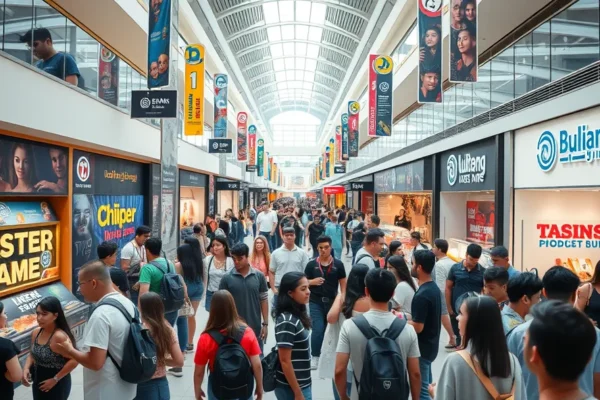
The Unexpected Comeback: How Malls Are Becoming Gen Z Hangouts
What is Retail? A New Look at Shopping Spaces
Retail refers to the sale of goods and services directly to consumers, rather than to businesses. Think about your favorite clothing store, the electronics shop, or the place where you buy your groceries – these are all examples of retail. For decades, shopping malls have been a cornerstone of retail, vast indoor spaces designed to house many different stores under one roof. They were once vibrant hubs for shopping and socializing, offering convenience and variety.
Understanding retail spaces and how they evolve is crucial because it impacts where and how we spend our money, which in turn affects local economies and job markets. Just as a town’s central market might shift from one location to another over centuries, the way we shop and the places we shop at can change significantly. This evolution in retail is a fundamental economic concept, reflecting shifts in consumer behavior and technological advancements.
How Malls Are Reinventing Themselves
The traditional image of a mall might be rows of department stores and smaller specialty shops. However, many shopping malls that survived the so-called “retail apocalypse” are now undergoing a dramatic transformation. Instead of relying heavily on anchor department stores, which have faced significant challenges, these malls are shifting their focus.
Imagine a mall that used to be filled with clothing stores and a large, old-fashioned department store. Now, picture that same mall where the department store space is gone. In its place, you might find a lively food hall with diverse culinary options, a state-of-the-art gym, an indoor entertainment center with arcades and mini-golf, and even apartment buildings integrated into the property. This diversification is key. By offering experiences and essential services beyond just traditional shopping, these malls are creating destinations that appeal to a new generation, particularly Gen Z.
One example is the transformation of the West Edmonton Mall in Canada, which has long been an entertainment-focused destination with an indoor amusement park and waterpark. While not exclusively a Gen Z hangout, it showcases the principle of adding entertainment and experiences to draw crowds. Closer to home, many older malls in the United States are now partnering with residential developers to include apartments. This “mixed-use” approach, where retail, residential, and entertainment spaces coexist, is a significant shift from the single-purpose malls of the past. The goal is to create a self-contained community hub rather than just a place to buy things.
Why This Mall Makeover Matters to You
This transformation has several implications for your personal finances and the broader economy. For individuals, especially those in urban planning and real estate, understanding these shifts can influence career choices and investment decisions. For consumers, particularly Gen Z and younger millennials, these revitalized malls offer more convenient and engaging places to live, work, and play. If you live in an area with a revitalized mall, it could mean more local entertainment options and potentially more affordable housing if residential components are successful.
Economically, the success of these mixed-use developments can boost local economies by creating jobs in construction, hospitality, fitness, and entertainment, alongside any remaining retail roles. It can also revitalize struggling commercial real estate markets. However, this shift also means a continued decline for traditional brick-and-mortar retail that fails to adapt, potentially leading to job losses in those sectors. It signals a broader economic trend where physical spaces are being re-evaluated to meet changing consumer needs and lifestyles.
The Evolution of Malls From Past to Present
The concept of the shopping mall really took off in the mid-20th century, with the first enclosed, climate-controlled mall opening in the United States in 1956. For decades, they were the epicenter of American consumer culture. However, the rise of e-commerce and changing consumer trends, often referred to as the “retail apocalypse,” led to a significant decline in mall traffic and store closures starting in the late 2000s and accelerating in the 2010s.
The COVID-19 pandemic further exacerbated these challenges, pushing more consumers online and impacting physical retail. In response, property owners began exploring new models. Data from the International Council of Shopping Centers (ICSC) has shown a decrease in enclosed malls in the US over the past decade, but also an increase in the development of “experiential” retail and mixed-use properties. This current interest in mall revitalization is a direct response to these pressures, attempting to salvage valuable real estate and create new forms of commercial and community spaces that resonate with younger generations, like Gen Z, who prioritize experiences and convenience.
Thinking About the Future of Retail and Your Finances
When you hear about malls transforming, it’s a good reminder to think about how your own spending habits and financial priorities align with these evolving consumer trends. For instance, if you find yourself spending more on experiences like dining out or going to the gym than on traditional clothing, this trend reflects your own consumer behavior.
A common misconception might be that malls are simply dying out. However, this new model shows that they are adapting. Instead of solely focusing on transactions, they are becoming multifaceted community centers. This means that when you see news about mall revitalization, consider it an indicator of broader shifts in how people interact with their physical environment and spend their disposable income. It’s about the changing definition of “going out” and how spaces are designed to cater to those new priorities.
Connecting Malls to Broader Economic Ideas
This transformation in malls is closely linked to several important financial and economic concepts. Understanding urban planning helps explain how these mixed-use developments are integrated into city landscapes. Real estate investment is at the heart of these transformations, as developers and property owners re-evaluate the value and potential of their assets. The concept of consumer trends is paramount, as the entire shift is driven by how people, particularly Gen Z, want to spend their time and money.
Furthermore, this discussion touches upon the future of retail, a dynamic field constantly being reshaped by technology and changing demographics. It also contrasts with millennial trends, which might have focused more on online shopping or different types of urban living. Seeing how these different generations approach consumption and leisure helps us understand the broader economic forces at play.
Frequently Asked Questions About the New Mall Landscape
How does the resurgence of malls as Gen Z hangouts impact the retail apocalypse?
The revitalization of malls by incorporating entertainment, food, and residential spaces helps to counter the negative effects of the retail apocalypse by creating new reasons for people to visit. It shows that physical retail can survive by evolving beyond just traditional shopping.
What are the consumer trends driving this mall transformation for Gen Z?
Gen Z often prioritizes experiences over possessions. They are drawn to places that offer diverse food options, social gathering spots, entertainment, and opportunities for fitness, all of which are features being integrated into these revitalized shopping malls.
Can individuals invest in this mall revitalization trend?
While direct investment in specific mall redevelopment projects might be complex, individuals can invest in real estate investment trusts (REITs) that own diversified portfolios of retail properties, some of which may be undergoing similar transformations. Understanding real estate and economic cycles is crucial for such investments.
What are the potential risks associated with these new mall models?
Risks include the possibility that these new strategies may not attract enough foot traffic, leading to financial losses for developers. There’s also the risk that economic downturns could impact consumer spending on entertainment and dining, which are now crucial to these malls’ success.
How does this affect the job market?
This shift can lead to a redistribution of jobs. While traditional retail sales jobs might decline, there is likely to be an increase in jobs related to food service, entertainment, property management, and residential services within these mixed-use developments.
What is the role of urban planning in mall revitalization?
Urban planning is critical in ensuring these revitalized malls are well-integrated into their communities, accessible via public transportation, and contribute positively to the surrounding urban fabric. Effective urban planning can help maximize the benefits of these mixed-use developments.
This article is for educational purposes only and does not constitute financial advice. Financial situations are unique, and it is recommended to consult with a qualified financial professional for personalized guidance. Investing involves risks, and outcomes can vary based on individual circumstances and market conditions.











