

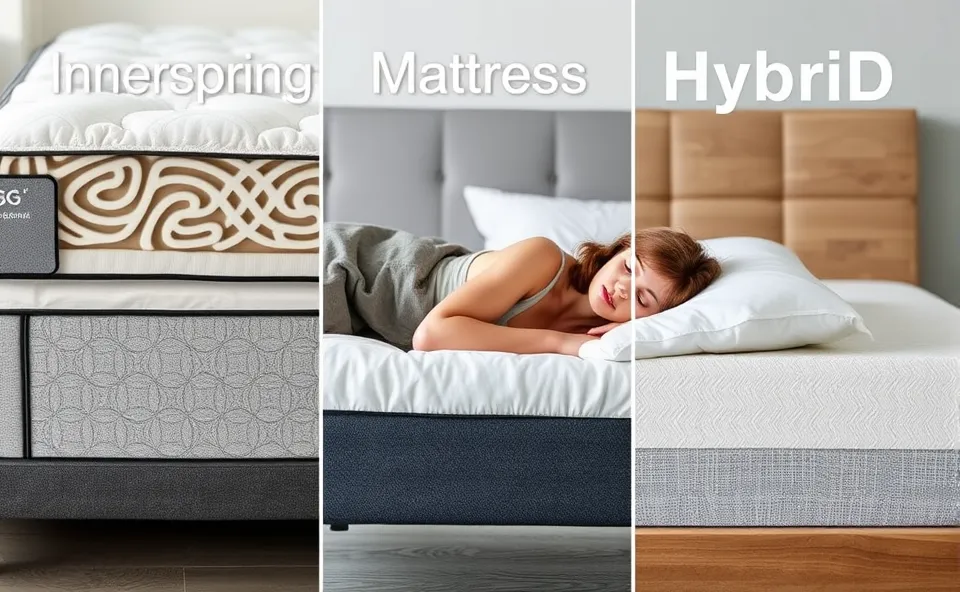
Finding Your Perfect Night of Sleep
Picking out a new bed used to be simple. You went to a store, sat on a few different blocks of foam and springs, and picked the one that felt okay. But today, the world of mattress types has exploded. We are no longer just choosing between hard and soft. Now, we have to navigate a sea of technical terms like pocketed coils, open cell foam, and cooling gels.
At its core, choosing the right mattress is about matching the materials of the bed to your specific sleep needs. Some people need a surface that hugs their curves to relieve pressure, while others need a firm base that keeps their spine aligned. This guide breaks down the most common options so you can stop guessing and start sleeping.
The most common choices usually fall into three big groups:
- Memory foam mattresses provide that famous sinking feeling. They contour to your body and are great for people who want to feel cradled.
- Innerspring mattresses are the classic choice. They use a system of coils to provide a bouncy feel and strong support.
- Hybrid mattresses try to offer the best of both worlds. They combine a coil base with thick layers of foam or latex on top.
Understanding these options is the first step in any mattress buying guide. Once you know what the materials do, you can figure out which one fits your body type and sleeping position.
Why We Are Suddenly Obsessed With Sleep Tech
You might wonder why there are suddenly so many articles and videos about how to choose mattress types. For a long time, a bed was just a piece of furniture. Now, it is seen as a piece of health technology. People have realized that sleep is not just downtime. It is the time when the brain cleans itself and the body repairs tissue.
The rise of the wellness movement has pushed sleep to the forefront. We track our steps and our calories, so it makes sense that we now track our REM cycles and deep sleep. When people see their sleep data is poor, they look at the biggest variable in the room: the bed.
Another reason for this trend is the change in how we live. With more people working from home, the bedroom has become a sanctuary. We are spending more time in our personal spaces, which makes the quality of those spaces more important. We are no longer okay with waking up with a sore lower back or feeling too hot in the middle of the night. This shift has turned a boring purchase into a high stakes decision about personal health.
From Old School Springs to Space Age Foam
To understand where we are, it helps to look at where we started. For decades, the innerspring mattress was the only real game in town. These beds used interconnected wires to create support. While they were durable, they had a few problems. They could be noisy, they often created a lot of motion transfer, and they tended to wear out in the middle, creating a dip.
Then came the revolution of memory foam. Originally developed by NASA to keep pilots safe during crashes, this material changed everything. It reacted to body heat and pressure, meaning it molded exactly to the shape of the person lying on it. For the first time, people with joint pain had a way to sleep without feeling every hard point of the mattress.
However, early foam beds had a downside. They trapped heat, leaving many sleepers feeling like they were sleeping inside an oven. This led to the birth of the hybrid mattress. Engineers realized that by putting springs at the bottom for airflow and support, and adding advanced foams on top for comfort, they could solve the heat and sinkage issues. This evolution shows a clear path toward personalization. We moved from one size fits all to a world where you can pick a bed based on your exact weight, temperature, and posture.
How the Right Bed Changes Your Daily Life
Choosing the right mattress does more than just make you feel cozy. It has a direct impact on how you function during your waking hours. When a bed doesn’t match your sleep needs, your body spends the night fighting to find a comfortable position. This leads to fragmented sleep, which ruins your focus, mood, and energy levels the next day.
For the consumer, the impact is felt in the shift toward the bed in a box model. Technology has allowed brands to compress giant mattresses into small boxes and ship them directly to your door. This has removed the pressure of the high pressure mattress showroom. Now, you can rely on a mattress tester or online reviews to make an informed choice from your own couch.
For the market, this has created a massive shift in business. Traditional furniture stores are losing ground to direct to consumer brands that focus on transparency and trial periods. Businesses are now competing not just on price, but on the science of sleep. They are adding layers of copper for cooling or graphite for durability. The mattress is no longer just a product. It is a service designed to optimize human performance.
What the Future of Sleep Looks Like
We are moving toward a time where your bed will be as smart as your phone. We are already seeing the beginning of adaptive sleep technology. Imagine a bed that senses when you are tossing and turning and automatically adjusts its firmness in real time to help you fall back asleep.
Sustainability will also play a huge role. Many traditional memory foam mattresses use chemicals that are not great for the planet. The next wave of mattress types will likely focus on organic latex, coconut coir, and recycled ocean plastics. We will see beds that are not only better for our backs but better for the earth.
We can also expect deeper integration with health tech. Your mattress may soon act as a non invasive health monitor, tracking your heart rate and breathing patterns and sending that data to your doctor. The bed will stop being a passive object and start being an active partner in your healthcare.
Common Questions About Choosing Your Bed
How do I know which of the mattress types is best for me?
The best choice depends on your sleeping position. Side sleepers usually prefer a memory foam mattress because it cushions the shoulders and hips. Back and stomach sleepers often do better with an innerspring mattress or a firm hybrid to keep their spine from sagging.
What makes a hybrid mattress different from memory foam?
A hybrid mattress uses a combination of materials. It typically has a base of coils for bounce and support, topped with layers of foam or latex for comfort. This usually makes them cooler and more supportive than a pure memory foam mattress.
Is it worth it to hire a mattress tester or read professional reviews?
Yes, because they test beds across different weights and positions. A mattress tester can tell you if a bed is actually breathable or if the edge support is weak, which are things you might not notice in a five minute store trial.
How can I use a mattress buying guide to save money?
Focus on the materials rather than the brand name. Look for the specific foam density or coil count. Many luxury beds use the same materials as mid range beds but charge more for the logo. A good guide helps you spot the value.
How often should I replace my bed to meet my sleep needs?
Most people should look for a new mattress every seven to ten years. If you wake up with more pain than you used to, or if you notice a visible dip in the center, it is time to explore new mattress types to support your body.











