

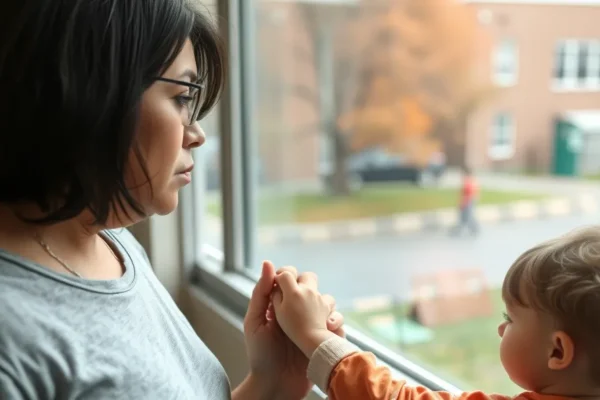
The Modern Challenge of Measles Outbreaks in Immunocompromised Kids
The start of the school year is typically marked by the excitement of new supplies and academic goals. However, for families with vulnerable children, this season increasingly brings a difficult calculation: how to balance the necessity of education with the physical risks posed by infectious disease. Recent data from the Centers for Disease Control and Prevention (CDC) shows a marked increase in measles cases across the United States. This resurgence has placed significant pressure on parents of immunocompromised kids—children whose immune systems are weakened by conditions like leukemia, transplant recovery, or primary immunodeficiency disorders.
The problem is driven by a complex intersection of waning herd immunity and rising vaccine hesitancy. Herd immunity occurs when a large enough percentage of a population is vaccinated, making it difficult for a disease to spread. When vaccination rates drop below specific thresholds, pathogens like measles, which are highly contagious, find easy paths to transmission. For the immunocompromised, who often cannot receive live vaccines or whose bodies do not mount a robust response even if vaccinated, the school environment becomes a high-stakes arena of risk management.
Understanding How Herd Immunity Works
To understand the risk, it helps to think of herd immunity as a protective buffer zone. Imagine a crowded room where everyone is wearing a high-quality raincoat. If someone walks through with a garden hose, the water hits the coats and stops. However, if enough people stop wearing their raincoats, the water reaches the few people in the center who are fragile and unable to protect themselves. In public health, vaccines act as those raincoats.
Measles is a virus that spreads through the air, surviving in spaces for up to two hours after an infected person has left. Because the virus is so efficient at traveling through ventilation systems and shared air, even brief exposure in a classroom or a cafeteria can be life-threatening for a child who lacks a functioning immune system. The core mechanism of the problem is the biological vulnerability of these children. While healthy children might recover from measles with standard care, a child with a compromised immune system faces a significantly higher risk of severe complications, such as pneumonia or encephalitis, which is inflammation of the brain.
Current State of School Safety and Public Health
Currently, the responsibility for managing these risks falls heavily on individual parents and local school districts. Schools employ various strategies, such as requesting proof of immunization and, in some districts, providing remote learning options for those who cannot safely attend in person. However, these solutions are inconsistent. In states with broad medical and religious exemptions for vaccines, the safety net is effectively punctured.
Real-world applications of public health safety involve contact tracing and rapid notification systems. If a case of measles is detected in a school, health departments work to notify families immediately. For immunocompromised students, this often triggers a protocol where the child must stay home for a defined period, or in extreme cases, receive preventive treatments like immunoglobulin therapy—a concentrated solution of antibodies—to boost their defenses. These measures are reactive rather than proactive, placing the burden of disruption on the families of the most vulnerable.
The Competitive Landscape of Protection
When discussing protection, we must distinguish between standard public health measures and emerging biotechnology. Traditional school safety relies on policy: mandates, exclusion of unvaccinated students, and screening. In contrast, researchers are working on more sophisticated medical interventions to support vulnerable populations.
While public health officials focus on policy, pharmaceutical companies are simultaneously developing new vaccine delivery platforms and prophylactic (preventative) antiviral therapies. The current advantage remains with traditional vaccines; they are the most effective and affordable tool for community protection. However, companies like Moderna and Pfizer are exploring mRNA-based approaches that could theoretically create faster-acting immunizations. These developments aim to fill gaps where traditional vaccines fail to trigger an adequate response in immunocompromised patients, but they are still in clinical trial stages and not yet available for general school use.
Social and Economic Implications
The rise of measles outbreaks in schools is fundamentally reshaping how families view the social contract of education. For parents of immunocompromised children, the decision to send their child to school has become a financial and logistical burden. It often requires one parent to reduce work hours to supervise home-schooling or shuttle children to and from appointments, creating economic instability.
Socially, we are seeing a divide in school communities. The tension between parental choice regarding vaccination and the collective right to a safe environment for all children has created significant friction at school board meetings. In the long term, if public health confidence continues to erode, we may see a migration of students toward private, highly regulated environments or, conversely, a massive increase in remote learning infrastructure that replaces traditional classroom interaction.
Limitations and Remaining Challenges
The primary bottleneck in managing measles outbreaks is the lack of universal compliance with public health recommendations. Technology and medical research cannot outpace a lack of social cohesion. Even if we had a “perfect” vaccine, it would be useless if large segments of the population choose not to utilize it due to misinformation or lack of trust in institutions.
Technical challenges also remain. Immunocompromised children often have “blunted” immune systems. This means that even when they receive a vaccine, their bodies may not produce enough antibodies to fight off the virus. Research is ongoing to create “adjuvants”—substances added to vaccines to make them more effective—but this technology is complex and varies greatly depending on the child’s specific underlying health condition.
Future Trajectory and Medical Advancements
The trajectory for pediatric health and disease management is moving toward personalized medicine. In the future, we may see doctors using genetic testing to identify which children are at highest risk of complications from infectious disease and tailoring vaccine schedules or prophylactic regimens specifically for them. This shift would move us away from a “one size fits all” policy toward a more granular, clinical approach to school safety.
Over the next five to ten years, expect an increase in the use of wearable diagnostic tools and environmental air-quality sensors in schools. These technologies could provide real-time data to administrators and parents about potential pathogen levels, allowing for more data-driven decision-making regarding school closures or enhanced ventilation protocols.
Frequently Asked Questions
Are measles outbreaks a serious threat to immunocompromised kids?
Yes, for children with weakened immune systems, measles can lead to severe, life-threatening complications such as pneumonia or brain inflammation. Because these children often cannot mount a strong response to vaccines, they rely entirely on the surrounding community to be vaccinated to avoid exposure.
How can parents ensure school safety during an outbreak?
Parents should stay in constant contact with the school nurse and local health department for real-time information. It is essential to understand the vaccination rates in their specific district and advocate for robust notification policies to ensure they are alerted to any potential exposures immediately.
Is vaccine hesitancy the main driver of these outbreaks?
Research published by the CDC confirms that a decrease in vaccination coverage is a primary driver of the resurgence of measles. When vaccine hesitancy leads to pockets of under-vaccinated populations, the virus finds it easier to spread, breaking the chain of herd immunity that protects vulnerable children.
What is the difference between herd immunity and individual immunity?
Individual immunity is the protection a person gets from their own vaccination or prior infection. Herd immunity is a community-level effect where a high percentage of vaccinated individuals acts as a barrier, preventing a virus from reaching those who cannot be vaccinated for medical reasons.
Are there medical treatments available for exposed immunocompromised children?
Yes, doctors can sometimes administer post-exposure prophylaxis, such as immunoglobulin therapy, which provides temporary, passive protection against the virus. These treatments must be administered within a very narrow window of time following a known exposure to be effective.
Disclaimer: This article is for informational purposes and does not constitute medical advice. Treatment plans for immunocompromised children should always be managed by a qualified pediatric immunologist or specialist.











