

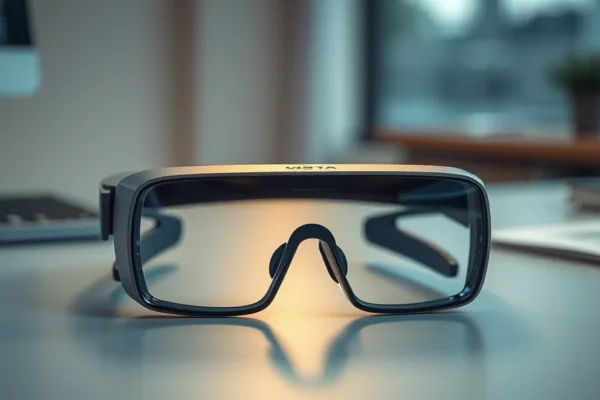
Meta Connect 2026 Unveils the Future of Wearable Tech and AI
Meta’s annual Connect conference in 2026 served as a significant crossroads, showcasing advancements that promise to redefine our interaction with digital information and the world around us. While virtual reality (VR) continues to mature, this year’s event heavily emphasized the evolution of wearable technology beyond immersive gaming, highlighting new Meta VR Glasses, discreet screen-free smart glasses, and substantial leaps in Meta AI features. These announcements collectively paint a picture of a future where digital experiences are more integrated, intuitive, and personal than ever before.
The Next Generation of Meta VR Glasses
The star of the show was undoubtedly the next iteration of Meta VR Glasses. Building upon the foundational work in consumer virtual reality, these new headsets aim to achieve a significant leap in both visual fidelity and user comfort. The goal is to move virtual reality beyond niche applications into a more mainstream entertainment and productivity tool.
This development is significant now because it represents Meta’s continued investment and commitment to the metaverse vision, addressing previous user feedback regarding weight, resolution, and field of view. The company believes that by refining the core VR experience, they can unlock broader adoption. Meta’s ongoing research and development in optics and display technology, as detailed in their recent technical blogs and investor presentations, are the driving force behind these advancements.
How the New Meta VR Glasses Enhance Immersion
At its core, the new Meta VR Glasses aim to create a more convincing sense of presence through higher-resolution displays and wider fields of view. Think of it like upgrading from a standard definition television to a 4K ultra-high definition screen, but with the added dimension of depth. The displays within the headset will offer significantly more pixels per eye, reducing the “screen door effect” – a visible grid pattern that can break immersion. Additionally, a wider field of view means users will see more of the virtual world, much like how peripheral vision enhances our perception in real life.
Meta is also focusing on advanced optics, potentially using pancake lenses, which are thinner and lighter than traditional fresnel lenses. This allows for a more compact and comfortable headset design. Furthermore, improved eye-tracking technology is expected to enable foveated rendering, a technique where the headset renders the part of the image you’re looking at in high detail and the periphery in lower detail. This is akin to how our own eyes work, focusing on what’s important to conserve processing power.
Screen-Free Smart Glasses for Everyday Use
Beyond the immersive world of VR, Meta also unveiled a new generation of screen-free smart glasses. Unlike previous attempts that often felt clunky or relied on intrusive displays, these new glasses are designed for a much more subtle integration into daily life. The focus here is on providing contextual information and AI assistance without requiring users to constantly look at a screen.
This innovation tackles the desire for always-on access to information and digital assistance in a less obtrusive manner. It aims to solve the problem of constantly pulling out a smartphone for quick tasks or information. Meta’s recent patent filings and statements regarding their wearable hardware division underscore a strategic pivot towards ambient computing, where technology recedes into the background.
The Discreet Power of Screen-Free Smart Glasses
These screen-free smart glasses operate by leveraging a combination of integrated sensors, microphones, and sophisticated AI processing. Think of them like a highly intelligent personal assistant that can hear your environment and respond to your voice commands discreetly. They don’t project images directly into your eyes; instead, they deliver audio feedback and subtle haptic cues.
For instance, while walking down the street, the glasses might offer subtle audio directions or identify a landmark via their camera and onboard AI, relaying the information through bone conduction audio, which transmits sound through the bones of the skull directly to the inner ear, leaving your ear canals open. This allows users to remain aware of their surroundings, a key difference from many existing wearable technology devices.
Advancements in Meta AI Features
Underpinning both the new Meta VR Glasses and the screen-free smart glasses are significant advancements in Meta AI features. This year’s conference showcased AI models that are more conversational, context-aware, and capable of performing complex tasks.
The push here is to make AI a seamless companion rather than a tool. Current AI assistants can be rigid and require specific commands. Meta’s latest AI aims to understand nuanced requests, learn user preferences over time, and proactively offer assistance. This is a critical step towards what many in the tech industry envision as a truly intelligent digital assistant integrated into our lives.
Putting Meta AI to Work
Meta’s AI advancements are about creating a more natural interaction. Instead of typing out a complex query, you might be able to explain your need in plain language, and the AI will interpret and act. For the new Meta VR Glasses, this means an AI that can help you navigate virtual environments, suggest activities, or even assist in collaborative virtual workspaces by summarizing discussions or translating in real-time. For the screen-free smart glasses, the AI acts as an always-on interpreter of your environment and your needs.
For example, if you’re looking at a historical building, the smart glasses’ AI could identify it and provide a brief audio summary without you needing to ask. Or, if you’re in a meeting, the AI could discreetly transcribe and summarize key action items. This is powered by large language models and computer vision advancements, trained on massive datasets to understand and generate human-like text and recognize objects and scenes in images and videos.
Current State and Real-World Applications
The new Meta VR Glasses, while not fully detailed regarding release dates, are positioned to enhance existing VR applications like social VR platforms (e.g., Horizon Worlds), immersive gaming, and professional training simulations. Early prototypes have been demonstrated to select developers and partners. The screen-free smart glasses are currently in advanced testing phases, with some consumer-ready models expected to enter limited release by late 2027. Meta has previously partnered with fashion brands for smart glasses, suggesting a similar go-to-market strategy.
Companies in sectors like manufacturing and healthcare are already exploring VR for training and remote assistance. The potential for the screen-free smart glasses lies in logistics, field service, and even personal productivity, offering hands-free information access. The maturity level for the VR headsets is moving towards broader consumer adoption, while the screen-free smart glasses are still in their early adoption phase, poised for growth.
The Competitive Landscape
Meta is operating in a dynamic and increasingly crowded market. In the VR headset space, competitors like Sony with its PlayStation VR, and Apple with its Vision Pro, are vying for market share. Apple’s approach, while more enterprise-focused initially, also emphasizes mixed reality capabilities. Meta’s key differentiator remains its focus on social VR and building an open metaverse ecosystem, alongside its aggressive pricing strategy for its Quest line, making VR more accessible than some premium alternatives.
For screen-free smart glasses, companies like Ray-Ban (owned by EssilorLuxottica, with whom Meta has partnered) and emerging startups are exploring similar audio-first or discreet information delivery concepts. Google’s past ventures into smart glasses highlight the technical and social challenges in this space. Meta’s advantage lies in its integrated AI capabilities and its existing user base across its social platforms, which can facilitate the adoption of new wearable technology.
Implications and Impact
The advancements presented at Meta Connect 2026 have profound implications. For industries, improved VR could revolutionize remote collaboration, employee training, and product design, leading to greater efficiency and reduced costs. The screen-free smart glasses could redefine personal assistance, making digital information a constant, subtle companion that enhances productivity without demanding constant attention.
Economically, this could spur significant growth in the hardware, software, and content creation sectors for immersive and augmented experiences. Socially, there’s the potential for enhanced connectivity and new forms of entertainment. However, concerns around data privacy, digital addiction, and the potential for increased social isolation through digital immersion will need to be carefully addressed. In the short term, expect to see these technologies integrated into more specialized professional use cases. Long-term, we could see a significant shift in how we work, socialize, and consume information, moving towards more ambient and integrated digital experiences.
Limitations and Challenges
Despite the excitement, significant challenges remain. The new Meta VR Glasses, while improved, will likely still face hurdles related to cost, battery life, and the need for dedicated physical space for some VR experiences. The development of compelling content that fully utilizes the advanced capabilities of these headsets is also crucial for widespread adoption. For the screen-free smart glasses, adoption hinges on user comfort with always-on listening devices, the accuracy and utility of AI responses in diverse real-world scenarios, and addressing public perception of privacy concerns related to data collection by these wearables.
The social acceptance of wearing technology that can see and hear is a major adoption barrier. Furthermore, the computational power required for advanced AI and realistic VR graphics, while improving, still demands significant energy and processing, impacting device size, heat, and battery longevity. Ethical considerations surrounding AI bias and data security are paramount and require ongoing attention and robust solutions.
Future Trajectory and Next Steps
The trajectory for Meta’s innovations points towards increasingly seamless integration between virtual and augmented realities, with AI acting as the intelligent bridge. We can anticipate future iterations of the Meta VR Glasses becoming lighter, more powerful, and potentially capable of projecting realistic augmented reality overlays. The screen-free smart glasses will likely evolve to offer more sophisticated sensory input and output, blurring the lines between digital and physical interactions even further.
Meta’s commitment to open standards and developer ecosystems will be key to fostering the content and applications that will drive these technologies forward. Expect to see continued advancements in AI models that can understand and interact with the real world more intelligently. The timeline for widespread mainstream adoption of these more advanced forms of wearable technology and immersive computing will likely unfold over the next 5-10 years, with specialized applications emerging much sooner.
Key Questions and Answers
What are the biggest takeaways from Meta Connect 2026 regarding VR and smart glasses?
The biggest takeaways are the significant improvements in the new Meta VR Glasses for enhanced immersion and the introduction of more discreet, screen-free smart glasses designed for everyday use, both powered by advanced Meta AI features. This signals a broadening of Meta’s wearable technology strategy beyond pure VR.
How will the new Meta VR Glasses differ from current models?
The new Meta VR Glasses promise higher resolution displays for sharper visuals, wider fields of view for greater immersion, and improved comfort through lighter designs, aiming to address key user feedback and push the boundaries of virtual reality.
Are the screen-free smart glasses truly “invisible” in their function?
While not literally invisible, the screen-free smart glasses are designed to be highly discreet, delivering information via audio cues or subtle haptics rather than visible displays, allowing users to stay present in their physical environment. This makes them a more subtle form of smart glasses than some predecessors.
What are the main applications for Meta’s latest AI features?
The latest Meta AI features are focused on conversational understanding, context awareness, and proactive assistance, enabling more natural interactions within both VR and with the screen-free smart glasses for tasks like information retrieval, navigation, and summarizing content.
When will these new Meta products be available?
While specific release dates were not fully disclosed, Meta indicated that further iterations of the Meta VR Glasses will be coming, and consumer-ready screen-free smart glasses are anticipated in limited release by late 2027, suggesting a phased rollout for these new pieces of wearable technology.
What are the biggest challenges Meta faces with these new technologies?
Key challenges include achieving widespread social acceptance of wearable AI devices, addressing data privacy concerns, ensuring sufficient battery life and processing power for advanced features, and developing compelling content to drive adoption of the new VR headset and smart glasses.
This article is based on information presented at Meta Connect 2026 and publicly available technical documentation. Specific product features, timelines, and capabilities are subject to change and ongoing research and development.











