

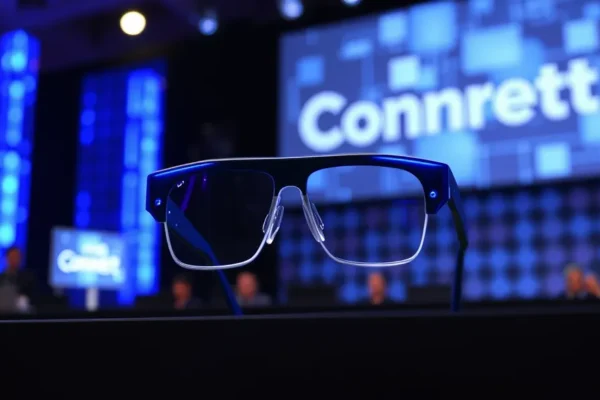
The Evolution of Wearable Tech at Meta Connect
At the recent Meta Connect event, the tech industry witnessed a significant pivot in how we conceptualize the intersection of our physical and digital lives. While much of the previous focus in the industry has centered on virtual reality (VR) headsets that completely isolate the user from their surroundings, Meta is now doubling down on a different vision. Through the showcase of its latest Meta smart glasses, the company is signaling an ambition to move technology away from our pockets and onto our faces, aiming to keep us seamlessly immersed in the digital world without disconnecting from reality.
This shift is significant because it addresses a fundamental problem in consumer technology: the “head down” problem. Currently, interacting with digital content—whether checking Instagram or responding to a message on Facebook—requires us to look down at a smartphone, effectively severing our connection to the physical environment. The innovations presented at Meta Connect suggest a future where information is layered over our vision or delivered through audio, allowing us to stay present in the moment while remaining digitally tethered.
According to official product announcements from Meta during the event, the company is moving toward a hybrid model. This involves combining the immersive power of the metaverse with the practical, everyday utility of lightweight, fashionable eyewear. This is not just a small hardware update; it is a fundamental reimagining of the future of connectivity.
Understanding the Intelligence Behind the Lenses
To understand how these devices function, it is helpful to distinguish between two different types of technology: augmented reality (AR) and smart glasses. Augmented reality refers to technology that overlays digital images, such as a 3D character or a navigation arrow, onto the real world. The smart glasses currently being showcased are a precursor to full AR. They do not yet feature high-tech displays that project visuals onto the lenses; instead, they act as a sophisticated, hands-free interface for AI and audio.
Think of these glasses like a digital sidekick that lives in your peripheral vision. Rather than looking at a screen to ask a question, you simply speak to the glasses. The device uses built-in microphones to capture your voice and cameras to see what you see. It then processes this information using artificial intelligence (AI) to provide real-time assistance.
The core mechanism relies on three main pillars: sensors, connectivity, and AI processing. The sensors (the cameras and microphones) act as the eyes and ears of the device. The connectivity allows the glasses to communicate with your smartphone, where the heavy computational lifting occurs. Finally, the AI acts as the brain, interpreting your surroundings. For example, if you look at a landmark and ask, “What is this building?”, the glasses use the camera feed to identify the structure and provide an audio response through the integrated speakers.
Real World Uses for Smart Glasses Today
While the dream of full digital overlays is still on the horizon, the current iteration of Meta smart glasses is already finding practical applications in the real world. We are currently in the early adoption phase, moving away from niche enthusiast gadgets toward mainstream consumer products.
One of the most prominent use cases is content creation. Through the partnership with Ray-Ban, Meta has integrated high-quality cameras into stylish frames. This allows users to capture photos and videos from a first-person perspective, making it much easier to share life experiences directly to Instagram or Facebook without ever reaching for a phone. This “point-of-view” storytelling is a major shift for social media creators.
Beyond social media, there are functional applications for daily life. Users are utilizing the glasses for:
- Hands-free navigation: Receiving turn-by-turn directions via audio while walking or cycling.
- Real-time translation: Using AI to listen to a foreign language and providing an immediate audio translation.
- Personal assistance: Asking for recipe suggestions while cooking or requesting information about a product while shopping.
These features move the device from a novelty into a tool that provides tangible utility in everyday routines.
A Competitive Race for the Digital World
Meta is not alone in its pursuit of the next major computing platform. The landscape of wearable tech is becoming increasingly crowded, with different companies taking vastly different approaches to the same problem.
The primary rival in the high-end space is Apple. With the release of the Vision Pro, Apple has focused on “spatial computing,” a high-fidelity version of mixed reality that uses incredibly powerful hardware to blend digital objects with the real world. However, Apple’s approach is currently heavy, expensive, and designed for stationary or controlled environments. Meta’s advantage lies in its focus on lightness and social integration. Meta is betting that people will wear glasses that look like normal eyewear more often than they will wear high-tech headsets.
Other players, such as Xreal and various startups, are focusing on lightweight AR glasses that prioritize visual displays. While these companies lead in visual technology, they often lack the deep social ecosystem that Meta possesses. Because Meta owns Facebook and Instagram, they have a massive advantage in terms of how users interact with their data and share their experiences. The winner of this race will likely be the company that best balances three difficult factors: battery life, visual capability, and social acceptability.
How Connectivity Will Change Our Social Fabric
The long-term implications of successful smart glasses extend far beyond simple convenience. This technology has the potential to reshape how we interact with our environments and each other, creating a new layer of the digital world that sits atop our physical reality.
From an economic perspective, we may see a shift in the creator economy. If everyone is wearing a camera, the way we consume and produce media will change. Brands may move away from traditional advertising toward “contextual experiences,” where digital information is served to you based on where you are physically standing. This could create entirely new business models centered around location-based digital services.
Socially, the impact is more complex. On one hand, these devices could enhance human connection by allowing us to stay informed and connected without the antisocial habit of staring at a glowing rectangle in our hands. On the other hand, there are significant concerns regarding social etiquette and the “always-on” nature of the technology. The ability to record or listen to the world around us at any moment could change the fundamental nature of privacy in public spaces.
Technical and Social Barriers to Adoption
Despite the excitement at Meta Connect, several significant bottlenecks remain. We must distinguish between the polished demonstrations seen on stage and the current technical reality.
The first major hurdle is physics, specifically battery life and heat management. High-performance AI and constant camera usage require significant power. Currently, most smart glasses can only function for a few hours of continuous use before needing a charge. Additionally, as processors get more powerful, they generate more heat, which is a difficult problem to solve when the device is resting directly against a user’s temple.
The second hurdle is the “privacy paradox.” For smart glasses to be truly useful, they need to be “seeing” and “hearing” the world. This creates immense tension with privacy regulations and social norms. The fear of being recorded without consent is a major barrier to mainstream adoption. Until there are standardized, foolproof ways to signal to others that a device is active, widespread use may be met with social resistance.
Finally, there is the issue of visual technology. Until we can shrink powerful AR displays into a frame that looks like standard eyewear, these devices will remain limited to audio and camera-based interactions. The jump from “smart glasses” to “true augmented reality” is a massive technical leap that has not yet been fully realized in a consumer-ready product.
The Long Term Road to Augmented Reality
The trajectory for Meta and its competitors is clear: the goal is to move from the smartphone to the eyes. Based on current industry trends and Meta’s own development roadmap, we can expect a staged rollout of technology over the next decade.
In the short term (1–3 years), we will likely see more refined versions of the current smart glasses, with improved AI capabilities, better battery life, and more seamless integration with existing social platforms. These will be primarily audio-and-camera-driven devices used for social interaction and lightweight assistance.
In the medium to long term (5–10 years), the industry is working toward “true AR.” This involves the development of waveguides—specialized optical elements that allow digital images to be projected onto clear glass. When this milestone is reached, we will see a world where digital windows, navigation paths, and interactive workspaces are layered directly onto our field of vision. The transition will be gradual, moving from bulky prototypes to everyday fashion as the underlying micro-LED and battery technologies mature.
Frequently Asked Questions
Are Meta smart glasses part of the metaverse?
Yes, Meta views smart glasses as a key hardware gateway to the metaverse. While current models focus on social interaction and AI, the long-term goal is to provide a way to interact with digital spaces and avatars through augmented reality.
How do Meta smart glasses compare to virtual reality headsets?
Virtual reality (VR) headsets like the Quest are designed to replace your reality with a fully digital environment, often used for gaming or training. In contrast, Meta smart glasses are designed to augment your existing reality, allowing you to stay present in the physical world.
What are the main privacy risks of this wearable tech?
The primary concern involves the use of built-in cameras and microphones, which can lead to recording people without their knowledge. As consumer technology becomes more integrated into our clothing, new regulations and social norms will be required to protect privacy.
Is this technology mature enough for everyday use?
The technology is currently in the early adoption stage. While the current Meta smart glasses are functional and stylish, they still face limitations in battery life and lack the advanced visual displays found in future augmented reality concepts.
Who benefits most from this new connectivity?
Initially, content creators and tech enthusiasts will benefit most from hands-free recording and AI assistance. Eventually, as the technology matures, the broader public will benefit from more seamless, “heads-up” digital integration in daily life.
Note: The capabilities described in this article are based on current product announcements and industry research. The timeline for full augmented reality integration remains subject to significant technical breakthroughs in optics and battery science.











