

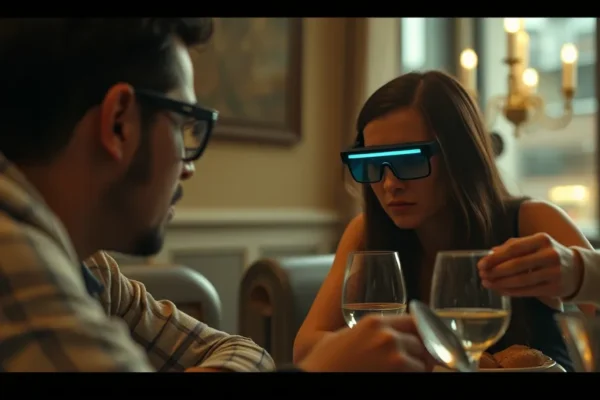
The Evolution of Connection: Meta Smart Glasses on Dates
Meta’s foray into wearable technology with its smart glasses presents a fascinating, albeit complex, new frontier for social interactions, particularly in the intimate setting of a date. These devices, which integrate cameras, microphones, and displays into eyewear, promise to augment reality and streamline our digital lives. However, when considering their use in dating, they introduce significant questions around privacy concerns, the potential for a “creepy” factor, and the evolving etiquette of our increasingly connected world.
What Are Meta Smart Glasses?
Meta smart glasses, developed by Meta Platforms (formerly Facebook), are essentially everyday eyeglasses embedded with technology. They are designed to offer hands-free access to digital information and functionalities. This includes taking photos and videos, making calls, listening to music, and even displaying augmented reality overlays without the need to pull out a smartphone. The primary problem they aim to solve is the friction of constantly switching between the physical and digital worlds, enabling a more seamless integration of technology into our lives. This is significant now as Meta, along with other tech giants, are heavily investing in the “metaverse” concept, with smart glasses being a key potential interface for this future. Meta announced its latest generation of Ray-Ban Stories smart glasses in September 2021, a collaboration with EssilorLuxottica.
How Do They Work?
At their core, Meta smart glasses function by capturing the wearer’s field of view and audio input. Integrated cameras can take photos or record short videos with a simple tap or voice command. Small speakers built into the arms of the glasses deliver audio directly to the wearer’s ears, while microphones capture sound. Some models also feature a small, built-in display that can project information discreetly into the wearer’s peripheral vision. Think of it like having a tiny, personal assistant built into your eyewear, able to record your experiences or provide you with information on demand. For example, a quick voice command like “Take a photo” or “Answer call” allows for immediate action without physically interacting with a separate device.
Current State and Real-World Applications
Currently, Meta’s smart glasses, primarily the Ray-Ban Stories line, are available to consumers in select regions, including the United States, Canada, and parts of Europe. Their initial applications have focused on convenience and capturing spontaneous moments. Users can record their adventures, share photos and videos directly to social media platforms, and listen to music or podcasts while keeping their hands free. While not yet mainstream, they represent an early adoption phase for this type of technology. Beyond personal use, there’s potential for future integration in fields like augmented reality training or hands-free assistance for certain professions, though these applications are still largely in development.
The Competitive Landscape
Meta isn’t alone in this burgeoning market. Google has a long history with smart glasses, notably through its Google Glass project, which saw early enterprise adoption before a more public, but ultimately scaled-back, consumer release. More recently, companies like Snap Inc. with its Spectacles have also been exploring camera-equipped eyewear, focusing on augmented reality filters and creative content capture. Apple is also widely rumored to be developing its own advanced augmented reality or mixed reality headsets and potentially smart glasses in the future, which could significantly shift the competitive dynamics. Meta’s advantage lies in its deep integration with its existing social media ecosystem and its substantial investment in metaverse technologies, potentially offering a more connected and immersive experience than standalone devices.
Implications and Impact: Dating Etiquette in the Age of Smart Glasses
The introduction of Meta smart glasses into dating scenarios raises profound social implications. On one hand, they could offer a way to discreetly capture memories of special moments or provide subtle navigational assistance. However, the ability to covertly record conversations and interactions introduces significant privacy concerns. This is where the “creepy” factor comes into play. Imagine being on a date and suspecting your companion is recording you without your explicit consent. This erodes trust and can create an uncomfortable power imbalance, turning a potentially intimate experience into one of surveillance. The evolving dating etiquette must grapple with digital consent, clearly defining when and how recording is acceptable. This technology challenges our understanding of social boundaries, blurring the lines between personal space and public documentation.
Limitations and Challenges: More Than Just a Camera
Despite their advanced features, Meta smart glasses face several limitations. The current models, while capable of capturing photos and videos, are not yet at the level of high-end smartphone cameras. Battery life remains a concern for extended use, and the processing power for complex augmented reality overlays is still developing. Furthermore, the social acceptance of wearing such devices, especially on dates, is a significant adoption barrier. The perception of surveillance technology can overshadow any perceived benefits, leading to user hesitation. Regulatory challenges surrounding data privacy and the potential misuse of recording capabilities also present hurdles that Meta and other companies must navigate.
Future Trajectory: Beyond the First Generation
The future trajectory for Meta smart glasses, and wearable display technology in general, points towards more sophisticated augmented reality experiences and deeper integration into our daily lives. As processing power increases and battery technology improves, we can expect more seamless overlay of digital information onto our physical surroundings. Future iterations might offer real-time translation, advanced biometric monitoring, or even emotional detection, further blurring the lines between human and digital interaction. Meta’s continued investment in its Horizon Worlds platform suggests a vision where these glasses are a primary gateway to a persistent, interconnected metaverse. Key developments to watch will include advancements in micro-display technology and the development of intuitive user interfaces that don’t require constant manual input.
Key Questions and Answers About Meta Smart Glasses and Dating
What are Meta smart glasses and how do they relate to dating?
Meta smart glasses are wearable eyewear with integrated cameras and audio capabilities. In dating, they introduce new possibilities for capturing moments but also raise significant privacy concerns and potential for a “creepy” factor.
Is it okay to wear Meta smart glasses on a date?
This is a complex question of dating etiquette. While not inherently forbidden, wearing them without discussion can be perceived as intrusive and a violation of social boundaries, potentially leading to discomfort for your date due to the surveillance tech aspect.
What are the privacy concerns with Meta smart glasses on dates?
The primary concern is covert recording. The ability to take photos or videos without explicit consent can make a date feel like an interrogation or surveillance operation, undermining trust.
How does the “creepy” factor of smart glasses affect dating etiquette?
The “creepy” factor stems from the potential for unexpected recording. It challenges modern dating red flags, as the act of recording can feel invasive, unlike traditional dating norms. Clear communication and digital consent are crucial to mitigate this.
Are there alternatives to Meta smart glasses for capturing date memories?
Yes, traditional smartphones and discrete cameras are widely accepted methods for capturing memories. The difference lies in the potential for unobtrusive, continuous recording offered by smart glasses, which can be perceived as a significant shift.
How long until Meta smart glasses are commonly accepted on dates?
Widespread acceptance on dates is likely a long way off. It will require significant evolution in user behavior, clearer ethical guidelines, and perhaps future generations of the technology that are less intrusive and more transparent in their functionality, addressing privacy concerns.
This article discusses emerging technology and its potential societal impacts. Capabilities and availability may change as research and development progress. Users should always be mindful of local laws and ethical considerations when using any form of recording technology.











