

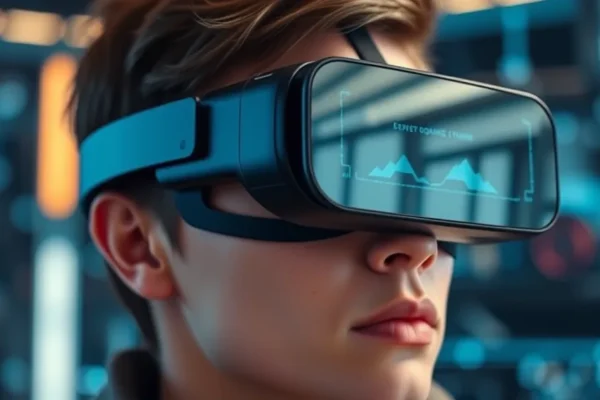
A Glimpse into Meta’s Next VR Frontier
Meta, the company formerly known as Facebook, has been a significant player in the virtual reality (VR) space for years. Their recent announcements regarding their next generation of VR glasses signal a leap forward in the quest for more natural and immersive digital experiences. These new Meta VR devices aim to push the boundaries of what we expect from virtual reality, moving beyond traditional bulky headsets to something more akin to everyday eyewear.
The core problem Meta is trying to solve is the inherent clunkiness and often isolating nature of current VR headsets. While incredibly powerful, many VR headsets can feel heavy, restrictive, and visually demanding, limiting their widespread adoption for everyday use. Meta’s vision for these new VR glasses is to create a wearable tech device that seamlessly blends the digital and physical worlds, enabling richer interactions and experiences without demanding a complete departure from reality.
This development is significant now due to the accelerating pace of innovation in mixed reality technology. With rivals like Apple entering the fray with devices like the Apple Vision Pro, Meta is keen to showcase its ongoing commitment and advancements. The company recently offered a closer look at its research and development in this area, highlighting prototypes that demonstrate a potential future for compact, powerful VR glasses.
The Engineering Behind the Immersion
At the heart of these new Meta VR devices is a reimagining of the VR form factor. Instead of the large, goggles-like design of many current VR headsets, Meta is exploring much sleeker, more glasses-like profiles. This is achieved through a combination of advanced optics and miniaturized internal components.
One key innovation is the use of “pancake lenses.” Think of them like a stack of very thin, specialized lenses that can fold light multiple times within a compact space. This allows the device to achieve a wide field of view and high resolution without the bulky depth typically required by older lens technologies. It’s akin to having a powerful projector crammed into a tiny space, redirecting images to your eyes with incredible efficiency.
Furthermore, Meta is developing new display technologies that offer higher pixel density and brightness. These displays are crucial for creating believable augmented reality overlays and vivid virtual environments. The goal is to make the virtual elements appear as solid and real as objects in the physical world, reducing the ‘screen door effect’ – where you can see the gaps between pixels – that has plagued earlier VR displays.
Under the hood, these devices are powered by increasingly efficient and powerful processors, sometimes referred to as a “computing puck” or a separate processing unit that can be worn discreetly. This allows the glasses themselves to remain lightweight and less power-hungry. This architecture is similar to how some high-end VR systems connect to external PCs, but miniaturized for a standalone wearable.
Bringing Virtual Worlds to Your Eyes Today and Tomorrow
While fully realized, everyday VR glasses are still largely in the research and development phase, Meta has been steadily integrating advanced features into its current offerings, like the Meta Quest 3. These include improved passthrough capabilities, which allow users to see their real-world surroundings through the headset’s cameras, blending augmented reality with virtual experiences.
Early prototypes and demonstrations by Meta showcase potential applications ranging from enhanced productivity tools – imagine virtual monitors floating in your office – to more natural social interactions in virtual spaces. For instance, future Meta VR glasses could enable more expressive avatars that accurately mirror your facial movements, making virtual meetings feel more like in-person conversations.
The company has stated that these advanced prototypes are part of their ongoing research into the future of spatial computing. While not yet available for general consumers, these developments inform the direction of their product roadmap. Users can experience increasingly sophisticated mixed reality features today with existing Meta Quest devices, with many of these advancements expected to trickle down into more consumer-friendly wearable tech in the coming years.
Navigating the Competitive Mixed Reality Arena
The landscape for virtual reality and augmented reality is highly competitive. Meta isn’t alone in its pursuit of advanced spatial computing. Apple’s recent entry with the Apple Vision Pro has significantly raised the stakes, showcasing a high-end device focused on blending digital content with the real world through a premium interface.
Compared to traditional VR headsets, Meta’s new VR glasses, in their idealized form, aim for a much less obtrusive and more versatile experience. While the Apple Vision Pro is also pushing towards a sleeker design than many previous VR headsets, it still represents a significant investment and a dedicated device for immersive computing. Meta’s long-term vision appears to be leaning towards devices that are more subtly integrated into daily life, potentially resembling normal eyeglasses.
Meta’s advantage lies in its established ecosystem and its previous experience with consumer VR through the Meta Quest line. They have a large user base and a wealth of data on how people interact with virtual and augmented reality. This allows them to iterate and refine their technology based on real-world usage. However, competitors are also rapidly innovating, making it a dynamic race to define the future of this technology.
Reshaping Our Digital and Physical Lives
The widespread adoption of advanced Meta VR glasses could fundamentally alter how we work, play, and connect. In the workplace, they could revolutionize remote collaboration, training simulations, and design processes. Imagine architects walking through full-scale virtual models of buildings on-site, or surgeons practicing complex procedures in a risk-free digital environment.
Economically, this shift could create new markets for hardware, software, and content. It also has the potential to reshape existing industries, from entertainment and gaming to education and retail. For consumers, it could mean more engaging ways to consume media, socialize with friends and family across distances, and interact with digital information in a more intuitive, three-dimensional way. The concept of a personal computing device could evolve from a flat screen to an immersive spatial interface.
Socially, the implications are vast. Enhanced virtual presence could combat feelings of isolation for remote workers or those geographically separated from loved ones. However, it also raises questions about digital well-being, the blurring lines between reality and virtuality, and the potential for increased digital divides if access is not equitable. In the short term, expect to see more advanced features integrated into current devices. The long-term impact hinges on the successful development and adoption of truly seamless wearable tech that offers compelling value.
The Hurdles on the Path to Sleek VR
Despite the exciting progress, significant challenges remain before we see Meta VR glasses that truly rival everyday spectacles. One major bottleneck is miniaturization without sacrificing performance. Packing powerful processors, high-resolution displays, and advanced sensors into a lightweight frame requires breakthroughs in battery technology, heat dissipation, and component efficiency.
Cost is another substantial barrier. Current high-end mixed reality devices, like the Apple Vision Pro, come with premium price tags, putting them out of reach for many consumers. For Meta’s vision of accessible VR glasses to materialize, manufacturing costs need to come down significantly. This is a common challenge for any nascent technology moving from prototypes to mass production.
Furthermore, user comfort and battery life are critical. Wearing a device for extended periods requires it to be lightweight, well-balanced, and not prone to overheating. Current battery technology often limits the operational time of powerful, compact electronics, necessitating frequent recharges or the use of external battery packs, which detracts from the seamless experience.
The Horizon of Immersive Eyewear
Meta’s trajectory suggests a continued focus on refining the form factor and enhancing the capabilities of their Meta VR device research. We can anticipate further advancements in display resolution, field of view, and the naturalness of augmented reality overlays. The company is investing heavily in AI to improve object recognition, environmental understanding, and user interaction within spatial computing environments.
Key developments to watch include the integration of eye-tracking technology for more intuitive control and foveated rendering (rendering only what the user is directly looking at in high detail, saving processing power). We may also see the evolution of haptic feedback integrated into eyewear, allowing for a more tactile sense of the virtual world.
While Meta has not provided specific release dates for future generations of VR glasses in the form factor discussed, their consistent investment and public demonstrations indicate that this is a long-term strategic priority. Expert consensus suggests that truly mainstream, glasses-like VR devices are still several years away, likely progressing through intermediate stages of more advanced mixed-reality headsets before reaching that ultimate goal.
Frequently Asked Questions About Meta’s VR Glasses
What are Meta’s new VR glasses aiming to achieve?
Meta’s new VR glasses are designed to be more compact and sleeker than traditional VR headsets, aiming to seamlessly blend virtual and augmented reality experiences into a more natural, wearable form factor. This moves beyond the bulky design of many current VR headsets.
How do these Meta VR devices differ from existing Meta Quest devices?
While current Meta Quest devices offer impressive VR and AR capabilities, the new VR glasses represent a significant step towards a much more minimalist, glasses-like design, potentially integrating technology into a form factor closer to everyday eyewear, moving towards advanced wearable tech.
When will these advanced Meta VR glasses be available to consumers?
Meta has not announced specific release dates for these highly advanced, glasses-like VR devices. They are currently in advanced research and development phases, with many of the underlying technologies expected to be incorporated into future Meta Quest products incrementally before a fully realized glasses form factor becomes available.
What are the main technical innovations enabling this new VR glasses design?
Key innovations include the use of advanced optics like pancake lenses to reduce bulk, higher-resolution and brighter displays to enhance visual immersion, and more efficient processing units, sometimes described as a computing puck, to manage power and performance in a smaller package.
How do Meta’s efforts compare to competitors like Apple Vision Pro?
Meta is pursuing a vision that emphasizes a more discreet and potentially more accessible form factor over time, while Apple’s Apple Vision Pro is positioned as a high-end spatial computing device. Both companies are pushing the boundaries of immersive displays and augmented reality, but their immediate product strategies may differ.
What are the biggest challenges facing the development of these Meta VR devices?
Significant challenges include miniaturizing powerful technology without compromising performance, reducing manufacturing costs to make them affordable, and ensuring user comfort and adequate battery life for extended use, all while addressing the complexities of advanced augmented reality integration.
This article discusses ongoing research and development. Specific product features, availability, and timelines are subject to change based on technological advancements and market conditions.











