

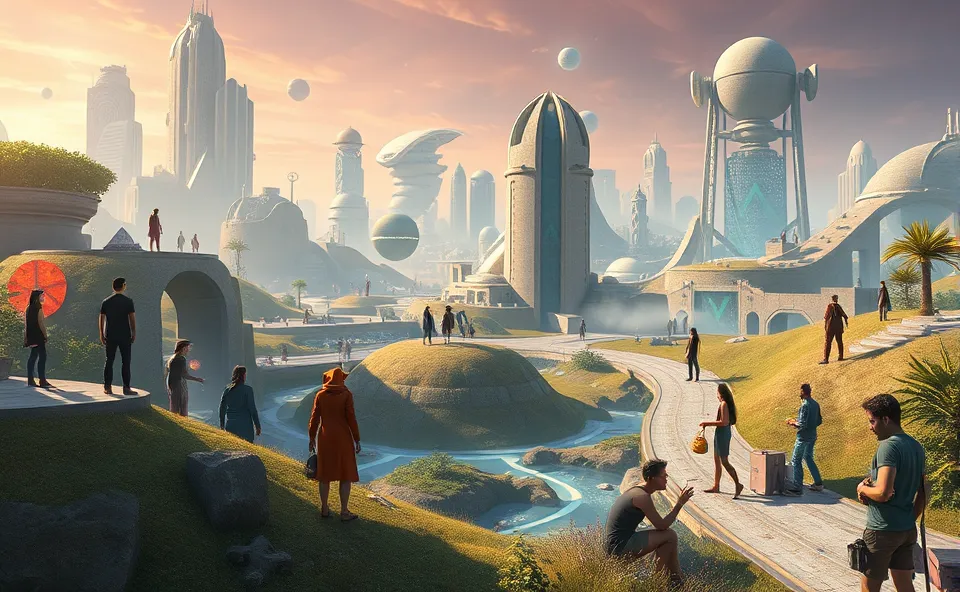
So, What Exactly Is This Metaverse Thing?
Imagine stepping into a digital world where you can do pretty much anything. That’s the core idea behind the metaverse. It’s not just one website or game, but a whole interconnected network of virtual spaces. Think of it like the internet, but instead of browsing pages on a screen, you’re actually inside it, interacting with people and digital objects as if you were really there. You can meet up with friends from across the globe, attend virtual concerts, build your own digital spaces, and even buy and sell digital items. It’s about creating immersive experiences that blur the lines between our physical and digital lives.
Why Is Everyone Talking About the Metaverse Right Now?
The metaverse has been buzzing for a while, but the recent surge in interest comes from a few key things. First, technology is finally catching up to the vision. Virtual reality headsets are getting better, more affordable, and more accessible. Augmented reality, which overlays digital information onto our real world, is also becoming more common through our phones and smart glasses. Businesses are also jumping in, seeing the metaverse as the next frontier for commerce, entertainment, and social interaction. Plus, with the rise of Web3 and decentralization concepts, people are exploring new ways to own and control their digital identities and assets within these digital worlds. It feels like we’re on the cusp of something big, and everyone wants to understand what it means for them.
A Little History Lesson: Where Did the Metaverse Come From?
The concept of the metaverse isn’t entirely new. Science fiction writers have dreamed up similar ideas for decades, with Neal Stephenson’s 1992 novel Snow Crash often cited as a major inspiration. Early online multiplayer games like Ultima Online and EverQuest in the late 90s also gave us glimpses of persistent digital worlds where players could interact and build communities. Then came platforms like Second Life in the early 2000s, which allowed users to create avatars, build virtual homes, and engage in a virtual economy. However, these early iterations were limited by technology and internet speeds. The recent renewed focus is thanks to significant advancements in computing power, graphics, and networking, making truly expansive and interactive virtual reality and augmented reality experiences much more feasible.
What Does This All Mean for You and Me?
The metaverse has the potential to reshape how we work, play, and connect. For individuals, it opens up exciting new avenues for entertainment and socializing. Imagine attending a virtual class with a professor from another continent, or experiencing a live concert from the front row, all from your living room. It could also create new economic opportunities, allowing people to earn a living by creating digital assets, providing services within virtual worlds, or even developing these digital worlds themselves. For businesses, the metaverse represents a new marketplace. Companies can create virtual storefronts, host product launches, and engage with customers in entirely new ways. Think about trying on clothes virtually before buying them online, or collaborating with colleagues in a virtual office space. It also pushes the boundaries of technology, driving innovation in areas like artificial intelligence, 3D graphics, and decentralized systems. The rise of blockchain and NFTs plays a big role here, offering ways to prove ownership of digital goods and establish a more decentralized economy within these digital worlds.
The Road Ahead: What’s Next for the Metaverse?
The metaverse is still very much in its early stages, and its future is about evolution, not a sudden arrival. We’ll likely see a gradual merging of our physical and digital lives, rather than a complete separation. Expect to see more sophisticated virtual reality and augmented reality hardware that becomes less bulky and more intuitive. Interoperability will be a big theme; the goal is for different digital worlds to connect, allowing you to take your avatar or digital items from one experience to another, much like you can click links between different websites today. As the technology matures, we’ll see more complex and realistic digital worlds emerge, supporting larger communities and more sophisticated interactions. The role of decentralization and Web3 principles will likely grow, giving users more control over their data and digital identities. It’s about building a more open and inclusive digital future, where the metaverse isn’t just a game, but a significant extension of our reality.
Frequently Asked Questions About the Metaverse
- What is the metaverse and how does it work?
- How is virtual reality related to the metaverse?
- What are NFTs and how do they fit into the metaverse?
- Will the metaverse lead to more online communities?
- What are some of the key technologies driving the metaverse?











