

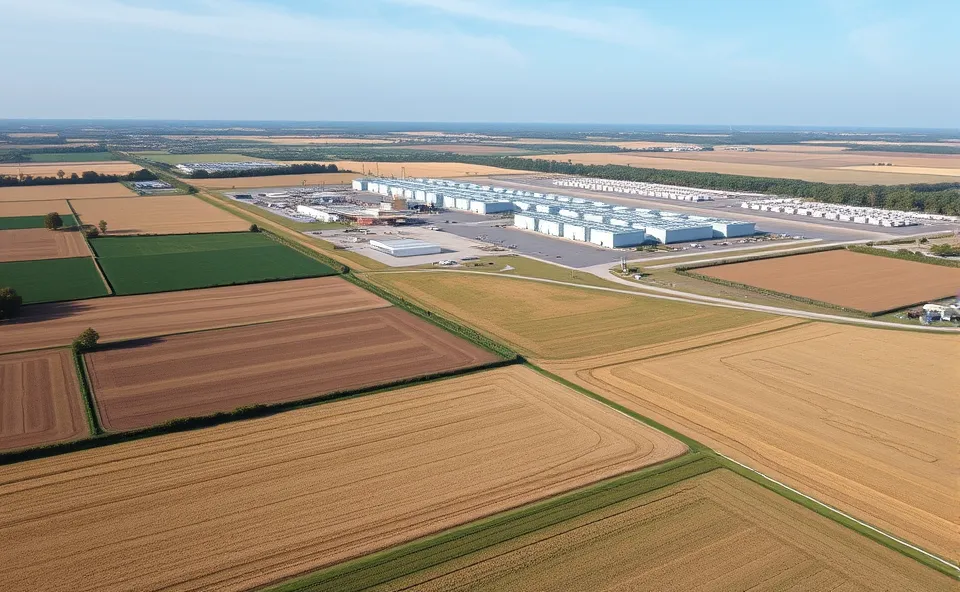
A Clash in the Cornfields
Imagine living in a quiet Michigan farm town where the biggest news of the week is usually the weather or the local harvest. Now imagine a sudden announcement that two of the biggest names in technology, OpenAI and Oracle, want to build a massive AI data center right in your backyard. For the residents of this rural community, the dream of a quiet life collided head on with the fast paced world of Silicon Valley.
The conflict started when the plan for this enormous facility was first presented. On paper, it looked like a win for economic development. It promised jobs and a boost to the local tax base. However, many residents were not sold. They worried about the noise, the massive amount of water needed to cool the servers, and the loss of precious farmland. The community did what citizens in a democracy do. They voted. They said no to the project.
But here is the part that has everyone talking. Despite the clear opposition from the people living there, construction began anyway. Through a mix of legal loopholes, zoning shifts, and the sheer power of corporate investment, the project moved forward. It is a classic story of a small town facing off against a global tech giant, and in this case, the giant is winning.
Why This Story Is Capturing Our Attention
You might wonder why a local zoning dispute in Michigan is making waves in the broader business and tech world. The reason is simple. This is not just about one town. It is a preview of what is happening across rural America. We are currently in the middle of a massive tech boom, and artificial intelligence is the engine driving it.
AI does not live in a cloud. It lives in physical buildings filled with thousands of power hungry computers. These facilities require an incredible amount of electricity and space. Because cities are too crowded and too expensive, companies like Oracle and OpenAI are looking toward the countryside. They want cheap land and access to power grids that can handle their load.
People are searching for this story because it touches on a deep tension. On one side, we have the promise of the future, smarter tools, and economic growth. On the other side, we have the desire to protect the environment, local autonomy, and a way of life that has existed for generations. It is a fight over who actually owns the future of the land.
The Hunger of the AI Revolution
To understand how we got here, we have to look at what an AI data center actually is. When you ask an AI to write a poem or analyze a spreadsheet, that request travels to a warehouse full of GPUs. These chips are incredibly powerful, but they generate a staggering amount of heat. To keep them from melting, these centers need millions of gallons of water for cooling.
For years, data centers were smaller and less intrusive. But the rise of generative AI changed the scale. The new generation of facilities is far larger than anything we saw a decade ago. This is why tech companies are targeting rural America. They need huge plots of farmland that can be converted into industrial zones quickly.
In Michigan, the attraction was likely the combination of available land and the existing energy infrastructure. However, the transition from a farm to a high tech hub is not seamless. Farmers do not want to see their soil paved over, and residents do not want the hum of industrial fans echoing through the valley at three in the morning. The background of this conflict is a fundamental disagreement over what constitutes progress.
What This Means for Communities and Markets
The impact of this specific project stretches far beyond the town borders. For the local residents, the immediate effect is a feeling of powerlessness. When a community votes against a project and it happens anyway, it erodes trust in local politics. It sends a message that corporate interests can override the will of the people if the project is deemed important enough for the state or the national economy.
From a business perspective, this reveals a new trend in how tech giants operate. They are no longer just building apps in offices. They are becoming major players in real estate and infrastructure. This shifts the economic landscape of rural areas in several ways:
- Property Values: While some landowners make a fortune selling their plots, others may see their home values drop due to industrial noise and traffic.
- Infrastructure Strain: A massive AI data center can put a huge load on the local power grid, potentially leading to higher costs or instability for regular homeowners.
- Job Shift: While construction creates temporary jobs, the actual operation of a data center requires relatively few people compared to the amount of land it occupies.
Technologically, this shows that the AI race is now a physical race. The company that can secure the most land and the most power will likely lead the market. The fight in Michigan is a sign that the bottleneck for AI is no longer just code, but concrete and electricity.
The Road Ahead for Rural Tech Expansion
So, what happens next? It is unlikely that this will be the last fight of its kind. As OpenAI and other players continue to expand, they will encounter more communities that are hesitant to welcome them. We can expect to see more legal battles over zoning laws and environmental impacts.
We will likely see a push for new legislation. Local governments may try to pass laws that give residents more say in data center construction. On the flip side, state governments might create “fast track” zones to attract tech investment, further reducing the power of local town halls.
The long term outcome will probably be a search for a middle ground. Tech companies may start offering more to the community, such as building new schools, improving roads, or providing free high speed internet to the surrounding area, to ease the tension. The goal will be to move from a relationship of conflict to one of partnership, but that will require a shift in how these companies view the people who live where they build.
Common Questions About the Michigan Project
Why is an AI data center being built in Michigan?
Michigan offers the large plots of land and the power infrastructure necessary to support the massive energy needs of AI. Rural areas are often more attractive to companies like Oracle because land is cheaper and there is more room for expansion.
Why did the community oppose the data center construction?
Most of the community opposition centered on the loss of farmland, the potential for noise pollution, and the huge amount of water required to cool the servers. Residents felt the industrial scale of the project did not fit their rural lifestyle.
Can a company build if the local residents vote against it?
In many cases, yes. Depending on the local laws and the way the land is zoned, a company may be able to use state level approvals or legal challenges to bypass a local vote. This is exactly what happened in the Michigan case.
How does an AI data center affect the local economy?
It brings a significant amount of money into the area during the construction phase and increases tax revenue for the county. However, the long term job creation is often lower than expected because these facilities are highly automated.
Will this lead to more tech companies moving into rural America?
Yes. Because AI requires so much physical space and electricity, the trend of moving away from crowded cities and into rural America is expected to grow. This will likely lead to more negotiations and conflicts between tech firms and local residents.











