

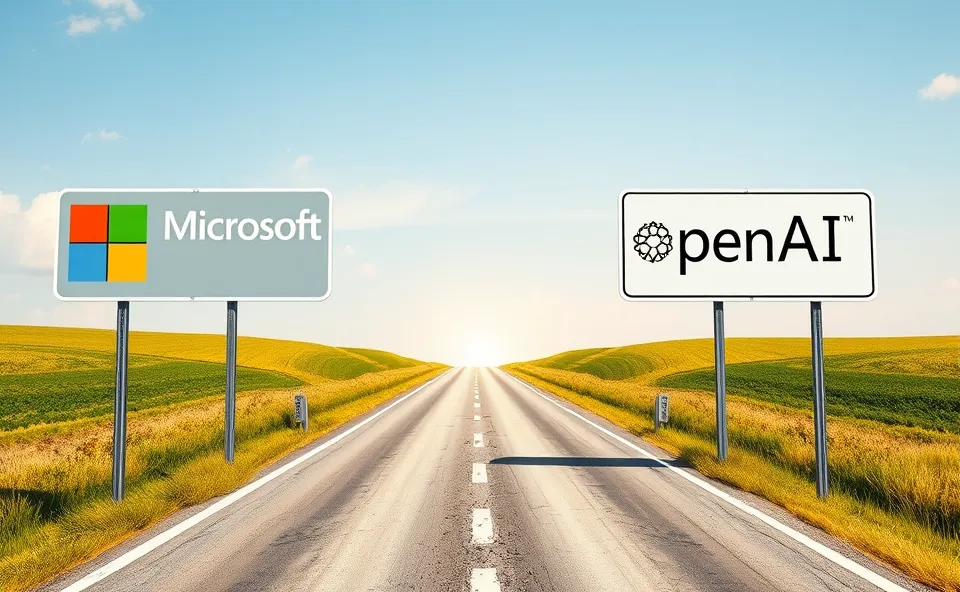
The Big Question: What If Microsoft and OpenAI Went Their Separate Ways?
Imagine this: the powerhouse that is Microsoft and the innovative AI darling OpenAI, usually seen as a package deal, start to explore paths that might lead them apart. It sounds a bit like a major tech relationship status update, doesn’t it? In the world of business and technology, the idea of a potential split between Microsoft and OpenAI has been swirling, and it’s got a lot of people in the stock market talking. What would this mean for Microsoft stock, and what’s the real story behind this buzz?
Why Are We Talking About This Now?
This conversation isn’t just coming out of the blue. The partnership between Microsoft and OpenAI has been incredibly fruitful, especially with the rapid advancements in AI. As AI continues to dominate headlines and reshape industries, every move by major players like Microsoft and foundational AI companies like OpenAI gets scrutinized. Investors are always looking for the next big thing or potential shifts in the landscape that could impact their portfolios. The intensity of interest in AI, coupled with the close ties between these two giants, naturally leads to questions about their future together and what happens if those ties loosen. It’s a natural curiosity that fuels discussions about Microsoft and its investments in the future of AI.
A Look Back: How We Got Here
To really get why a potential separation is a big deal, we need to rewind a bit. Microsoft has invested billions of dollars in OpenAI, giving it access to Microsoft’s massive cloud computing power through Azure. This collaboration has been a game changer, allowing OpenAI to scale its groundbreaking AI models, like those powering ChatGPT. In return, Microsoft has gained a significant edge in the AI race, integrating OpenAI’s technology into its own products and services, from search engines to productivity software. This wasn’t just a simple investment; it was a deep, strategic alliance. Think of it as a powerful engine being bolted onto an already robust chassis. Both sides benefited immensely, pushing the boundaries of what AI could do and bringing it to the masses faster than many expected. This synergy is why the thought of them separating is so noteworthy.
What a Split Could Mean for the Tech World and Microsoft Stock
Now, let’s get down to the brass tacks of what a split could mean, especially for Microsoft stock. On the surface, it might seem like a step backward. However, business analysis often reveals hidden opportunities.
For Microsoft, a strategic divergence from OpenAI could actually unlock new avenues for growth and solidify its own AI identity.
- Diversification of AI Strategy: Currently, Microsoft’s AI efforts are heavily intertwined with OpenAI. A split could encourage Microsoft to accelerate its own internal AI research and development, potentially leading to a broader and more diverse AI portfolio. This means not putting all its AI eggs in one basket.
- Increased Control and Flexibility: While the partnership has been beneficial, it also comes with dependencies. Separating might give Microsoft more control over its AI roadmap, allowing it to integrate technologies from various sources or develop proprietary solutions without the constraints of a partnership agreement. This flexibility is often a win for corporate strategy.
- m> Sharpened Focus on Azure: Microsoft’s cloud platform, Azure, is a massive business. If OpenAI were to pursue its own independent path more aggressively, Microsoft could re-double its efforts to make Azure the premier cloud destination for all* AI development, not just for OpenAI. This would highlight Azure’s capabilities and attract a wider range of AI companies and researchers.
- Potential for New Partnerships: While this might sound counterintuitive, a split could free Microsoft to forge new strategic technology partnerships across the AI landscape. It could allow them to collaborate with other cutting-edge AI labs or even acquire smaller, specialized AI firms, further diversifying their capabilities.
- Investor Confidence and Market Perception: For investors, a clear, independent AI strategy from Microsoft could be viewed positively. It would demonstrate Microsoft’s ability to innovate and lead in AI on its own terms, rather than solely relying on an external partner. This could boost confidence in Microsoft stock, especially if the company articulates a compelling vision for its AI future.
Think about it from a business analysis perspective. Microsoft is a giant with vast resources. While OpenAI brought specific, cutting-edge AI models, Microsoft has the infrastructure, the customer base, and the talent to build and deploy AI solutions at scale. A separation doesn’t mean Microsoft stops innovating in AI; it means it might innovate differently, perhaps more broadly, and with even greater control over its destiny. The future of AI is massive, and Microsoft has the capacity to play many roles within it.
Looking Ahead: What the Future Might Hold
What does this all mean for where things are headed? If Microsoft and OpenAI were to chart more independent courses, it wouldn’t be an abrupt end but likely a measured evolution. Microsoft would continue to leverage its significant investments and its own deep AI expertise. We’d probably see Microsoft pushing its Azure AI services even harder, perhaps developing its own suite of AI models alongside integrating best-in-class solutions from elsewhere.
OpenAI, on the other hand, might have more freedom to explore diverse commercialization paths and partnerships. The crucial element here is that the foundational technology and the drive for AI innovation are too strong to be derailed by a partnership change. The market is hungry for AI advancements, and both Microsoft and OpenAI have the capacity to keep delivering, albeit potentially through different strategic frameworks. It’s about adapting and thriving in a rapidly evolving technological landscape. The core competition and innovation in AI will undoubtedly continue.
Frequently Asked Questions About Microsoft and OpenAI
What is the current relationship between Microsoft and OpenAI?
Microsoft has a significant investment in and close partnership with OpenAI. They provide substantial cloud computing resources through Azure and integrate OpenAI’s advanced AI models into many of their products and services. This technology partnership has been a cornerstone of recent AI developments.
Why is a potential split between Microsoft and OpenAI being discussed?
The discussion arises due to the immense growth and strategic importance of AI. As both Microsoft and OpenAI continue to evolve their AI strategies, questions naturally emerge about the long-term implications of their close, yet distinct, organizational structures and future directions. This is a key area of interest for those following the stock market and the future of AI.
How might a split affect Microsoft stock?
A separation could have varied effects on Microsoft stock. On one hand, it might signal increased independence and a broader AI strategy for Microsoft, potentially boosting investor confidence. On the other hand, the deep integration has provided significant synergy, and any change would be carefully watched by the market. It’s a complex business analysis scenario.
What are the benefits for Microsoft if it were to scale back its OpenAI investment or partnership?
Potential benefits for Microsoft could include greater control over its AI roadmap, the ability to diversify its AI technology sources, and a sharpened focus on promoting its own Azure cloud platform as a universal AI hub. This could lead to a more robust and varied corporate strategy in the AI space.
What does this mean for the future of AI development overall?
The future of AI is likely to be characterized by continued innovation from multiple players. Whether through partnerships or more independent ventures, companies like Microsoft and organizations like OpenAI will continue to push the boundaries of what AI can achieve, impacting technology and business across the globe. The ongoing OpenAI investment and Microsoft’s own AI efforts ensure this momentum.











