

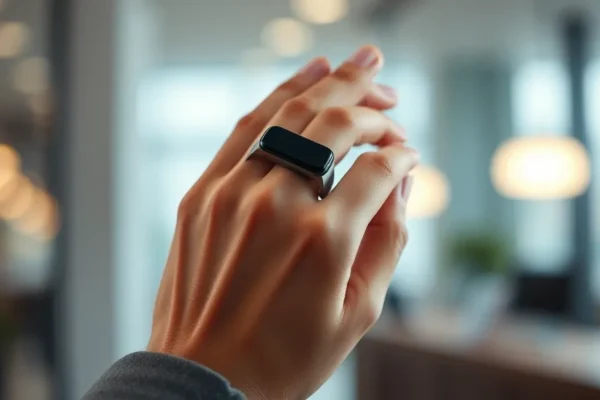
Tired of Constant Pings? Welcome to the Era of Minimalist Wearables
Are you drowning in a sea of notifications from your smartwatch? Does your wrist feel less like a connected hub and more like a buzzing alarm clock? If so, you’re not alone. Many of us are feeling the strain of constant digital input, and a quiet revolution is brewing in the world of wearable technology. Meet the rise of minimalist wearables – devices designed to quietly gather your bio-data and health tracking information without bombarding you with pings, alerts, and tiny screens. These screen-free tech marvels aim to give you valuable insights into your well-being while supporting a digital detox. They’re not about adding more noise to your life; they’re about offering a calmer, more focused way to understand your body.
What These Gadgets Actually Do and How You’d Use Them
At their core, these minimalist wearables are sophisticated data collectors. Instead of a bright screen, they rely on subtle vibrations, color-coded lights, or simply communicate with a companion app on your phone. Their primary job is health tracking: monitoring your sleep patterns, heart rate, activity levels, and sometimes even more advanced metrics like body temperature or stress levels. The beauty is in their unobtrusiveness.
Imagine this: You wake up and your smart ring, which you wore all night, has already logged your sleep stages. You don’t need to check a screen; later, when you sync it with your phone, you’ll see a breakdown of your deep sleep, REM sleep, and overall rest quality. Or consider a discreet fitness tracker band that vibrates gently to remind you to stand up and move every hour, without interrupting your conversation or work.
Scenario 1: The Busy Parent. You’re juggling kids, work, and household chores. A minimalist wearable can track your daily steps and activity without demanding your attention. You get a notification on your phone at the end of the day showing your progress, allowing you to understand your physical output without needing constant screen interaction throughout your chaotic day. It’s silent support for your well-being.
Scenario 2: The Tech-Weary Professional. You want to monitor your stress levels and sleep quality to improve performance, but you’re trying to cut down on screen time. A smart ring can anonymously track your heart rate variability overnight and during the day. You check the app once a day for trends, helping you identify patterns that might be affecting your focus or mood, all without another glowing rectangle demanding your attention.
Scenario 3: The Traveler. Jet lag is a beast. A device that tracks your sleep cycles can help you understand how your body is adapting to new time zones. It can also monitor your activity on long travel days, providing you with data to help you optimize your rest and recovery, all without needing to fiddle with settings or glance at a screen while you’re on the move.
Who Should Seriously Consider This Kind of Wearable?
Best for: Individuals actively seeking a digital detox and looking to reduce notification fatigue. If you’re sensitive to constant digital interruptions and want to focus on understanding your body’s data without adding to your screen time, these are for you. People interested in deep, actionable bio-data tracking that informs lifestyle changes rather than demanding immediate action will find a lot to love.
Good for: Anyone curious about their health metrics but overwhelmed by the feature-rich, screen-heavy smartwatches. If you value simplicity, elegant design, and a device that blends seamlessly into your life, these minimalist wearables are a compelling option. They’re also great for athletes who want detailed performance data without distractions during training.
Skip if: You rely on your wearable for immediate notifications, quick replies, smart home controls, or extensive app integration directly on the device. If the idea of a screen-free experience feels limiting, or if you need a device that functions as a secondary smartphone on your wrist, this category of wearable devices might not be the right fit.
What Else is Out There? Comparing Your Options
The primary alternative to minimalist wearables is, of course, the feature-rich smartwatch. Think Apple Watch, Samsung Galaxy Watch, or Garmin’s advanced models. These devices offer a wealth of functionality: calling, texting, GPS navigation, music control, and a vast app ecosystem, all displayed on vibrant screens. They excel at providing immediate information and interaction.
However, they also contribute to notification fatigue and can be a significant source of digital distraction. Smart rings, like Oura or the upcoming Samsung Galaxy Ring, and simpler fitness trackers (like some Fitbit models that prioritize basic tracking) are the key players in the minimalist space. They stack up by offering longer battery life (often weeks instead of days) and a much more focused user experience. Where a smartwatch might cost $300-$500+, a good smart ring can range from $300-$400, with some simpler trackers available for under $100. The value proposition lies in the trade-off: you get deeper, more passive health insights for a simpler, less intrusive experience.
Getting Started: Is It a Steep Learning Curve?
Generally, the setup for minimalist wearables is quite straightforward. You’ll typically download a companion app on your smartphone, which guides you through the pairing process via Bluetooth. This usually involves creating an account and answering a few basic questions about yourself. For smart rings, initial setup might involve ensuring a comfortable fit, which can sometimes take a day or two to get used to. For simple fitness bands, it’s often plug-and-play after pairing.
The learning curve is primarily in understanding the data presented in the app. While the device itself is simple to wear, interpreting sleep scores, recovery readiness, or advanced heart rate metrics might require a bit of exploration within the app. Most apps are designed to be intuitive, with clear explanations and trends visualized. You won’t need to be a tech wizard; most users can be up and running within 15-30 minutes.
The Real Perks You’ll Actually Notice
- Reduced Distractions: This is the big one. By removing the screen and constant notifications, these devices help you stay present in your life. Users report feeling less anxious and more focused.
- Deeper Sleep Insights: Many minimalist wearables, especially smart rings, excel at providing detailed sleep analysis (REM, deep, light sleep, interruptions) that helps you understand your recovery and energy levels.
- Longer Battery Life: Forget daily charging. Many of these devices last anywhere from a week to several weeks on a single charge, making them incredibly convenient for everyday wear and travel.
- Subtle Health Tracking: They work in the background, capturing vital bio-data without you having to constantly check in. This passive approach can lead to more consistent data collection over time.
- Comfort and Discreetness: Often designed to be small and unobtrusive, you might forget you’re even wearing them, which is ideal for continuous monitoring.
The Honest Downsides and What to Watch Out For
- Limited On-Device Functionality: If you want to see your heart rate instantly or control music without your phone, this isn’t for you. All interaction and immediate data viewing happen through the app.
- App Dependence: While screen-free on the wrist, you’re still tethered to your smartphone for any meaningful data interaction. If you’re trying to go completely screen-free, these won’t achieve that.
- Potential for Data Overload (in the app): While the device is minimalist, the companion app can sometimes present a lot of complex data that requires interpretation. Some users report feeling overwhelmed by the sheer volume of metrics.
- Subscription Models: Some of the more advanced health tracking features or detailed analytics require a paid subscription, adding to the long-term cost (e.g., Oura’s subscription).
Price, Value, and If It’s Worth Your Cash
The price point for minimalist wearables varies. High-end smart rings like the Oura Ring typically cost around $300-$400 upfront, with an additional monthly subscription fee (around $6/month) for full access to insights. Simpler fitness trackers that offer screen-free operation might be found for $50-$150. The value depends heavily on your priorities. If you’re seeking deep sleep and recovery insights and are willing to pay a premium for discreet, high-quality bio-data tracking and are okay with a subscription, a smart ring can offer significant long-term value. If you just want basic step counting without a screen, a much cheaper fitness tracker will suffice. Compared to smartwatches, they often offer better battery life for less upfront cost, but you sacrifice interactive features.
The Final Word: Should You Embrace the Quiet Tech?
Minimalist wearables represent a significant shift in how we interact with technology and our own bodies. They are a powerful tool for anyone looking to reclaim their focus, reduce digital distractions, and gain deeper, more actionable insights into their health. If the constant buzz of a smartwatch feels more like a burden than a benefit, and you prioritize understanding your well-being through consistent, unobtrusive data, then exploring the world of minimalist wearables is highly recommended.
Who should buy this: You’re on a mission for a digital detox, want to improve sleep and recovery, and value passive, insightful health tracking. You’re comfortable using a smartphone app for detailed analysis.
Who should wait or look elsewhere: You need immediate notifications, enjoy smart features on your wrist, or prefer a device that doesn’t require a smartphone for basic data interpretation.
This technology isn’t about replacing your smartphone or smartwatch entirely, but offering a focused, more intentional alternative for those overwhelmed by the digital noise. It’s about getting the data you need without the distractions you don’t.
Your Burning Questions Answered
What is the main benefit of minimalist wearables?
The primary benefit is the reduction of notification fatigue and digital distraction. They focus on collecting bio-data tracking information like sleep and activity without the constant urge to check a screen.
Are smart rings considered minimalist wearables?
Yes, smart rings are a prime example of minimalist wearables. They are screen-free and primarily focus on collecting detailed health metrics.
How long does the battery typically last on these devices?
Battery life for minimalist wearables is often a strong point, with many lasting anywhere from 5 days to several weeks on a single charge, significantly longer than most smartwatches.
Do I need a smartphone to use minimalist wearables?
Yes, you almost always need a smartphone to pair the device, sync data, and view detailed analytics. They are designed to work in conjunction with an app rather than as standalone devices.
Are these devices accurate for health tracking?
Reputable wearable devices in this category generally offer good accuracy for core metrics like heart rate and sleep stages, supported by user feedback and various reviews. However, they are not medical devices.
Can I return a minimalist wearable if I don’t like it?
Return policies vary by retailer and manufacturer. It’s essential to check the specific return policy of where you purchase the device before buying, especially if you’re unsure about the fit or functionality for your needs.
Product prices and availability vary by region. Verify current pricing before purchase.











