

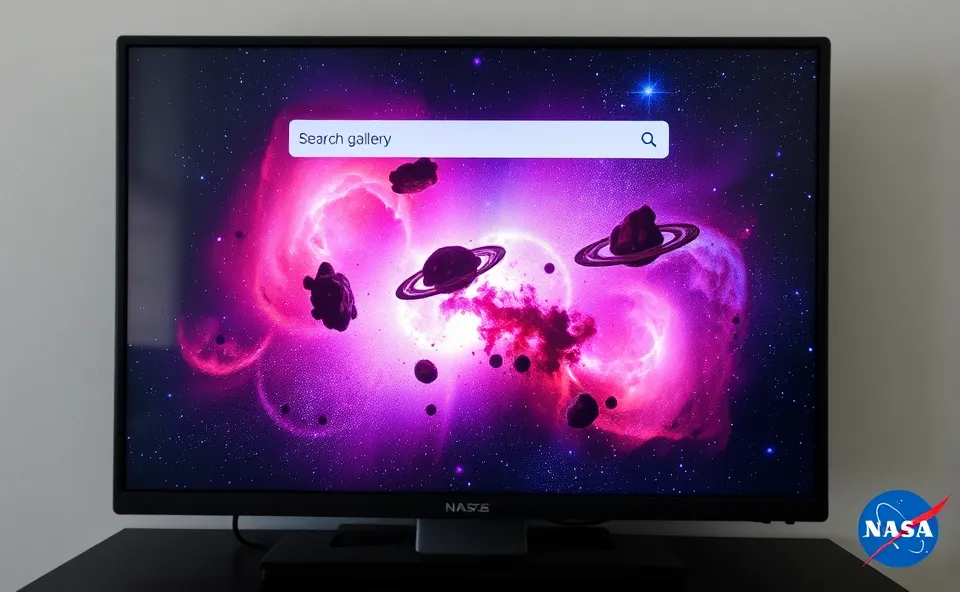
How to Access the Greatest Gallery in the Universe
Imagine having a key to a vault that holds the most stunning images ever captured. We are not talking about a fancy art museum in Paris or a private collection in New York. We are talking about the actual cosmos. NASA has spent decades capturing the edges of our universe, and the best part is that they give this treasure away for free.
If you want to find NASA images, you do not need a special permit or a degree in astrophysics. The agency maintains a massive digital archive that allows anyone to browse and download high resolution space images. From the swirling clouds of a distant nebula to the dusty plains of Mars, these visuals are available to the public.
Most of these assets are considered public domain. This means the US government does not claim a copyright on them. You can use them for your own projects, put them on your wall, or even use them in a business presentation. To get started, you simply need to visit the official NASA image gallery. This is the central hub where you can search for specific keywords, like galaxy photos or astronomy pictures, and find exactly what you need in seconds.
When you dive into the NASA multimedia archives, you will find more than just stills. There are time lapse videos, raw footage from space walks, and cinematic clips of rocket launches. The process is simple: search, select the resolution you want, and download. It is essentially the world’s most high quality stock photo site, but without the monthly subscription fee.
Why Everyone is Obsessed with Space Visuals Right Now
You have probably noticed that your social media feed is suddenly full of glowing gas clouds and sparkling star clusters. There is a reason why people are searching for the best NASA photos more than ever before. A big part of this is the James Webb Space Telescope. This machine is like a time machine that sees in infrared, capturing light from the very beginning of time.
The images coming back from this telescope are not just scientific data. They are pieces of art. When a new image of a deep field or a stellar nursery drops, it goes viral instantly. People are drawn to the scale and the mystery of it all. In a world where we spend most of our time looking at small screens, seeing a high resolution image of a galaxy millions of light years away provides a sense of perspective that is hard to find elsewhere.
Beyond the telescopes, there is a renewed interest in lunar exploration. With new missions heading back to the moon, people want to see the surface of our nearest neighbor in crisp detail. Content creators are also driving this trend. YouTubers and bloggers love to use public domain space photos to make their videos look more professional and cinematic. Space is the ultimate backdrop, and because it is free, it has become a staple of modern digital storytelling.
The Journey From Secret Labs to Public Folders
To understand why we have such easy access to these images today, we have to look back. In the early days of the space race, images were physical things. They were film reels and prints that lived in secure government facilities. If you wanted to see a photo of the moon, you had to wait for a newspaper to print it or a magazine to publish it.
As technology shifted to digital, NASA realized that their data was too valuable to keep locked away. They shifted their philosophy toward open science. The goal was to let the whole world help analyze the data. If a student in a small town could download a photo of a star, they might be the one to discover something new.
Over the years, the agency built out its multimedia archives to be user friendly. They moved from clunky databases to searchable galleries. They started offering different file sizes, recognizing that some people just wanted a phone wallpaper while others needed a file large enough to print on a billboard. This transition turned NASA from a secretive government agency into a global content provider. They recognized that by sharing the beauty of the cosmos, they could inspire the next generation of engineers and dreamers.
Why Open Space Data Changes the Game for Everyone
The fact that you can find free NASA photos has a massive impact on more than just hobbyists. It has a real effect on business, education, and technology. For small business owners and entrepreneurs, this is a goldmine. Creating a brand usually requires a budget for photography or expensive stock image memberships. Now, a tech startup or a design agency can use nebula images or galaxy photos to create a futuristic aesthetic without spending a dime.
In the classroom, the impact is even bigger. Teachers no longer have to rely on blurry textbook photos from ten years ago. They can bring high resolution space images into the classroom, allowing students to zoom in on the craters of the moon or the rings of Saturn. This makes science feel tangible and exciting. It turns a boring lesson into a visual adventure.
From a technology standpoint, these archives serve as a benchmark for imaging software. Developers use the raw data from NASA to test image processing tools and AI enhancement software. When you see a tool that can upscale a photo or remove noise, there is a good chance it was tested against the complex patterns found in cosmos photography. By making this data public, NASA has effectively subsidized a huge part of the visual arts and scientific community.
What the Next Era of Space Photography Looks Like
We are only scratching the surface of what is possible. As we move forward, the way we access and experience space images will change. We can expect a shift toward more real time data. Instead of waiting weeks for a processed image to be uploaded to a gallery, we may soon see high definition live streams from various points in our solar system.
The resolution will also continue to climb. We are moving past 4K and heading toward 8K and beyond. This means that when you download NASA photos in the future, the level of detail will be almost indistinguishable from looking through a telescope yourself. We will see more diversity in the images too, as we send more probes to the icy moons of Jupiter and the methane lakes of Titan.
We can also expect better integration with virtual and augmented reality. Imagine stepping inside a 3D version of a nebula image or walking through a reconstructed version of the Martian surface based on actual photography. The archives will stop being a collection of flat files and start becoming immersive environments. The bridge between professional astronomy and the general public will continue to shrink, making the universe feel a little bit smaller and much more accessible.
Common Questions About Finding NASA Space Photos
Are NASA space photos actually free for commercial use?
Yes, most images produced by NASA are in the public domain. This means you can use them in your business, on your website, or in your advertisements without paying a royalty fee. However, you should always check the specific credit line for a photo to ensure there are no restrictions from a third party partner.
Where is the best place to find NASA images for a wallpaper?
The official NASA image gallery is the best spot. You can filter by resolution to find high resolution space images that fit your screen perfectly. For the most recent and stunning visuals, look for the James Webb Space Telescope collections.
How do I download NASA photos in the highest quality?
When you find an image you like in the multimedia archives, look for the download options. NASA usually provides several sizes. Always choose the largest file size or the original TIF file if you plan to print the image or use it for a professional design project.
Can I use nebula images and galaxy photos in a YouTube video?
Absolutely. Since these are public domain space photos, they are perfect for B-roll in videos. Many creators use them to add a sense of scale or wonder to their content without worrying about copyright strikes.
What is the difference between a raw NASA image and a processed one?
Raw images are the actual data captured by the sensor and often look grey or grainy. The best NASA photos are processed by experts who assign colors to different light wavelengths. This is how we get those vivid purples and golds in nebula images, making the science visible to the human eye.











