

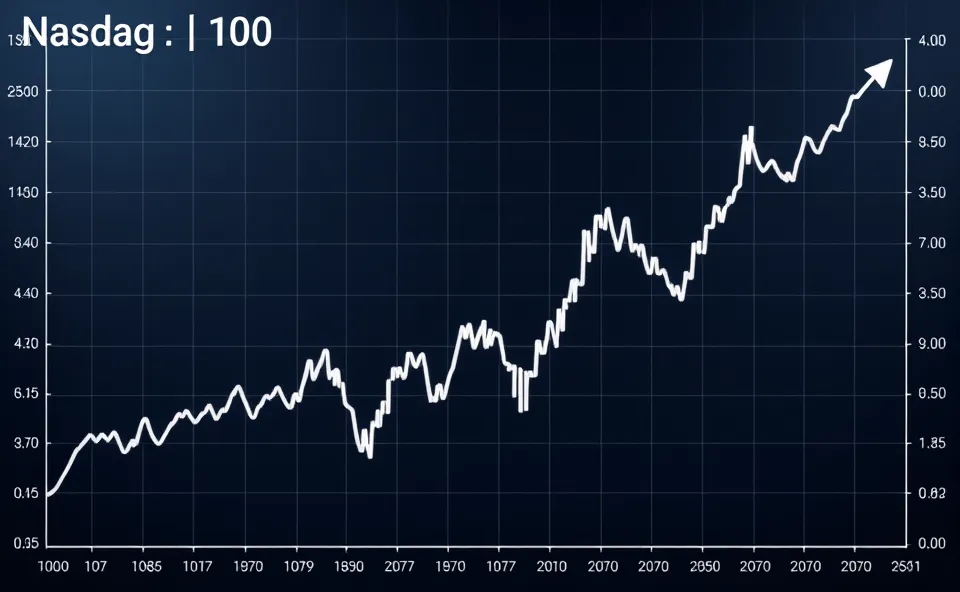
Is the Nasdaq 100 Getting Ready for a Break?
Hey everyone, let’s chat about what’s been going on with the Nasdaq 100 lately, especially with all the buzz around semiconductor stocks. It feels like the tech giants have been on a rocket ship, but sometimes, even rockets need to refuel. We’re seeing some signals that suggest the incredible run in chip stocks might be cooling off, and that could ripple through the broader Nasdaq 100 index.
Why All the Fuss About Chip Stocks Right Now?
You might be wondering why everyone’s suddenly talking about a potential pullback. Well, the semiconductor rally has been nothing short of spectacular. For months, companies that make the chips powering everything from your smartphone to cutting-edge AI have seen their stock prices soar. Think about giants like Nvidia, AMD, and even companies like TSMC, the world’s biggest chip manufacturer. Their performance has been a massive driver for the entire Nasdaq 100. However, when any sector runs up this fast and this far, market watchers start to look for signs of exhaustion. We’re seeing some technical indicators suggesting that the upward momentum might be losing steam. It’s like a runner hitting a wall; they can keep pushing, but it gets harder and the risk of slowing down increases.
A Look Back at the Tech Boom
To understand where we are, it’s helpful to remember how we got here. The past few years have been a wild ride for tech stocks. Fueled by low interest rates and a growing reliance on digital services, the NASDAQ Composite and its tech heavy cousin, the Nasdaq 100, have climbed to new heights. The pandemic accelerated many digital trends, and the demand for computing power exploded. AI, in particular, has been a massive catalyst. The promise of AI has pushed companies involved in developing the hardware for it – the semiconductors – to the forefront. This created a sort of gold rush, with investors piling into chip stocks, expecting them to be the backbone of the next technological revolution. Companies like Nvidia, with its powerful graphics processing units (GPUs) crucial for AI, have been star performers. But this kind of rapid growth often leads to stocks becoming overvalued, meaning their current price doesn’t fully reflect their underlying value. That’s where the idea of a market correction or pullback comes into play.
What This Means for the Broader Market and Your Investments
So, what’s the big deal if semiconductor stocks take a breather? The Nasdaq 100 is heavily weighted towards technology companies, and chip stocks are a huge part of that. If these leading tech stocks experience a significant drop, it’s almost guaranteed to pull the entire Nasdaq 100 down with it. This isn’t just about the stock market itself; it has wider implications. For businesses, it could mean a more cautious approach to investment and expansion, especially for those heavily reliant on the tech sector. For consumers, it might mean a slower rollout of new technologies or potentially higher prices if the supply chain for these critical components becomes less robust. For investors, this is a crucial time to reassess their investment strategy. It doesn’t necessarily mean doom and gloom, but it does call for a more thoughtful approach. Understanding the concentration of risk in certain sectors is key. Diversification across different asset classes and industries becomes even more important when you see one sector, like semiconductors, dominating the market narrative.
Peering Into the Crystal Ball: What’s Next for Tech Stocks?
Looking ahead, the situation for the Nasdaq 100 and its semiconductor stars is multifaceted. It’s unlikely to be a simple crash, but rather a period of consolidation or a more gentle market correction. The underlying demand for chips, driven by AI, cloud computing, and the internet of things, remains strong. Companies are still investing heavily in this area. However, the pace of the rally has been unsustainable. We might see investors take profits, leading to some selling pressure. Companies that have grown very quickly might face pressure to justify their valuations with continued strong earnings. It’s also possible we’ll see a rotation of investment. Money might move from the most hyped tech stocks into other sectors that have been overlooked, or into companies that are less sensitive to economic cycles. For chip stocks specifically, the long-term outlook is still bright, but the short-term could involve some choppiness as the market digests the rapid gains and seeks a more stable equilibrium. Keep an eye on earnings reports from major players like Nvidia, AMD, Intel, and TSMC, as these will provide valuable clues about the health of the sector.
Your Questions Answered About the Nasdaq 100 and Chip Stocks
What is the Nasdaq 100 and why is it important?
The Nasdaq 100 is an index that tracks the performance of the 100 largest non-financial companies listed on the Nasdaq stock exchange. It’s heavily weighted towards technology stocks, so its movements are often seen as a barometer for the health of the tech sector and the broader stock market.
What is a semiconductor rally?
A semiconductor rally refers to a period where the stock prices of companies involved in the design, manufacturing, or sale of semiconductors, or chip stocks, experience a significant and sustained increase. This is often driven by high demand for their products and positive investor sentiment.
Could a pullback in semiconductor stocks affect the entire NASDAQ Composite?
Yes, absolutely. Because semiconductor companies are such a significant part of the Nasdaq 100, and the Nasdaq 100 is a major component of the broader NASDAQ Composite, a sharp decline in chip stocks can indeed drag down the entire NASDAQ Composite index.
What are some examples of top chip stocks in the current market?
Some of the most talked-about chip stocks recently include Nvidia, which is a leader in AI chips, AMD, a major competitor, Intel, a long-standing player in the chip industry, and TSMC, a crucial manufacturer for many chip designers. These are often referred to as prominent chip stocks.
What investment strategy should I consider if the Nasdaq 100 faces a market correction?
During a market correction, a common investment strategy is to focus on diversification across different industries and asset classes. It’s also wise to review your risk tolerance and consider investing in companies with strong fundamentals that can weather economic downturns. For long-term investors, market pullbacks can also present opportunities to buy quality assets at lower prices.











