

The Big Number We Can’t Ignore
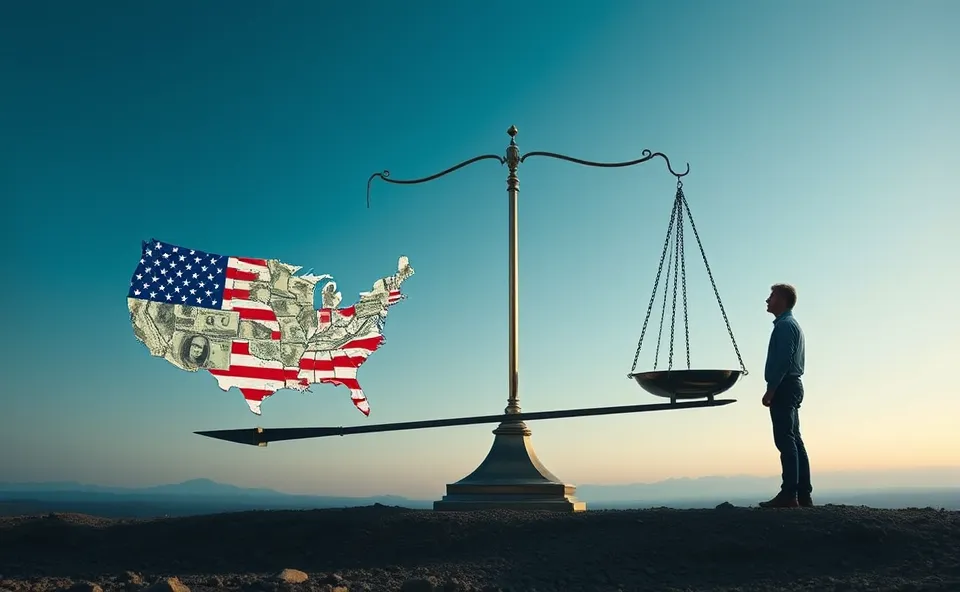
Imagine you have a job that pays you a decent salary, but you have a credit card balance that is exactly the same size as everything you earn in a year. For a while, you might manage it. You pay the minimums and hope for the best. But eventually, the interest starts to pile up, and you realize you are spending more on the interest than on your actual life. This is essentially where the national debt stands in relation to the US economy.
Recently, a disturbing warning has emerged showing that our total debt is reaching a point where it matches the size of our entire economic output. We are talking about a staggering $39 trillion debt. To put that in perspective, that is not just a number on a spreadsheet. It is a reflection of how the government has been spending far more than it brings in through taxes for a very long time.
What makes this current moment different is the mood of the people. A recent bipartisan survey reveals a deep sense of unease. People are not just worried about the big numbers they see on the news. They are feeling the pressure in their own lives. Fiscal confidence has hit a 22 month low, meaning people have lost faith in the government’s ability to manage the money. There is a growing feeling that the people in charge are ignoring a ticking clock.
Why This Is Trending Right Now
You might wonder why the national debt is suddenly a hot topic of conversation when the government has been borrowing money for decades. The reason is simple. The abstract numbers are starting to hit the dinner table.
Most people do not wake up thinking about the US economy as a whole. They wake up thinking about the cost of eggs, the price of gasoline, and whether their rent is going to go up again next month. There is a direct link between how a government manages its money and the everyday costs that citizens face. When the government borrows trillions of dollars, it affects interest rates and inflation.
People are searching for answers because they feel a gap between what politicians say and what their bank accounts show. The bipartisan survey highlighted that this concern is not about politics. It is not just one side of the aisle worrying. Whether someone is a conservative or a liberal, the fear is the same. They see the $39 trillion debt and they wonder who is going to pay for it. The conversation has shifted from a boring accounting debate to a survival conversation about the cost of living.
How We Got Into This Position
To understand where we are, we have to look at the habit of borrowing. For years, the government has operated on a deficit. This means it spends more money on services, infrastructure, and defense than it collects in taxes. In the short term, this can be a tool for growth. If you borrow money to build a bridge or invest in technology, that investment helps the economy grow, which eventually makes the debt easier to pay back.
However, the pattern changed. The borrowing became a permanent way of doing business rather than a temporary fix. Over the last few decades, several things happened at once:
- Tax cuts were implemented without corresponding spending cuts.
- Major conflicts and wars required massive amounts of funding.
- The aging population means more people are relying on social safety nets.
- Emergency spending during global crises added trillions to the tab almost overnight.
For a long time, the interest rates on this debt were very low. This made the borrowing feel cheap. It was like having a massive loan with a tiny interest rate. But the world changed. As inflation rose, the cost of borrowing went up. Now, the government has to pay significantly more just to keep the existing debt from spiraling. This is why the current situation feels like a tipping point.
What This Means For You and the Market
When the national debt reaches the size of the US economy, it creates a ripple effect that touches everyone. It is not just a problem for economists in suits. It affects the average person in several ways.
First, there is the issue of interest rates. When the government borrows huge amounts of money, it competes with everyone else for those loans. This can push up interest rates for mortgages, car loans, and business loans. If you find it harder to get a fair rate on a home loan, the national debt is partly to blame.
Second, it limits the government’s ability to respond to new problems. If a major recession hits or another global emergency occurs, the government has less room to maneuver. They are already maxed out. This creates a fragile environment for the US economy.
For businesses and the tech sector, this instability is a risk. Companies rely on predictable markets to invest in new research and development. If there is a fear of a fiscal crisis, businesses may stop hiring or stop innovating because they are afraid of a sudden economic shock.
Lastly, there is the pressure on everyday costs. To deal with the debt, governments often have to choose between raising taxes or cutting services. Neither option is popular. If taxes go up, consumers have less money to spend. If services are cut, the quality of life for millions of people drops. This is why the call to action for fiscal responsibility is becoming so loud.
Looking Ahead at the Path Forward
So, what happens next? We are not heading toward an immediate collapse, but we are heading toward a period of necessary and likely painful adjustments. The $39 trillion debt cannot simply vanish. There are a few logical paths the government could take.
One path is a combination of spending cuts and tax increases. This is the most direct way to balance the books, but it is the hardest to achieve politically. It requires a level of bipartisan cooperation that we have not seen in a long time.
Another possibility is that the economy grows faster than the debt. If the US economy creates a massive wave of new wealth through technology and productivity, the debt becomes a smaller percentage of the total pie. This is the optimistic view, but it depends on the country remaining competitive and innovative.
The most likely scenario is a slow, grinding process of adjustment. We will probably see more debates over the debt ceiling and more tension between different branches of government. The real goal is to restore fiscal confidence. People need to believe that there is a plan.
The call to action is clear. The current path is not sustainable. Future leaders will have to make hard choices about what the government should actually be responsible for and what should be left to the private sector. The goal will be to bring the debt back to a level that does not threaten the stability of the US economy.
Common Questions About the National Debt
Why does the national debt matter if the US economy is so large?
The size of the economy matters, but the ratio is what counts. When the national debt equals the size of the economy, it means the government owes as much as the entire country produces in a year. This makes the system fragile and increases the risk of inflation and higher interest rates for everyone.
How does the national debt affect my everyday costs?
When the government borrows heavily, it can lead to higher inflation and higher interest rates. This makes things like groceries, gas, and housing more expensive. It also means that loans for cars or homes cost more in interest.
What is fiscal confidence and why is it low?
Fiscal confidence is the belief that the government can manage its money responsibly without causing a crisis. It is currently at a 22 month low because people see the $39 trillion debt growing and feel that there is no real plan to fix it.
What is a bipartisan survey in this context?
A bipartisan survey is a study that gathers opinions from people across the entire political spectrum. In this case, it shows that both Democrats and Republicans are worried about the national debt and the cost of living, proving that this is a national concern rather than a political one.
What can be done to lower the national debt?
Reducing the debt usually requires a mix of reducing government spending and increasing revenue through taxes. Some suggest focusing on economic growth to make the debt smaller relative to the size of the US economy.











