

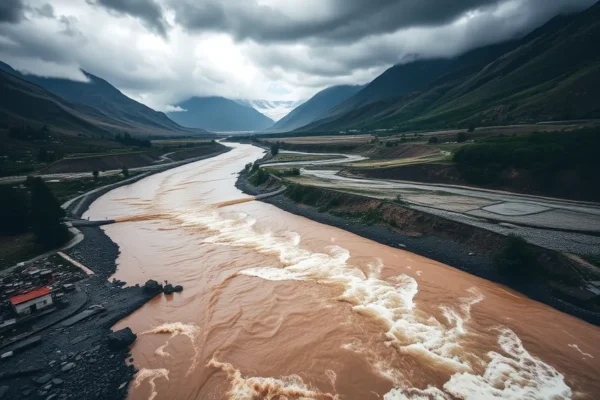
A devastating flood has recently swept through Nepal, causing immense destruction and loss of life. While natural disasters of this magnitude are not new to the region, the specific events leading to this catastrophe are increasingly linked to a larger, more complex phenomenon: climate change. The warming global climate is accelerating the melting of the Himalayan glaciers, creating unstable lakes that can burst catastrophically, unleashing torrents of water and debris downstream. This report delves into the intricate connection between rising global temperatures, glacial melt, and the devastating Nepal flood.
The Chain Reaction of a Warming Planet
The recent Nepal flood serves as a stark reminder of how global climate shifts can have localized, devastating consequences. The root cause of this disaster lies in the accelerating melt of Himalayan glaciers, a direct result of rising global temperatures. These glaciers, vast reservoirs of ice that have existed for centuries, are now shrinking at an unprecedented rate due to global warming.
Scientists have been observing this trend for years. A report by the Intergovernmental Panel on Climate Change (IPCC) consistently highlights the vulnerability of mountain glaciers to even small increases in average global temperatures. The ongoing warming trend, driven by human-induced emissions of greenhouse gases, means that the ice holding back these vast bodies of water is weakening.
Understanding Glacial Lake Outburst Floods
When glaciers melt, they can form lakes, often referred to as glacial lakes. These lakes are typically dammed by moraines, which are piles of rock and sediment left behind by glaciers. In a stable environment, these moraine dams are strong enough to hold back the water. However, as global temperatures climb and glacial melt intensifies, the volume of water in these lakes increases, and the moraine dams can become destabilized.
Think of it like a balloon being overfilled with water. Eventually, the material holding the water back can stretch too thin and burst. In the case of glacial lakes, a sudden collapse of the moraine dam, or even the melting of ice within the dam itself, can lead to a sudden and massive release of water. This is known as a Glacial Lake Outburst Flood (GLOF).
These GLOFs are not a gentle overflow; they are catastrophic events. The sheer volume of water, combined with rocks, mud, and debris picked up along the way, creates a powerful destructive force. This force can travel for many kilometers downstream, obliterating anything in its path. The Nepal flood is a tragic example of such an event, where the collapse of a glacial lake unleashed a devastating torrent.
Where We See This Happening Today
The phenomenon of GLOFs is not confined to Nepal. Scientists have identified thousands of potentially dangerous glacial lakes in mountainous regions around the world, particularly in the Himalayas, the Andes, and the Alps. These regions are considered hotspots for GLOF risks due to the large number of glaciers and the increasing rate of melt.
Research published in journals like Nature Climate Change has extensively documented the increasing frequency and intensity of GLOFs in regions like the Himalayas. For instance, studies have tracked the expansion of glacial lakes in the Everest region and identified specific lakes with a high risk of outburst. Nepal, with its vast Himalayan expanse, is particularly vulnerable. While this is a natural process exacerbated by climate change, the specific event in Nepal highlights the urgent need for monitoring and mitigation strategies. This is not a technology that is “available” for general use, but rather a dangerous natural process that climate science is helping us to understand and predict.
The Broader Landscape of Climate Change Impacts
The Nepal flood, driven by glacial collapse, is just one manifestation of the broader impacts of climate change. This event underscores the interconnectedness of our planet’s systems and the far-reaching consequences of rising global temperatures. Other related phenomena include more frequent and intense heatwaves, sea-level rise, and more extreme weather events like hurricanes and droughts.
The science behind this is robust. Organizations like NASA and NOAA continuously monitor global temperatures and ice cover. Their data shows a clear warming trend and a significant reduction in Arctic sea ice and glacial mass worldwide. This scientific consensus forms the basis for understanding why events like the Nepal flood are becoming more common and severe.
Implications for the Region and Beyond
The implications of increasing GLOFs, like the one experienced in Nepal, are profound and multifaceted. Economically, these events can devastate local communities, destroying homes, infrastructure, and agricultural land. The cost of disaster relief and long-term rebuilding efforts can be enormous, placing a significant burden on national economies, especially those of developing nations.
Socially, the loss of life and displacement of communities create immense human suffering. It disrupts livelihoods, erodes cultural heritage, and can lead to long-term psychological trauma. For regions heavily reliant on glacial meltwater for agriculture and drinking water, the long-term impact of glacier retreat also poses a significant threat to water security.
The environmental impact is also considerable. GLOFs can alter river courses, damage ecosystems, and contribute to soil erosion. In the long term, the continued retreat of glaciers means that the natural water towers that sustain many regions will diminish, potentially leading to water scarcity.
Limitations and Challenges in Addressing GLOFs
While climate science provides crucial insights into the risks of GLOFs, addressing them presents significant limitations and challenges. Firstly, accurate and timely prediction of a glacial lake outburst is extremely difficult. Monitoring thousands of remote and often inaccessible glacial lakes requires sophisticated technology and continuous effort. Early warning systems are being developed, but their effectiveness depends on reliable data and the ability to disseminate warnings quickly to vulnerable populations.
Secondly, mitigation strategies are often complex and costly. Options include draining excess water from lakes to reduce pressure on the dam, reinforcing the moraine dams, or relocating communities downstream. These interventions require substantial financial investment and technical expertise, which may be beyond the capacity of many affected regions. Furthermore, the sheer scale of glacial retreat due to global warming means that simply managing individual lakes may not be a sustainable long-term solution.
The Future Trajectory of Glacial Melt
The future trajectory of glacial melt and the associated risk of GLOFs is largely dependent on global efforts to curb climate change. According to current climate models and projections from organizations like the World Meteorological Organization (WMO), if greenhouse gas emissions continue unabated, global temperatures will continue to rise, leading to further accelerated glacial melt.
This means that the risk of catastrophic GLOFs in regions like the Himalayas is likely to increase in the coming decades. While research is ongoing to improve monitoring and early warning systems, the most effective long-term solution lies in global action to reduce emissions and limit global warming. Scientists are also exploring more innovative approaches, such as using satellite imagery and AI to better predict GLOF events, but these are still in early stages of development.
Key Questions and Answers about the Nepal Flood and Climate Change
What is the primary cause of the recent Nepal flood?
The Nepal flood is largely attributed to the catastrophic collapse of a glacial lake, a phenomenon exacerbated by rising global temperatures and climate change. This event, often referred to as a Glacial Lake Outburst Flood (GLOF), is a direct consequence of accelerated glacial melt.
How does global warming contribute to floods in Nepal?
Global warming causes glaciers to melt at an increased rate, forming large glacial lakes. As these lakes grow and the ice dams holding them back weaken, there is an increased risk of sudden dam collapse, leading to devastating floods downstream. This is a critical aspect of climate change impacts.
Is the Nepal flood an isolated incident?
While this specific event is a natural disaster, the underlying cause – accelerated glacial melt due to climate change – is a global issue. Many mountainous regions worldwide are facing increased risks of similar events due to rising temperatures, making this a significant concern for climate science.
What are the implications of such floods for the region?
The implications are severe, including loss of life, destruction of infrastructure, displacement of communities, and long-term economic and environmental damage. These natural disasters highlight the urgent need for robust disaster relief and climate adaptation strategies.
What is being done to prevent future floods caused by glacial collapse?
Efforts include monitoring glacial lakes for instability, developing early warning systems, and exploring mitigation techniques like reinforcing dams or managing water levels. However, the ultimate solution lies in global efforts to combat climate change and reduce greenhouse gas emissions.
How certain are scientists about the link between climate change and these events?
Climate science is very certain about the link. Extensive research and data from organizations like the IPCC clearly demonstrate that rising global temperatures, driven by human activity, are intensifying extreme weather events and causing significant glacial melt, increasing the risk of GLOFs.
This report is based on current scientific understanding and observations of the Nepal flood and its connection to climate change. The long-term implications and future trajectories are subject to ongoing research and global climate action.











