Understanding Geopolitical Risk and Its Financial Ripples
Imagine your local grocery store suddenly faces a shortage of a key ingredient, say, olive oil, because the main supplier in another country has a political crisis. This disruption can lead to higher prices at your local store. In a similar, but much larger, way, geopolitical risk refers to the potential for political events in one country or region to disrupt global stability and, consequently, financial markets and economies worldwide. These events can include wars, political unrest, trade disputes, or even decisions by leaders about military actions.
Understanding geopolitical risk is crucial because it directly impacts the financial world you live in. When tensions rise between nations, especially those involved in vital global trade or resource production, it creates uncertainty. This uncertainty can make investors nervous, leading them to pull money out of riskier assets like stocks and move into safer ones like gold or government bonds. This, in turn, can affect the value of your savings, your retirement funds, and even the cost of goods you buy every day. It’s like a storm brewing far away that can eventually affect your own backyard.
How Geopolitical Events Can Influence Global Markets
Geopolitical events often work by creating uncertainty and disrupting the flow of goods, services, or capital. Let’s break down a recent example to see this in action.
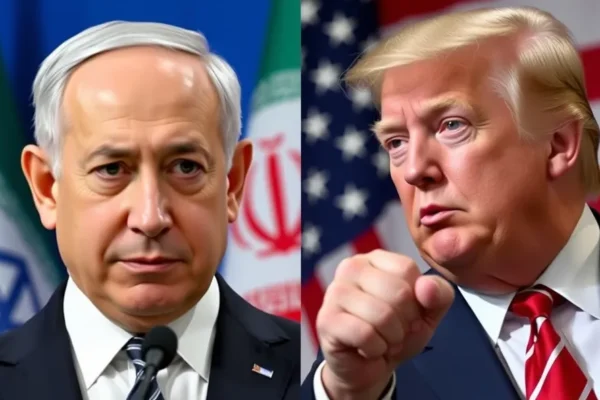
Consider the complex dynamics involving Israel and Iran. For a long time, Iran-Israel relations have been fraught with tension. When Israeli Prime Minister Netanyahu reportedly planned to resume strikes against Iran earlier this month, and then Donald Trump, as a former US president, decided to postpone any US attack until after the US midterm elections, this sent ripples through the global geopolitical landscape.
Here’s a simplified look at the mechanism:
1. Escalation of Tensions: When leaders like Israeli Prime Minister Netanyahu signal a potential military response against another nation, it immediately heightens concerns about a broader conflict. This is like two neighbors getting into a heated argument over a fence; everyone nearby starts to worry about how bad it might get.
2. Impact on Trade and Resources: Iran is a significant oil producer. Any perceived threat to its production or export capabilities, due to potential Iran strikes or broader conflict, can immediately affect global oil prices. Imagine if a major shipping route for a key commodity became unsafe; the cost to move that commodity would skyrocket, and its price would follow. Crude oil prices are highly sensitive to such events.
3. Investor Sentiment and Capital Flight: Increased geopolitical conflict or the threat of it often makes investors jittery. They fear that economic activity could be disrupted, supply chains broken, or markets destabilized. This fear can lead to a “flight to safety,” where investors sell assets perceived as risky (like stocks in companies that rely on international trade) and buy assets seen as secure (like U.S. Treasury bonds or gold). This can cause stock markets to fall and bond yields to drop.
4. Election Timing and Policy Uncertainty: In the case of Donald Trump’s decision to postpone US action until after the US midterm elections, this highlights how domestic political considerations can influence international policy. Election timing introduces a layer of uncertainty about future policies. Investors and other nations try to gauge how different election outcomes might affect global relations and economic strategies. This delay, in itself, can create a period of watchful waiting, where markets might remain volatile as they anticipate future decisions.
5. Regional Stability: Middle East tensions are a constant factor, and events like these can exacerbate them. Regional instability can deter foreign investment, disrupt tourism, and affect the economic growth of countries in the area and their trading partners.
A real-world analogy for this is a domino effect. One country’s action or a leader’s statement can trigger a series of reactions, affecting economies and financial markets far beyond the immediate parties involved.
Why Global Politics Matters to Your Personal Finances
You might wonder, “How does a potential strike in the Middle East or a decision by a former US president affect my bank account or my investments?” The answer lies in the interconnectedness of the global economy.
Personal Impact:
- Higher Prices (Inflation): If tensions in the Middle East disrupt oil supplies, the price of gasoline at your local pump will likely increase. This also affects the cost of transporting almost all goods, from your groceries to electronics, potentially leading to broader inflation, which is a general increase in prices and a fall in the purchasing value of money.
- Investment Volatility: If you have investments in stocks, bonds, or mutual funds, you’ll likely see the value of your portfolio fluctuate more when geopolitical risks are high. This can be unsettling, especially if you’re close to retirement or relying on your investments for short-term goals.
- Currency Exchange Rates: Geopolitical instability can affect currency values. If a country is perceived as risky, its currency might weaken, making imported goods more expensive for that country and its exports cheaper for others. This can indirectly influence the cost of goods you buy if they are imported or if the companies you invest in operate internationally.
Economic Impact:
- Global Supply Chains: Major geopolitical conflicts can disrupt global supply chains, meaning the intricate network of companies and processes that bring products from raw materials to your hands. This can lead to shortages and higher costs for businesses and consumers alike.
- Economic Growth: Increased uncertainty and conflict can slow down global economic growth as businesses become hesitant to invest and consumers cut back on spending. This can translate into fewer job opportunities and slower wage growth.
- Interest Rates: Central banks often adjust interest rates in response to economic conditions, including those influenced by geopolitical events. For example, if inflation rises due to supply disruptions, a central bank might raise interest rates to try and cool down the economy, making borrowing more expensive for businesses and individuals.
Who Benefits and Who is Affected:
- Beneficiaries: In times of geopolitical tension, certain sectors might benefit. For example, defense companies might see increased demand for their products. Producers of essential commodities like oil might see higher prices. Safe-haven assets like gold might increase in value.
- Negatively Affected: Consumers often bear the brunt of increased prices. Businesses that rely on stable international trade and supply chains can face significant challenges. Investors who hold riskier assets can experience portfolio losses.
Tracing the Evolution of Geopolitical Risk in Finance
The concept of geopolitical risk influencing financial markets is not new. Throughout history, wars, revolutions, and major political shifts have always had economic consequences. Think of the impact of World War I and World War II on global trade and economies, or the oil shocks of the 1970s, heavily influenced by political events in the Middle East.
However, in our increasingly interconnected and globalized world, the speed and reach of these impacts have intensified. The rise of instant global communication means news of geopolitical events spreads immediately, and financial markets react within seconds.
Recent triggers for heightened interest in this topic include:
- The ongoing tensions between Iran and Israel: This is a long-standing issue with implications for global energy markets and regional stability.
- The conflict in Ukraine: This has had profound effects on energy prices, food security, and international trade routes, showcasing how regional conflicts can have global economic repercussions.
- Shifting trade policies and geopolitical alliances: Nations re-evaluating their relationships and trade agreements can create uncertainty about future economic flows.
According to the International Monetary Fund (IMF), geopolitical fragmentation could significantly reduce global economic growth and increase inflation over the medium term. This highlights the growing importance of understanding these dynamics.
Navigating Your Financial Life Amidst Geopolitical Uncertainty
When news headlines flash with reports of potential Iran strikes or political decisions impacting international relations, how should you think about it in your financial life?
- Diversification is Key: Don’t put all your eggs in one basket. If you invest, spreading your investments across different asset classes (stocks, bonds, real estate), geographic regions, and industries can help cushion the impact of downturns in any one area. This is a fundamental principle of risk management.
- Long-Term Perspective: Market volatility caused by geopolitical events can be alarming in the short term. However, historically, markets have recovered from such shocks. If your financial goals are long-term (e.g., retirement decades away), it’s often advisable to stay the course rather than making impulsive decisions based on short-term news.
- Stay Informed, But Avoid Knee-Jerk Reactions: Understanding that events like those involving Israeli Prime Minister Netanyahu’s plans and US election timing have potential economic consequences is important. However, reacting emotionally to every headline can lead to poor financial decisions. Focus on your financial plan and goals.
- Consider Inflation-Resilience: As geopolitical events can contribute to inflation, think about how your spending and savings are affected. Having an emergency fund can help you manage unexpected price increases.
Common Misconceptions:
- “This won’t affect me”: As shown, global events have a way of filtering down to local economies and personal finances through trade, commodity prices, and investor confidence.
- “I can predict the market perfectly”: It’s nearly impossible to consistently predict how geopolitical events will precisely impact markets in the short term. Focusing on robust financial planning is a more reliable strategy.
Connecting Geopolitical Risk to Broader Financial Concepts
Understanding geopolitical risk is interwoven with several other critical financial concepts:
- Risk Management: This is the overarching discipline of identifying, assessing, and controlling threats to an organization’s or individual’s capital and earnings. Geopolitical risk is a major category of external risk.
- Inflation: As discussed, disruptions to supply chains or commodity markets due to political instability can directly fuel inflation.
- Market Sentiment: This refers to the prevailing attitude of investors toward a particular security or financial market. Geopolitical events are major drivers of market sentiment, often leading to fear or optimism.
- Global Trade and Supply Chains: The efficiency and stability of international trade are directly vulnerable to geopolitical conflicts, impacting economies worldwide.
- Currency Exchange Rates: Political stability and economic outlook are key determinants of a currency’s value, and geopolitical events can cause significant fluctuations.
Frequently Asked Questions About Geopolitical Risk and Your Money
Here are some common questions people have when geopolitical events make headlines:
How do Iran strikes or Middle East tensions affect inflation?
Geopolitical instability in regions that are major energy producers, like the Middle East, can disrupt oil and gas supplies. This can lead to higher energy prices, which then ripple through the economy, increasing the cost of transportation and manufacturing, ultimately contributing to higher inflation.
What is the impact of US midterm elections on geopolitical decisions like potential Iran strikes?
During election periods, leaders may be more cautious about initiating significant foreign policy actions, especially military ones, that could be politically unpopular or perceived as risky by voters. Decisions like Donald Trump’s postponement of potential attacks until after the US midterm elections illustrate how election timing can influence the pace and nature of geopolitical responses.
Can individuals directly control or influence geopolitical risk’s effect on their finances?
Individuals cannot directly control geopolitical events or their immediate market reactions. However, they can control their financial responses by building diversified portfolios, maintaining a long-term perspective, and ensuring they have adequate emergency savings to weather economic uncertainty.
What are the main financial risks associated with increased geopolitical conflict?
The primary financial risks include market volatility (sharp ups and downs in stock and bond prices), increased inflation, disruptions to global supply chains leading to shortages and higher costs, and potential currency devaluations, all of which can negatively impact investment returns and purchasing power.
How does understanding Iran-Israel relations and Middle East tensions help an investor?
For investors, staying informed about Iran-Israel relations and broader Middle East tensions helps them anticipate potential impacts on global energy markets, company earnings, and overall market sentiment. This awareness can inform better investment decisions, such as hedging against inflation or diversifying into sectors less vulnerable to regional conflicts.
What should I watch out for in the news regarding election timing and financial markets?
When election timing is a factor in geopolitical decisions, watch for announcements from government officials, policy shifts, and reactions from international bodies. Financial markets often become more sensitive to news surrounding elections, as potential changes in leadership or policy can introduce uncertainty.
Disclaimer and Advice Section
This article is for educational purposes only and does not constitute financial advice. Financial situations are unique, and market conditions can change rapidly. The information provided here is general in nature and may not be suitable for your specific circumstances. It is essential to conduct your own research and consult with a qualified financial advisor before making any financial decisions or taking any investment actions. Past performance is not indicative of future results, and all investments carry risk, including the potential loss of principal. Financial outcomes vary for each individual.