

Understanding Gold Concessions and Global Deals
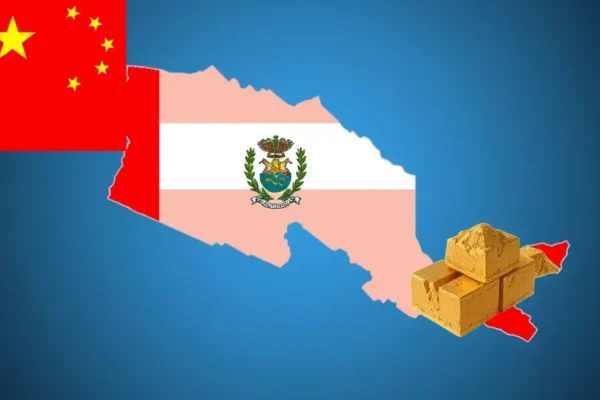
At its heart, this topic is about a country, Nicaragua, agreeing to let companies, specifically from China, dig up and take away a valuable natural resource, gold. Think of it like owning a bakery and agreeing to let a big company from another town use your special oven and take all the bread you bake for them to sell elsewhere. These agreements are called mining concessions. A concession is essentially permission granted by a government to a company to explore for and extract natural resources, like gold, from a specific area of land for a certain period. For Nicaragua, this means granting significant rights over its mineral wealth.
Why should you care about deals like these involving Nicaragua China mining? Because they are more than just local business transactions. They can ripple outwards, affecting global markets for precious metals, influencing the economies of entire regions, and even reshaping geopolitical relationships – the way countries interact on the world stage. Understanding these gold concessions Nicaragua grants helps us see how international economics and politics are deeply intertwined, impacting the price of gold you might see in the news, the stability of regions like Central America, and the broader US China geopolitical landscape.
How Nicaragua China Mining Deals Work
When a country like Nicaragua grants mining rights, it’s a structured process. First, the Nicaraguan government identifies areas believed to contain valuable minerals, such as gold. Then, it opens these areas up for bids from companies interested in exploration and extraction. Chinese companies, looking for resources to fuel their own growing economy, have shown significant interest. They might sign agreements for what are called mining concessions, where they get exclusive rights to mine in a designated zone.
The typical mechanism involves the Chinese companies investing heavily in exploration – using technology to find out exactly how much gold is there – and then in extraction, which means building mines, hiring workers (sometimes local, sometimes imported), and processing the ore to get the pure gold. In return for these rights, the Nicaraguan government usually receives payments, often called royalties (a percentage of the gold extracted) or taxes. Imagine a landlord (Nicaragua) who owns a building with a hidden treasure room (gold deposits). They agree to let a professional treasure hunter (Chinese company) use their tools and expertise to find and take the treasure, giving the landlord a cut of what’s found.
For example, in recent years, China has been expanding its economic reach globally, and Central America has become a focus. Companies like China National Gold Group Corporation or Shandong Gold Mining Co. Ltd. are major players in the international mining scene and could be involved in such arrangements. These deals can specify the duration of the concession, the environmental standards the company must follow, and the profit-sharing mechanisms. This isn’t just about digging; it’s a complex financial and legal arrangement that transfers ownership rights to mineral extraction.
Why These Gold Deals Matter to Everyone
The implications of extensive Nicaragua China mining deals extend far beyond the borders of Nicaragua. For individuals, changes in the global supply of gold can influence its price. If more gold is extracted, especially with large investments from major global players, it could potentially put downward pressure on gold prices. This matters to investors who hold gold as an asset or for countries that hold gold reserves.
Economically, these deals can have a significant impact on Nicaragua’s own Nicaragua economy. Gold mining can bring jobs, foreign investment, and government revenue through taxes and royalties. However, it also carries risks. A heavy reliance on resource extraction can make an economy vulnerable to fluctuations in global commodity prices. Environmental concerns are also paramount; mining, if not managed properly, can lead to pollution and land degradation, affecting local communities and ecosystems.
From a broader perspective, these gold concessions Nicaragua grants are part of a larger global trend. China’s growing demand for resources and its increasing outward investment strategies are reshaping economic relationships. When Chinese companies gain significant resource control in a region like Central America, it can be seen as establishing a strategic foothold. This is where Central America influence intersects with global power dynamics, creating a visible aspect of US China competition for economic and political leverage. Countries that benefit directly are often the mining companies and, ideally, the host nation through revenue. Those potentially affected negatively could be local communities if environmental standards are not met, or nations that see a shift in regional influence.
The Evolving Landscape of Resource Deals
The practice of countries granting concessions for resource extraction is not new. Throughout history, colonial powers often secured rights to minerals and other resources from territories they controlled or influenced. What’s different now is the nature of the players and the global interconnectedness. In the 20th century, Western multinational corporations often dominated the scene. Today, state-owned enterprises and private companies from emerging economies, particularly China, are increasingly prominent.
The current interest in Nicaragua China mining is largely driven by China’s immense appetite for raw materials to sustain its manufacturing sector and infrastructure development. According to the U.S. Geological Survey (USGS), global gold production is spread across various countries, and the demand for gold is influenced by its use in jewelry, electronics, and as an investment asset. China’s Belt and Road Initiative, a massive global infrastructure development strategy, often involves resource-backed financing and investments, making deals like these a key component. This signifies a geopolitical shift where economic cooperation often intertwines with strategic objectives. Recent reports from organizations monitoring international investment indicate a rise in Chinese involvement in resource extraction projects across Latin America, highlighting this ongoing trend.
Thinking About Gold Mining Rights in Your Financial Life
For individuals, understanding these international resource deals helps to contextualize news about commodity prices and global politics. When you hear about international agreements involving resource extraction, it’s helpful to consider the potential impact on supply chains and the prices of goods you might buy or invest in. For instance, a surge in gold prices might affect the cost of electronics that use gold components, or impact the value of gold jewelry.
A common misconception might be that these deals are purely about one country exploiting another. While power imbalances can exist, they are also complex economic arrangements involving investment, job creation, and revenue generation for the host country. It’s crucial to look beyond simplistic narratives and consider the specific terms of the agreements. When you see news about gold concessions Nicaragua granting, it’s worth considering: Who is investing? What are the stated benefits? Are there independent reports on environmental impact and local community engagement?
An actionable insight is to remember that international commodity markets are influenced by many factors, including geopolitical events and large-scale resource extraction agreements. Diversifying your investments, if you are an investor, can help mitigate risks associated with any single commodity or region’s economic stability. Understanding the broader Nicaragua economy and its reliance on such deals provides context for its economic trajectory.
Connecting Gold Deals to Broader Economic Concepts
This topic is closely related to several other financial and economic concepts. Foreign direct investment (FDI) is a key element, as Chinese companies are directly investing capital into Nicaragua. Commodity markets are central, as gold is a global commodity whose price is determined by supply and demand. Understanding resource nationalism, where a country seeks to exert greater control over its natural resources, can also provide context.
The concept of emerging markets is also relevant, as countries like Nicaragua are often seen as emerging economies that can benefit from foreign investment but also face development challenges. Furthermore, the impact on global trade balances and the geopolitics of resources are critical connections. Understanding mining concessions in a broader sense helps to grasp how nations leverage their natural wealth.
Frequently Asked Questions About Nicaragua China Mining
How does Nicaragua China mining affect global gold prices?
Large-scale mining operations, especially by major global players like Chinese companies, can increase the global supply of gold. If supply increases significantly without a corresponding rise in demand, it could lead to lower gold prices, although many factors influence this market.
What are the economic benefits for Nicaragua from these gold concessions?
Nicaragua can benefit from foreign investment, job creation, tax revenues, and royalties from the extracted gold. However, these benefits depend heavily on the terms of the agreements and responsible resource management.
Is this related to US China competition in Central America?
Yes, the expansion of Chinese economic influence through resource deals like Nicaragua China mining is often viewed within the broader context of US China competition for influence and strategic partnerships in regions like Central America.
Can ordinary people in Nicaragua directly benefit from these mining deals?
Direct benefits for ordinary citizens can come through employment opportunities, local business development, and potentially through government revenue used for public services. However, the extent of these benefits depends on local hiring practices, corporate social responsibility, and effective government revenue management.
What are the risks associated with extensive gold mining concessions?
Risks include potential environmental damage, such as pollution and deforestation, and social impacts on local communities. Economic risks involve the potential for a country to become over-reliant on commodity exports, making it vulnerable to price volatility.
How does China’s strategy in Central America influence other countries?
China’s growing economic presence, including through mining concessions, can influence trade patterns, investment flows, and diplomatic alignments in Central America, potentially shifting regional dynamics and increasing its Central America influence.
Financial situations vary for individuals and countries alike. This article provides general educational information and is not intended as financial advice. For personal financial decisions or to understand how specific international events might affect your investments, please consult with a qualified financial professional. Past performance is not indicative of future results, and all investments carry risk.











