

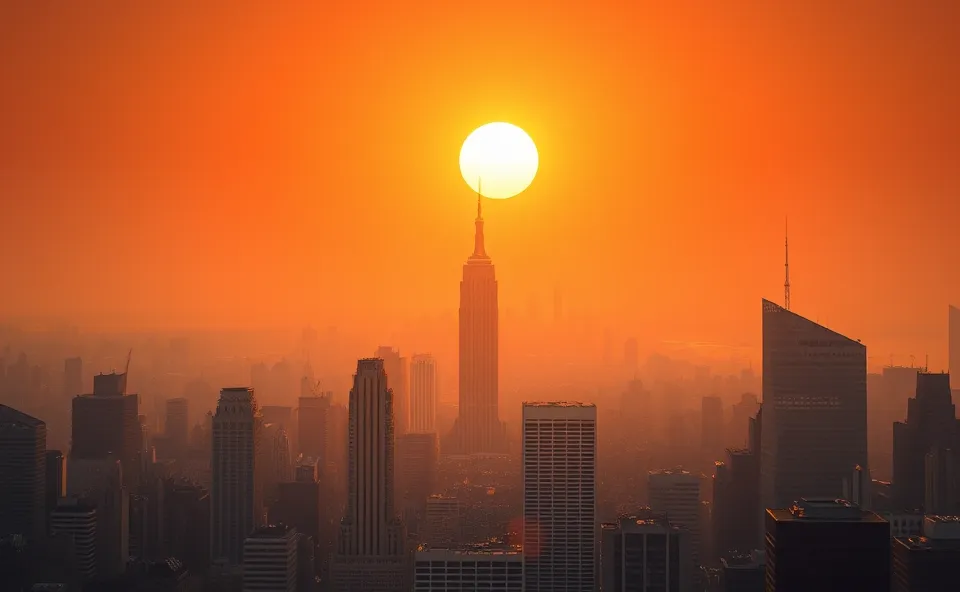
When New York Feels Like a Sauna
Imagine stepping outside and feeling like you just walked into a giant steamer basket. That is exactly what is happening with the latest New York heatwave. While the thermometer might show a number that looks manageable, the actual experience is much more intense. The city is bracing for a stretch where the heat index is expected to hit 109 degrees Fahrenheit. For those who are not familiar with the term, the heat index is not the actual air temperature. It is a measure of how hot it actually feels to the human body when you add humidity into the mix.
This brings up a classic debate: is a New York summer worse than a desert summer? Many people compare NYC extreme heat to the weather in Phoenix, Arizona. In Phoenix, you have dry heat. Your sweat evaporates quickly, which helps your body cool down. But in New York, the humidity acts like a blanket. It traps moisture against your skin and stops that evaporation from happening. This is why, even if the actual temperature in Phoenix is higher, a day that feels like 109 degrees Fahrenheit in New York can feel much more oppressive. When it is this sticky, your body struggles to regulate its own temperature, making the heat feel heavier and more exhausting.
The current weather forecast is sending a clear signal that this is not just a typical warm spell. It is an extreme event that requires a change in how people move and breathe in the city. When the air is this saturated with moisture, the simple act of walking a few blocks can feel like a workout. It is a physical weight that settles over the five boroughs, turning the city into a humid pressure cooker.
Why the Timing is Creating a Buzz
If this heat happened in the middle of a random Tuesday in July, it would be a nuisance. But the timing of this New York heatwave is what has everyone talking. We are heading straight into a holiday weekend, which is usually the time when millions of people plan outdoor barbecues, rooftop parties, and trips to the beach. Suddenly, those plans are colliding with a severe heat advisory.
People are searching for updates because they are trying to figure out if their outdoor plans are even safe. When the heat index climbs toward that 109 mark, the risk of heat exhaustion and heatstroke skyrockets. This has led to a surge in interest regarding heat safety and the location of city cooling centers. Everyone wants to know if they should pivot their holiday celebrations from the park to an air conditioned living room.
There is also a psychological element at play. New Yorkers are used to heat, but there is a threshold where the city becomes nearly unlivable without electricity. The anxiety surrounding the holiday weekend stems from the fear of power outages. When everyone turns their air conditioning to the maximum setting at the exact same time, the electrical grid takes a massive hit. The combination of high stakes, a holiday crowd, and dangerous temperatures has turned this weather event into a trending topic across the city.
The Concrete Oven Effect
To understand why New York gets so much hotter than the surrounding countryside, we have to look at the urban heat island effect. New York City is essentially a massive collection of concrete, asphalt, and steel. These materials are experts at absorbing heat from the sun during the day and holding onto it. While a forest or a park can cool down quickly once the sun sets, the streets of Manhattan keep radiating heat long into the night.
This means that during an NYC extreme heat event, there is no real escape. Even at 2:00 AM, the pavement is still warm to the touch. This creates a cycle where the city never truly resets. The heat from Friday lingers into Saturday, and Saturday adds more heat on top of it. When you add the humidity from the surrounding Atlantic Ocean, you get a recipe for a heatwave that feels endless.
This isn’t a new phenomenon, but it is getting worse. As climate change pushes global temperatures higher, these urban heat islands are becoming more dangerous. We are seeing more frequent spikes in temperature and longer durations of extreme heat. The city was built for a different era of weather, and the infrastructure is now struggling to keep up with a climate that is becoming more volatile and aggressive.
How Extreme Heat Strains Our Tech and Economy
While we usually talk about heatwaves in terms of comfort, there is a massive technological and business impact behind the scenes. The most immediate concern is the power grid. Air conditioning is a power hungry technology. When a city of millions cranks up the AC to fight a 109 degree feel, the demand for electricity can peak at levels that the grid was not designed to handle. This leads to brownouts or total blackouts, which can paralyze everything from subway lines to elevators.
From a business perspective, extreme heat impacts productivity. High temperatures are known to slow down cognitive function and increase irritability. For companies with physical offices, the cost of cooling massive glass buildings becomes a significant overhead expense. For the tech sector, the challenge is even more literal. Data centers, which power our apps and websites, generate an enormous amount of heat. They rely on massive cooling systems to keep servers from melting down. During a New York heatwave, these systems have to work twice as hard, increasing energy costs and the risk of hardware failure.
There are also shifts in consumer behavior. Local businesses that rely on foot traffic, like street vendors or open air markets, see a sharp decline in customers who are too afraid to step into the heat. On the other hand, delivery services and indoor entertainment venues see a spike. The economy of the city literally shifts indoors, changing how money flows through the local markets during these peaks.
Building a City That Can Breathe
Looking ahead, New York cannot simply rely on bigger air conditioners to survive. The long term solution involves rethinking the technology of the city itself. We are likely to see a push toward more green infrastructure. This includes things like green roofs, where plants are grown on top of buildings to absorb sunlight and cool the air naturally. Planting more urban forests is another key strategy to break up the urban heat island and provide natural shade.
We can also expect to see smarter energy grids. The integration of AI and smart meters can help the city distribute electricity more efficiently, predicting where the load will be highest and preventing the dreaded blackout. There is also a growing interest in reflective building materials. Using “cool pavements” or white roofs can bounce sunlight back into space rather than absorbing it into the concrete.
Ultimately, the goal is resilience. As climate change continues to make these events more common, the city will have to evolve. The focus will shift from simply surviving a heatwave to designing an environment that naturally resists extreme heat. This means better urban planning and a commitment to adding nature back into the concrete jungle.
Common Questions About the Heatwave
Why does the New York heatwave feel hotter than Phoenix?
It comes down to humidity. Phoenix has a dry heat, which allows sweat to evaporate and cool your body. New York has high humidity, which traps heat and moisture against your skin. This makes the heat index feel much more intense, even if the actual temperature is lower than in the desert.
What is the difference between temperature and heat index?
Temperature is the actual reading on a thermometer. The heat index is a “real feel” calculation that combines air temperature and relative humidity. When the humidity is high, it prevents your body from cooling itself, making it feel like it is 109 degrees Fahrenheit even if the thermometer says something lower.
How can I stay safe during NYC extreme heat?
The best heat safety tips include staying hydrated, wearing lightweight clothing, and avoiding outdoor activity during the hottest part of the day. If you do not have air conditioning, look for official cooling centers provided by the city to lower your body temperature.
What is a heat advisory and why is it issued?
A heat advisory is issued by weather services when a combination of high temperature and humidity makes it dangerous to be outdoors for long periods. It serves as a warning for people to take precautions to avoid heat related illnesses.
How does climate change affect the urban heat island?
Climate change increases the baseline temperature of the planet. Because cities like New York are made of heat absorbing materials, they amplify this warming. This makes the urban heat island effect more severe, leading to more frequent and more intense heatwaves.











