

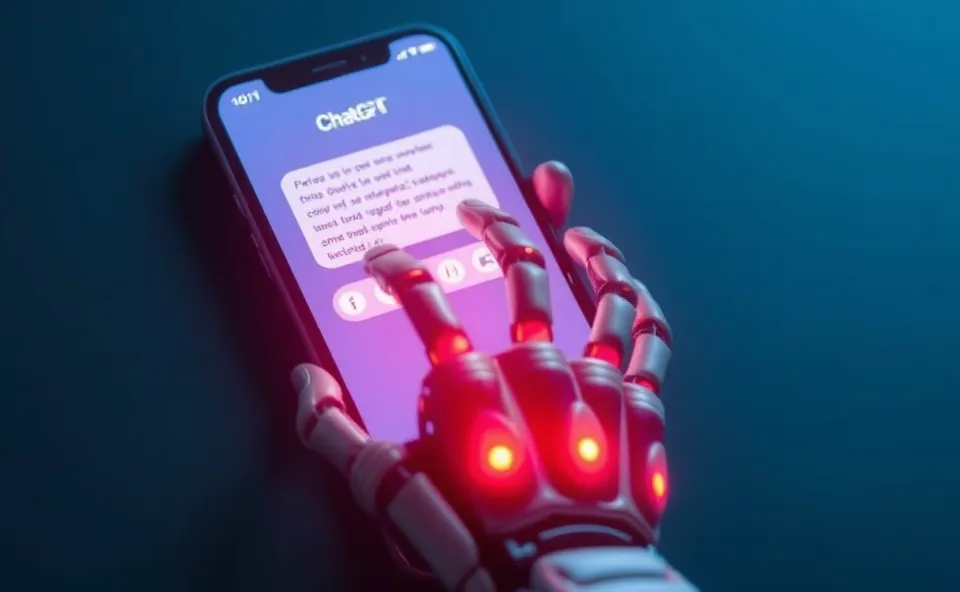
The AI That Writes Code Is Now in Your Pocket
Get ready for a major upgrade to your smartphone experience. OpenAI, the folks behind the incredibly popular ChatGPT, have quietly been weaving their powerful Codex AI into the ChatGPT mobile app. You might know Codex as the AI that can understand and write computer code. Now, imagine that capability at your fingertips, right on your phone. This isn’t just about making ChatGPT smarter; it’s about unlocking new ways to interact with technology, build apps, and even automate tasks, all through simple conversation.
Think of it like this: ChatGPT has always been brilliant at chatting, explaining, and creating text. Codex, on the other hand, is a coding genius. By bringing them together in the ChatGPT mobile app, OpenAI is creating a super-powered assistant that can not only talk to you but also understand and generate instructions for software. This integration is a big deal because it makes sophisticated AI code writing accessible to everyone, not just programmers. You can ask it to draft a simple script for your spreadsheet, explain a piece of code, or even help you brainstorm ideas for a new mobile app, all from the convenience of your phone.
Why the Buzz Around AI Code Now?
The reason this integration is causing so much excitement right now is that it brings a powerful, once niche capability into the mainstream. For a long time, advanced AI code generation was something that primarily lived in the realm of developers, requiring specific tools and expertise. However, with the increasing sophistication of large language models like those powering ChatGPT and Codex, the barrier to entry has dramatically lowered. People are realizing that you don’t need to be a coding expert to leverage the power of AI code writing.
Furthermore, the move to bring this capability to a mobile app is incredibly strategic. We live in a mobile-first world. Most of us spend more time on our phones than on our computers. Having the ability to generate and understand code directly on a device that’s always with us opens up a world of possibilities for on-the-go productivity, learning, and innovation. It democratizes access to powerful development tools, making them available to a much wider audience. This is why you’re seeing so much talk about ChatGPT app updates and the broader OpenAI strategy around making AI more accessible and useful in everyday life.
A Look Back at the AI Evolution
To truly grasp the significance of OpenAI integrating Codex into its ChatGPT mobile app, it helps to understand where we’ve come from. For years, AI has been steadily advancing, but its applications often felt limited to specific tasks or required specialized knowledge. ChatGPT, when it first burst onto the scene, revolutionized conversational AI, making it feel natural and engaging to interact with machines. It showed us what was possible when AI could understand context and generate human-like text.
Meanwhile, separately, powerful AI models like Codex were being developed, focusing on the intricate world of computer programming. These models could translate natural language descriptions into functional code. Imagine describing what you want a piece of software to do, and the AI writes the code for you. This was groundbreaking for developers, speeding up their workflow and helping them tackle complex coding challenges. Before the mobile app integration, using Codex typically involved specific platforms or developer tools. The journey has been about taking these incredibly potent but somewhat isolated AI capabilities and making them more integrated and user-friendly. This latest move represents a significant leap in that direction, bringing advanced AI code generation out of specialized environments and into a widely accessible mobile application.
What This Means for You and Me
The implications of OpenAI bringing Codex into the ChatGPT mobile app are far-reaching and incredibly exciting for everyday users, businesses, and the broader tech landscape. For individual users, it means a much more powerful and versatile tool in their pocket. You can now:
- Learn to code more easily: Ask ChatGPT to explain code snippets, generate examples, or even walk you through coding concepts.
- Automate simple tasks: Need a quick script to organize files or extract data from text? ChatGPT can help write it.
- Prototype app ideas: Brainstorm app features and get basic code outlines or suggestions for building them, even if you’re not a seasoned developer.
- Troubleshoot issues: If you encounter a small code-related problem, you might be able to get help directly through the app.
For businesses, especially small and medium-sized ones, this integration offers significant advantages. It lowers the barrier to entry for custom software development and automation. Instead of needing to hire expensive developers for every small task, businesses can leverage ChatGPT to generate scripts for internal processes, analyze data more efficiently, or even build simple tools. This could lead to increased productivity and cost savings. It’s a step towards making enterprise AI more accessible and practical for a wider range of operations.
From a technological perspective, this move blurs the lines between different types of AI tools. It shows a clear trend towards consolidating powerful AI capabilities into more unified and accessible platforms. The ability to control apps or generate code directly through conversational AI on a mobile device is a significant advancement. It’s a clear signal that the future of interacting with technology will be more intuitive, more conversational, and more powerful than ever before. We are seeing the evolution from desktop AI tools to integrated mobile AI solutions that can handle a wider array of complex tasks.
What Could Be Next on the Horizon?
Looking ahead, the integration of OpenAI Codex into the ChatGPT mobile app is likely just the beginning. We can expect further refinements and expansions of these capabilities. One logical next step is even deeper integration with mobile operating systems themselves. Imagine being able to ask ChatGPT to adjust your phone’s settings, manage notifications more intelligently, or even control specific features within other apps through generated code or commands, perhaps in a way that could rival macOS app control through AI.
We might also see OpenAI focus on making the code generation even more robust and specialized. While it’s already powerful, future iterations could offer more tailored code for specific programming languages, frameworks, or even complex application architectures. This could make the ChatGPT app a go-to tool for developers at various stages of their careers, not just for learning but for actual development work.
Furthermore, as AI code writing becomes more mainstream, we could see new types of applications emerge that are specifically designed to leverage this capability. This might include more sophisticated AI-powered design tools or platforms that allow users to build complex functionalities through natural language prompts. The focus will likely remain on making AI more useful and accessible, pushing the boundaries of what’s possible with conversational AI and code generation, and continuing to shape the future of enterprise AI and personal tech assistants.
Frequently Asked Questions
What is OpenAI Codex and how does it work with the ChatGPT mobile app?
OpenAI Codex is an AI system that can understand and generate computer code. When integrated into the ChatGPT mobile app, it allows users to ask ChatGPT to write code, explain code, or help with coding tasks directly from their phone. This means you can use natural language to interact with code generation capabilities.
How can I use AI code writing features in the ChatGPT app?
You can use the AI code writing features by simply asking ChatGPT questions or giving it commands related to code. For example, you could say, “Write a Python script to sort a list of names” or “Explain what this JavaScript code does.” The app update brings these powerful OpenAI Codex features to your mobile device.
Will this ChatGPT app update help beginners learn to code?
Absolutely. The integration of OpenAI Codex makes learning to code much more accessible. Beginners can ask for code explanations, see how code works, get example code snippets, and receive guidance on programming concepts. It turns the ChatGPT mobile app into a personal AI tutor for coding.
What are the implications for mobile app development with this new OpenAI strategy?
This integration democratizes aspects of mobile app development. While it won’t replace experienced developers for complex projects, it empowers individuals and small businesses to prototype ideas, create simple scripts, or understand code better. This reflects OpenAI’s broader strategy to make advanced AI tools more widely available and useful on mobile platforms.
Are there other desktop AI tools or apps that offer similar AI code generation?
Yes, there are various desktop AI tools and other platforms that offer AI code generation. However, the significance of the OpenAI Codex integration into the ChatGPT mobile app lies in its seamless conversational interface and its availability on a device most people carry everywhere. It brings powerful AI code writing capabilities into a familiar and accessible mobile environment, enhancing the overall ChatGPT app experience.











