

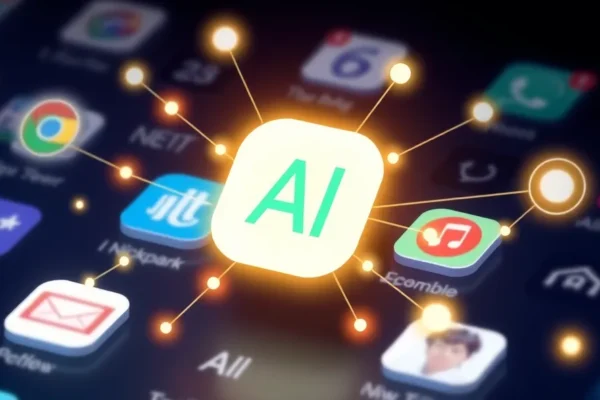
Meet OpenAI Dots Your New Always-On AI Assistant
Imagine an AI that doesn’t just wait for your command but actually thinks ahead, connecting your apps and tackling complicated chores before you even ask. That’s the promise of OpenAI’s new “Dots” AI agents. These aren’t your typical chatbots; they’re designed to be proactive, always-on AI companions that can juggle multiple steps and interact with your favorite services. Think of them as super-smart helpers that can manage a string of tasks, making your digital life smoother. If you’re already using AI assistants, you’ll want to know how Dots could change the game.
What Can OpenAI Dots Do For You in Real Life?
The real magic of OpenAI Dots lies in their ability to handle complex, multistep tasks seamlessly. Instead of you telling an AI assistant one step at a time, Dots can understand a whole request and execute it.
Here are a few ways this could work for you:
- If you travel frequently: Imagine saying, “Book me a flight to London for next Tuesday, find a hotel near the conference center with good reviews, and add it all to my calendar.” Dots could then go to your travel app, check flight prices, find hotels based on your preferences, book them (with your confirmation, of course), and then slot it all into your calendar, even sending an alert to your partner. It’s like having a personal travel agent that never sleeps.
- If you manage a busy household: You could tell Dots, “Create a grocery list for this week based on our usual meals, check if we have everything in the pantry using our smart fridge app, and then order the missing items from the supermarket for delivery on Friday.” Dots would then cross-reference your pantry inventory with your meal plan and place the order automatically.
- If you’re a content creator: A request like, “Find the top 5 trending topics in my niche this week, draft a social media post for each with relevant hashtags, and schedule them for optimal engagement times,” could be handled by Dots. They’d scour the web, analyze data, write drafts, and prep them for posting across your platforms.
This proactive AI approach feels like a significant step towards truly integrated personal AI assistants.
Who Should Be Excited About OpenAI Dots?
This technology is clearly aimed at a few key groups:
- Best for: Power users and early adopters who are already leveraging AI tools and want to push the boundaries of what’s possible. If you love automating your life and are comfortable with new technology, Dots will be right up your alley.
- Good for: Busy professionals and individuals looking to reclaim time and reduce mental load. Anyone who juggles multiple responsibilities and uses a variety of apps could benefit from Dots handling the tedious interconnections.
- Skip if: You’re not yet comfortable with basic AI tools or prefer a simpler, more hands-off approach. Dots are designed for active integration and might feel overwhelming if you’re just starting with AI assistants. Also, if you’re highly concerned about data privacy and app permissions, you’ll want to carefully examine Dots’s security protocols.
How Do OpenAI Dots Stack Up Against the Competition?
The most direct comparison for OpenAI Dots is likely Meta’s Muse AI agents. While both aim to provide intelligent assistance, the key difference is in their approach to proactivity and app integration.
- OpenAI Dots seem to be built with a focus on truly independent, proactive task completion across a wide range of applications. They aim to connect your existing apps rather than replace them.
- Meta Muse, on the other hand, is reportedly more focused on understanding user intent and generating content or actions within Meta’s own ecosystem or partner apps.
In terms of price, it’s still early days, and details are scarce. However, OpenAI has a history of subscription-based models for advanced features, so expect something similar, potentially in tiers based on complexity or usage. Meta’s offerings might integrate with existing platforms, possibly offering a lower barrier to entry but with a more curated experience. The value proposition for Dots will likely be in its broad app compatibility and the depth of its multistep task handling.
Getting Started with Dots: Setup and Learning Curve
As with most cutting-edge AI, the initial setup for OpenAI Dots is likely to be a key factor in its adoption.
- Ease of Setup: We’re anticipating a process that involves granting permissions for Dots to access various apps and services you use. This is crucial for them to “connect” and act on your behalf. Think of it like giving a trusted assistant keys to different rooms in your digital house.
- Technical Skills: While you won’t need to be a coder, understanding which apps you want Dots to interact with and being comfortable managing permissions will be important. It’s less about technical knowledge and more about digital organization.
- Learning Curve: The initial learning curve will likely involve teaching Dots your preferences and refining your commands to be as clear as possible. The goal is for Dots to learn from your interactions, so the more you use them, the smarter they should become. It might take a few tries to get those complex requests just right, but the potential for long-term gains in efficiency is significant.
Real-World Pros of OpenAI Dots
From what we understand about their design, OpenAI Dots offer some compelling advantages:
- True Automation of Complex Tasks: This is the headline feature. Dots can handle sequences of actions that would otherwise require you to manually switch between multiple apps and instructions.
- Proactive Assistance: The “always-on” nature means Dots can potentially anticipate needs and act without explicit, real-time prompting, saving you time and mental effort.
- Seamless App Integration: The ability to connect and orchestrate actions across diverse applications is a major leap forward, breaking down digital silos.
- Personalized Efficiency: As Dots learn your habits and preferences, they can become increasingly tailored to your individual workflow and needs.
- Reduced Cognitive Load: Offloading repetitive or multi-step digital tasks can free up your brainpower for more creative or critical thinking.
User feedback from early testers (where available) often highlights the “wow” factor of seeing multiple actions complete automatically.
Real-World Cons and Limitations to Consider
Even with exciting new tech, there are always drawbacks:
- Privacy Concerns: Granting an AI access to multiple apps and your data inherently raises privacy questions. Robust security and clear data usage policies will be paramount.
- Permission Management: Keeping track of which apps Dots have access to and revoking permissions if needed could become complex over time.
- Potential for Errors: Complex multistep tasks can go wrong. If Dots misinterpret a command or an app has an outage, it could lead to unintended consequences or incomplete tasks.
- Compatibility Limitations: While the goal is broad integration, not every app or service might be immediately compatible, or the level of integration might vary.
- Learning Curve for Nuance: Getting Dots to perform exactly as you intend for very specific or nuanced tasks might require significant fine-tuning and patience.
Price, Value, and Affordability
As of now, specific pricing for OpenAI Dots hasn’t been fully detailed by OpenAI. However, given their advanced capabilities and OpenAI’s existing pricing structures for services like ChatGPT Plus, it’s reasonable to expect:
- Cost of Entry: Likely a monthly subscription model, possibly tiered based on the number of agents, complexity of tasks, or usage limits. We might see a starting price in the range of $10-$30 per month, with premium tiers costing more.
- Value Proposition: For individuals and professionals who can significantly benefit from automation and time savings, the value could be substantial, potentially outweighing the subscription cost. This is a technology that promises to pay for itself in reclaimed time.
- Hidden Costs: Beyond the subscription, there are no obvious additional hardware costs. The “cost” will be in the time invested in setup and learning.
- Comparison to Alternatives: This will depend heavily on the final pricing. If Dots are priced competitively with other AI subscription services, their unique capabilities will justify the cost for the right user. Budget alternatives would likely be less integrated, requiring more manual input and separate app usage.
- Long-Term Value: The potential for ongoing improvement and adaptation means Dots could offer sustained value as AI technology evolves.
The Verdict: Who Should Grab OpenAI Dots?
OpenAI Dots represent an exciting glimpse into the future of personal AI. They’re poised to move beyond simple command-response interactions to become truly proactive and integrated digital collaborators.
- Who Should Buy This: Early adopters, tech enthusiasts, and busy professionals who are already invested in the AI ecosystem and are looking for significant automation capabilities to manage their complex digital lives. If you want to delegate multi-app workflows and free up mental energy, Dots are worth investigating as soon as they become widely available.
- Who Should Wait or Look Elsewhere: If you are new to AI, concerned about data privacy, or prefer a simpler digital experience, it might be wise to wait for Dots to mature or explore more basic AI assistants. If your needs are very simple, like just setting reminders or answering quick questions, this level of advanced AI might be overkill.
- Final Honest Take: OpenAI Dots have the potential to be a game-changer in personal AI. The ability to handle multistep tasks across apps is precisely what many users have been waiting for. However, as with all new, powerful tech, expect a period of learning, potential hiccups, and ongoing refinement. The value will be in how effectively you can integrate them into your workflow and manage the associated privacy considerations.
- Best Use Case: Delegating intricate, recurring digital tasks that involve multiple applications, such as managing travel bookings, complex research compilation, or sophisticated content scheduling.
Product prices and availability vary by region. Verify current pricing before purchase.
Common Questions About OpenAI Dots
What exactly are OpenAI Dots AI agents?
OpenAI Dots are advanced AI agents designed to proactively connect with your various apps and services to handle complex, multistep tasks automatically, acting as always-on AI assistants.
How is this different from current AI assistants like Siri or Alexa?
Unlike assistants that primarily respond to direct commands, OpenAI Dots are built to be proactive and orchestrate sequences of actions across different applications, aiming for a deeper level of integration and automation.
Will Dots replace the apps I already use?
No, the goal of Dots is to connect and work with your existing apps and services, not to replace them. They act as an intelligent layer that coordinates actions between them.
How much will OpenAI Dots cost?
While exact pricing isn’t fully detailed, expect a subscription-based model, likely with tiers similar to other advanced OpenAI offerings. Current estimates place it in a similar range to premium AI assistant services.
What are the privacy implications of using OpenAI Dots?
As Dots connect to multiple apps, granting them permissions raises privacy concerns. It’s crucial for OpenAI to provide clear transparency on data usage and robust security measures, and for users to manage their app permissions carefully.
Can I use OpenAI Dots for personal and work tasks?
Yes, the concept behind Dots is to integrate into your digital life broadly, so they can be used for both personal productivity and managing work-related workflows across various platforms.











