

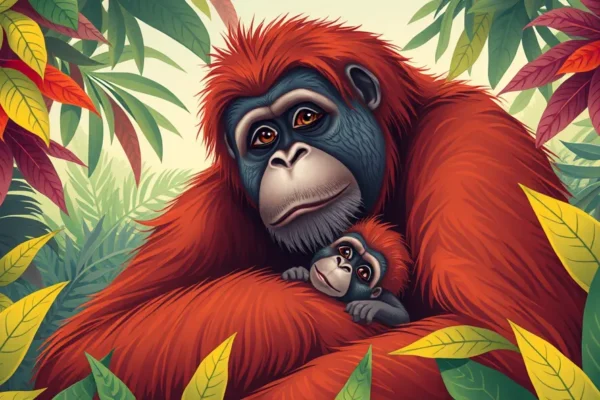
A Surprising Success Story: The Secret Life of Zoo Orangutans and Their Global Impact
In a world often preoccupied with the rapid advancements of artificial intelligence and quantum computing, a quiet success story unfolds in the realm of conservation, powered by dedicated animal care and innovative management. US zoos have been quietly nurturing a remarkable orangutan breeding program, leading to a significant increase in the population of these magnificent great apes. This success isn’t just a win for the animals themselves; it has sparked a wave of public engagement through social media and is directly contributing to vital orangutan conservation efforts in the wild. This story highlights how dedicated efforts within zoo conservation can have far-reaching impacts, offering a beacon of hope for endangered species.
Behind the Scenes of a Primate Breeding Breakthrough
The success of the orangutan breeding program in US zoos is a testament to meticulous planning and a deep understanding of these intelligent creatures. The Association of Zoos and Aquariums (AZA) manages this crucial initiative, known as a Species Survival Plan (SSP). Essentially, an SSP acts like a sophisticated matchmaking service for endangered animals. Zoos participating in the program share detailed information about their orangutans – their age, genetics, temperament, and reproductive history. A team of species experts then analyzes this data to make carefully considered decisions about which orangutans should be paired for breeding. The goal is to create genetically diverse and healthy offspring, maximizing the long-term survival of the species. This process is vital for maintaining a robust population, preventing the introduction of genetic defects, and ensuring that future generations of orangutans have the best possible chance of thriving.
From Zoos to the World: Social Media’s Role in Conservation
The charming antics of a baby orangutan, or the tender interactions between orangutan mothers and their young, are incredibly compelling. Zoos have increasingly leveraged social media platforms to share these moments with the public. Think of it like a global live stream of nature’s most adorable moments. High-quality photos and videos of orangutan births, playful juvenile behavior, and the daily lives of these primates are shared widely. This digital storytelling has a profound impact. It humanizes these great apes, making them relatable and fostering an emotional connection with audiences worldwide. When people see a fluffy baby orangutan learning to climb or a mother patiently grooming her offspring, they are more likely to care about the challenges these animals face in their natural habitats. This increased awareness is not just about likes and shares; it translates into tangible support for wildlife protection and animal rescue initiatives.
Boosting Wild Conservation Through Zoo Success
The significance of a healthy captive population for orangutan conservation in the wild cannot be overstated. Orangutans in their natural habitat, primarily on the islands of Borneo and Sumatra, face immense threats, including deforestation for palm oil plantations, illegal pet trade, and habitat destruction. The successful orangutan breeding program managed by the AZA and similar programs globally provide a vital safety net. This captive population serves as a genetic reservoir, ensuring that even if wild populations continue to decline, the species has a chance of survival. Furthermore, the funds and awareness generated by zoo visitors and online engagement often directly support on-the-ground conservation efforts. This can include habitat restoration projects, anti-poaching patrols, and rehabilitation centers for rescued orangutans. The zoo conservation model, when effectively implemented through programs like the SSP, directly contributes to wildlife protection by providing resources and advocating for the preservation of wild orangutan populations.
The Mechanics of Managed Breeding
The core of the orangutan breeding program relies on advanced population management techniques. Zoos utilize studbooks, which are detailed genetic records for each individual animal. These studbooks are crucial for understanding the genetic makeup of the entire captive population. When deciding on breeding pairs, experts aim to maximize genetic diversity. This is akin to a family tree, ensuring that closely related orangutans are not bred together, which can lead to health problems in offspring. The AZA’s SSP program uses complex software to analyze these studbooks and suggest optimal pairings. This scientific approach ensures that the breeding program is not just about increasing numbers but about building a resilient and genetically healthy population that could potentially be reintroduced into the wild in the future, although reintroduction is a complex process with many challenges. The primary goal currently is to secure the species’ survival in captivity as a vital backup.
Where Orangutan Conservation is Thriving Today
The AZA’s orangutan breeding program involves over 50 accredited zoos across the United States. These institutions are at the forefront of this zoo conservation effort, housing healthy populations of Bornean and Sumatran orangutans. Beyond the US, similar programs exist in Europe (managed by EAZA, the European Association of Zoos and Aquaria) and other parts of the world, all coordinated to ensure a global approach to the survival of these great apes. Visitors can witness these efforts firsthand at zoos like the San Diego Zoo, the Bronx Zoo, and the Indianapolis Zoo, which are actively involved in breeding and conservation education. The success is evident in the consistent births of baby orangutan individuals, demonstrating the program’s ongoing viability and effectiveness in supporting endangered species.
Facing the Competition: Other Conservation Approaches
While the orangutan breeding program in zoos is a critical component of conservation, it’s important to acknowledge other approaches to wildlife protection. The most vital effort remains the preservation of orangutans’ natural habitats in Borneo and Sumatra. Organizations like the Borneo Orangutan Survival Foundation (BOSF) and the Sumatran Orangutan Society (SOS) work tirelessly on the ground to protect forests, rescue and rehabilitate orangutans affected by deforestation and the illegal pet trade, and combat poaching. These field conservation efforts are direct interventions that address the root causes of orangutan endangerment. The zoo breeding programs and field conservation efforts are not mutually exclusive; they are complementary. Zoos provide a crucial safety net and generate public support, while field organizations work to save orangutans in their natural environment. The advantage of the zoo program lies in its controlled environment and ability to manage genetics precisely, offering a level of certainty for population growth that is challenging to achieve in the wild.
The Far-Reaching Ripples of Orangutan Success
The success of the orangutan breeding program has significant implications. Economically, it supports the operations of zoos, which are often non-profit organizations reliant on visitor revenue and donations. This, in turn, creates jobs in animal care, education, and conservation. Socially, the increased visibility of orangutans through social media fosters greater public awareness and empathy, encouraging more people to engage with conservation issues. This can lead to changes in consumer behavior, such as choosing sustainably sourced products that don’t contribute to habitat destruction. The timeline for impact is both immediate and long-term. Immediate impacts include increased public engagement and support for conservation organizations. Long-term, a genetically robust captive population ensures that orangutans will exist for future generations, providing opportunities for potential reintroduction if wild habitats can be secured. The existence of this zoo conservation success story also inspires other conservation efforts for different endangered species.
Navigating the Hurdles in Orangutan Conservation
Despite the successes, significant limitations and challenges remain for the orangutan breeding program and overall orangutan conservation. The primary challenge is the lack of space and resources to house an ever-growing captive population indefinitely. Moreover, reintroducing orangutans born and raised in captivity back into the wild is an incredibly complex and challenging undertaking. These animals need to learn survival skills, understand social dynamics of wild groups, and find suitable habitats, which are often scarce. Genetic diversity, while managed, can still be a concern in smaller populations. Funding for both zoo-based programs and crucial on-the-ground conservation efforts is a perpetual challenge. The ultimate goal remains the preservation of wild orangutan populations, and success in captivity is a means to that end, not the end itself. The ethical considerations of keeping great apes in captivity, even for conservation purposes, are also a subject of ongoing discussion within the conservation community.
The Future Path for Orangutan Survival
The future trajectory of the orangutan breeding program is likely to involve continued refinement of genetic management techniques and closer collaboration between zoos and field conservation organizations. Researchers are exploring advanced genetic analysis to further optimize breeding decisions and potentially identify individuals with traits best suited for future reintroduction. There is also ongoing research into assisted reproductive technologies, though these are still in early stages for great apes and are complex to implement. The focus will continue to be on ensuring the health and genetic viability of the captive population while simultaneously advocating for and supporting habitat protection in the wild. The ultimate goal, as stated by many conservationists, is to reach a point where such robust captive breeding programs are no longer the primary safety net, because the wild populations are thriving. Developments to watch include advancements in habitat restoration technologies and the effectiveness of international policies aimed at protecting rainforests.
Frequently Asked Questions About Orangutan Conservation
Is the orangutan breeding program the only way to save these animals?
No, the orangutan breeding program in US zoos is a vital component of a multi-faceted conservation strategy. It complements crucial efforts to protect wild orangutan habitats and combat threats like deforestation and poaching.
How successful is the orangutan breeding program in terms of numbers?
The program has been very successful in maintaining and increasing the captive population of orangutans, ensuring a healthy genetic diversity among these endangered species. This provides a critical safety net for the species.
What are the biggest threats to orangutans in the wild?
The primary threats are habitat loss due to deforestation, particularly for palm oil plantations, and the illegal pet trade, which often involves the killing of mother orangutans to capture their young.
Can orangutans bred in zoos be released back into the wild?
Reintroduction is a complex and challenging process that requires significant preparation and suitable wild habitats. While it is a long-term goal, it is not always feasible for every individual.
How does social media help orangutan conservation?
Social media raises awareness and fosters emotional connections with orangutans, particularly adorable baby orangutan stories. This engagement often translates into increased public support and donations for wildlife protection and animal rescue efforts.
What can an average person do to help orangutan conservation?
Consumers can make informed choices by supporting companies that use sustainable palm oil, reducing their consumption of products that contribute to deforestation, and donating to reputable orangutan conservation organizations working on the ground.
This article is based on information from the Association of Zoos and Aquariums (AZA) and various wildlife conservation organizations. The information presented reflects the current understanding and capabilities within the field of zoo-based conservation and its impact on wild populations. Further research and advancements are continually being made.











