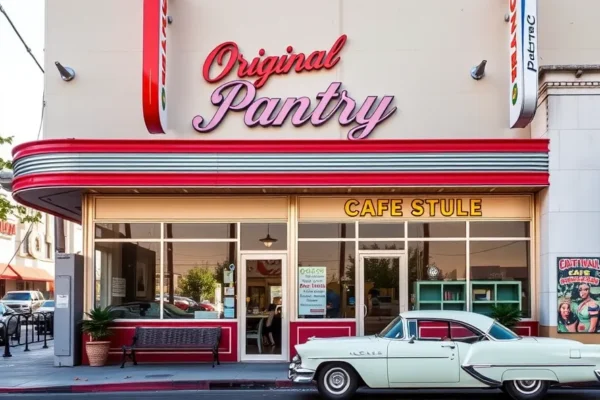
The Iconic Original Pantry Cafe Reopens Its Doors in Downtown Los Angeles
The historic Original Pantry Cafe, a beloved century-old diner in downtown Los Angeles, has officially reopened its doors after a significant hiatus. This celebrated LA diner comeback marks the return of a landmark that has served Angelenos for generations. The reopening was confirmed by owner Joe Antoci, with initial reports surfacing in early 2024 following a period of closure. The landmark establishment, a fixture in the heart of downtown Los Angeles, is back to serving its classic comfort food and bustling atmosphere.
A Dual Mission Driving the Restaurant Reopening LA
The strategic rationale behind the Original Pantry Cafe’s reopening is twofold, encompassing both a commercial imperative and a deeply ingrained social mission. On one hand, the decision represents a calculated business comeback, aiming to reclaim its position as a popular dining destination and generate restaurant profits in a revitalized downtown landscape. On the other, the reopening is intrinsically linked to a profound commitment to addressing homelessness services in Los Angeles. This dual focus is not merely a PR exercise; it appears to be a core tenant of the business strategy, reflecting a desire to leverage the diner’s enduring appeal for positive community impact. According to statements from management, a significant portion of the restaurant’s profits is earmarked for supporting initiatives that provide shelter, food, and job training for individuals experiencing homelessness. This approach aims to create a sustainable model where commercial success directly fuels social good, setting a precedent for other businesses in the region.
Competitive Positioning in a Dynamic LA Restaurant Scene
The Original Pantry Cafe’s reopening enters a competitive Los Angeles restaurant market that is both diverse and rapidly evolving. The vintage diner’s strength lies in its established brand recognition, its historical significance, and its appeal as an affordable, unpretentious dining experience. In a city increasingly dominated by trendy, high-end eateries and global chains, the Original Pantry Cafe occupies a unique niche. Its revival offers a compelling alternative for customers seeking classic American comfort food and a connection to the city’s past. This positions the century-old diner as a direct competitor to other casual dining establishments and diners across downtown Los Angeles, but with the added advantage of its iconic status. While newer restaurants might compete on innovation or ambiance, the Pantry capitalizes on nostalgia and a proven, enduring customer base. The company’s commitment to social impact could also serve as a differentiator, attracting customers who value businesses that contribute positively to the community. This community support aspect is likely to resonate strongly in Los Angeles, a city often grappling with social challenges.
Industry Trends Toward Socially Conscious Business Models
The Original Pantry Cafe’s strategic alignment of profit with purpose reflects a growing trend within the broader restaurant industry. Consumers, particularly younger demographics, are increasingly seeking out businesses that demonstrate a commitment to social responsibility. This move signals a recognition by legacy establishments that authenticity, historical significance, and a clear social mission can be powerful drivers of customer loyalty and positive public perception, especially in a crowded market like Los Angeles. The LA diner comeback of such an iconic spot, coupled with its social initiatives, could inspire other businesses to explore similar models. Industry peers may observe the Original Pantry Cafe’s success to gauge the viability of integrating social impact into core business operations, rather than treating it as a separate corporate social responsibility (CSR) initiative. This approach challenges the traditional separation of profit and purpose, suggesting a future where businesses can thrive by doing good.
Financial Outlook: Balancing Nostalgia and Social Investment
The financial implications of the Original Pantry Cafe’s reopening are multifaceted. The immediate goal is to generate revenue through increased foot traffic and sustained customer patronage. As a well-loved establishment, there is significant pent-up demand and inherent brand equity that can be leveraged. The success of the restaurant profits, however, will be directly tied to operational efficiency, menu pricing, and effective cost management, especially in the current economic climate. The commitment to directing a portion of profits towards homelessness services adds another layer of financial consideration. While this can boost brand image and customer loyalty, it also means a portion of potential profit is dedicated to a social cause. The long-term financial impact will depend on the sustainability of both revenue generation and the effectiveness of the social programs. Analysts will be watching closely to see if the dual mission creates a virtuous cycle where increased profits allow for greater social investment, which in turn enhances brand reputation and further drives profits. Specific financial projections have not been publicly disclosed, but the historical success of the Original Pantry Cafe suggests a strong foundation for generating revenue.
Execution Risks: Revitalizing a Legacy While Fulfilling a Social Mandate
Despite the optimistic outlook, the Original Pantry Cafe’s return faces several execution risks and challenges. Revitalizing a beloved, century-old diner requires careful attention to maintaining its authentic charm while meeting modern customer expectations for service and quality. There’s a risk of alienating long-time patrons if the changes are too drastic, or failing to attract new customers if the offerings remain stagnant. Historically, such business comebacks can be complex. Furthermore, the ambitious social mission, while commendable, introduces operational complexities. Effectively managing and distributing funds for homelessness services requires robust organizational capacity, transparency, and demonstrable impact. Ensuring that these initiatives are genuinely effective and not just symbolic will be crucial for maintaining public trust and achieving the intended social outcomes. There’s also the risk of increased operating costs associated with maintaining a historic building and potentially higher wages or benefits to align with social values. Market volatility, changes in downtown Los Angeles foot traffic, and shifts in consumer spending habits are external factors that could impact the business comeback’s success.
Stakeholder Impact: Community, Staff, and Customers at the Forefront
The reopening of the Original Pantry Cafe has significant implications for various stakeholders. For the downtown Los Angeles community, it represents the return of a cultural touchstone and a potential boost to local economic activity. The commitment to homelessness services is particularly impactful, offering tangible support to a vulnerable population and setting a positive example for community support. Employees will benefit from renewed job opportunities, and the company’s stated commitment to fair labor practices will be a key factor in attracting and retaining talent. Customers, both loyal patrons and newcomers, will experience the revival of a classic LA diner, with the added satisfaction of knowing their patronage contributes to a worthy cause. For investors or ownership, the success hinges on effectively balancing the financial sustainability of the restaurant with the impact of its social mission. The organizational culture is likely to evolve, emphasizing a shared purpose that extends beyond traditional profit motives. This can foster a strong sense of identity and pride among staff.
Outlook and Next Steps: Measuring Success Beyond Sales Figures
If the Original Pantry Cafe’s strategy succeeds, we can expect to see sustained customer engagement and a positive reputation that extends beyond its culinary offerings. Key milestones to watch include consistent positive customer reviews, stable or increasing revenue figures, and clear, measurable outcomes from its homelessness services initiatives. The timeline for seeing significant results from the social impact aspect might be longer term, requiring ongoing investment and program development. Investors and community observers will likely monitor annual reports or specific impact statements detailing the effectiveness of the homelessness services. The ability to maintain operational excellence while expanding social impact will be critical indicators of long-term success for this ambitious LA diner comeback. The Original Pantry Cafe’s trajectory could set a new benchmark for how legacy businesses integrate social responsibility into their core strategy.
Key Questions and Answers About the Original Pantry Cafe’s Return
Will the Original Pantry Cafe’s return be successful?
The success of this LA diner comeback hinges on its ability to balance its rich history with modern operational demands and effectively execute its dual mission of generating restaurant profits and supporting homelessness services. While the iconic status and community support provide a strong foundation, sustained execution will be key.
Why is the Original Pantry Cafe focusing on homelessness services?
The company has publicly stated a commitment to addressing homelessness in Los Angeles, viewing its business as a vehicle for positive social change. This strategic choice aims to create a sustainable model where commercial success directly fuels much-needed social impact.
What are the risks involved in this business comeback?
The primary risks include operational challenges in revitalizing a historic venue, managing the financial commitments to social programs, potential shifts in consumer preferences, and the inherent volatility of the restaurant industry. Ensuring genuine impact from its homelessness services initiatives is also a critical challenge.
How long until we see the impact of the social mission?
Measurable outcomes from homelessness services often take time to materialize. While initial community support might be immediate, demonstrating significant, long-term impact will likely require a consistent investment and a period of program development and evaluation, potentially spanning several years.
What is the competitive advantage of the Original Pantry Cafe?
Its primary competitive advantages are its century-old legacy, its iconic status as a vintage diner, a strong emotional connection with the community, and its unique social mission. This combination differentiates it from other Los Angeles restaurants, offering both nostalgia and purpose.
What should industry peers learn from this reopening?
The Original Pantry Cafe’s strategy suggests that legacy businesses can leverage their history and brand to drive profit while simultaneously making a tangible social difference. This could encourage other businesses to explore integrating social impact into their core operations as a differentiator and a means of building stronger customer loyalty.
Business outcomes are subject to execution risk and market dynamics.