

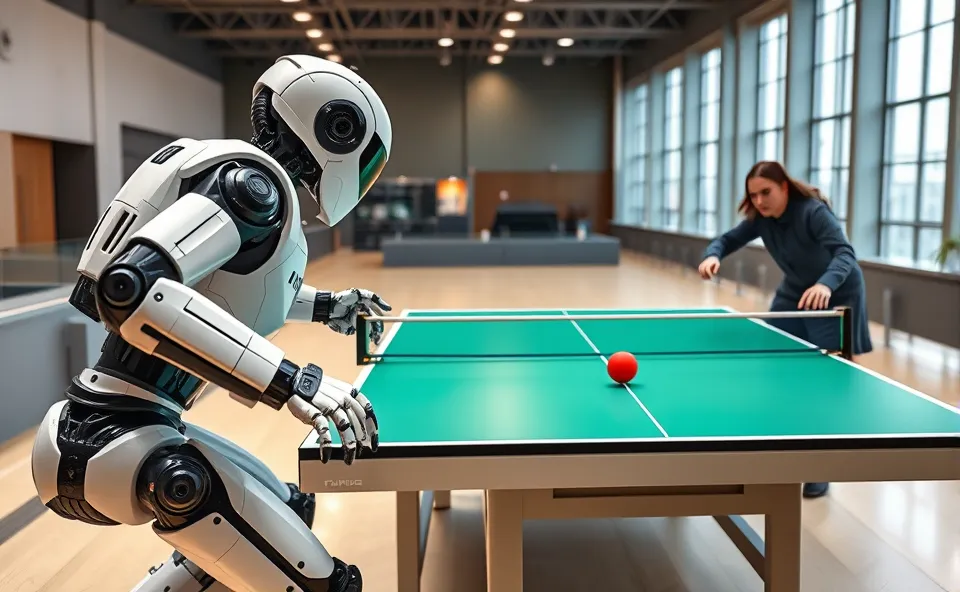
Ace Steps Up to the Table: A Ping-Pong Robot Ready to Rumble
Imagine this: a ping-pong match, but one of the players is a robot. Not just any robot, though. This is Ace, a sophisticated table tennis robot designed to not only return your shots but to analyze them in real time and fire back with incredible precision. Ace isn’t just playing games; it’s aiming for the world championship. This is the exciting intersection of AI in sports and the future of competitive robotics, and it’s capturing attention.
Why All the Buzz About a Ping-Pong Robot?
So, why are so many people talking about Ace right now? It’s because this ping-pong robot is no longer just a lab experiment. Ace is actively challenging human players, showing off its advanced capabilities in ways that make you stop and think. The idea of a robot competing at a professional sports level, even in a game like table tennis, is a huge leap. It sparks curiosity about how far robotics and AI have come and what it means for the sports we love. People are searching for Ace and the concept of a Ping-Pong Robot Champion because it represents a tangible glimpse into the future of human-robot interaction and the evolving landscape of sports.
From Simple Returns to Sophisticated Strategy: Ace’s Journey
To understand Ace’s current prowess, we need a little background. Table tennis robots have been around for a while, mostly used for practice. Think of the old ball launchers that could just fire balls at a consistent speed and angle. They were useful for repetitive drills, helping players hone their basic strokes. But Ace is a different beast entirely. It incorporates advanced AI, specifically designed for real-time ball trajectory analysis. This means Ace doesn’t just react; it predicts. It “sees” the ball, calculates its speed, spin, and angle, and then determines the optimal response. This level of sophistication in a table tennis robot is a significant evolution from its predecessors. The development of such advanced robots is a testament to the progress in robotics and sports AI.
More Than Just a Game: Ace’s Impact on Sports and Tech
The implications of a ping-pong robot like Ace are far reaching. For starters, it’s a fantastic demonstration of AI in sports. It shows how artificial intelligence can be applied to complex, fast-paced physical activities. This could pave the way for AI to assist athletes in training, analyze performance, or even scout talent in new ways.
For the sport of table tennis itself, Ace presents intriguing possibilities:
- Enhanced Training: Imagine amateur players getting personalized coaching from an AI that can adapt to their weaknesses and push them to improve.
- New Spectator Experiences: Watching a robot compete at a high level could be a unique and thrilling spectacle, drawing new fans to the sport.
- Understanding Human Play: By analyzing how Ace plays against top humans, scientists and coaches can gain deeper insights into the nuances of human strategy and skill.
Beyond sports, Ace pushes the boundaries of robotics and human-robot interaction. It’s a complex machine that needs to interact seamlessly with a dynamic, unpredictable environment and a human opponent. Success in this arena means progress in areas like sensor fusion, real-time decision-making, and sophisticated actuator control. The Ace Robot is a concrete example of how these technologies are converging.
The Next Serve: What’s Ahead for Ace and Robotic Athletes
What does the future hold for Ace and its kind? The pursuit of a world championship title suggests a clear path forward: continued refinement and competition. We can expect Ace to become even more adaptable, learning from every match and human opponent. Its programming will likely evolve to mimic more complex human playing styles, including unpredictable feints and strategic shot placement.
The ultimate goal might be seeing robots like Ace compete in official tournaments, perhaps in a separate category initially. This would require establishing rules and standards for robotic athletes. More broadly, Ace’s success could inspire similar AI and robotics initiatives in other sports, from tennis to basketball. The field of competitive robotics is set to explode, and Ace is leading the charge in a surprisingly engaging way. We might be on the cusp of a new era where the line between human and robotic athletic achievement begins to blur, especially in AI driven sports.
Frequently Asked Questions About the Ace Robot
What exactly is the Ace Ping-Pong Robot?
Ace is an advanced table tennis robot designed to play ping-pong at a high level. It uses AI to analyze the trajectory of the ball in real time and respond with precise strokes, aiming to challenge human players and potentially compete professionally.
How does Ace’s AI in Sports capabilities set it apart?
Unlike older table tennis robots that just repeat drills, Ace’s AI allows it to predict the ball’s path, spin, and speed. This enables it to react dynamically and strategically to shots, making it a much more formidable opponent and a significant advancement in sports AI.
What are the implications of a Ping-Pong Robot Champion for the future of sports?
A Ping-Pong Robot Champion like Ace suggests a future where AI and robotics play a larger role in sports, not just for training but also potentially for competition. It opens doors for new spectator entertainment and deeper analysis of athletic performance.
How does the Ace Robot contribute to the field of robotics?
The Ace Robot is a sophisticated piece of engineering that requires precise movements, advanced sensor technology, and rapid decision-making. Its development pushes the boundaries of what’s possible in robotics, particularly in creating machines that can interact intelligently and physically in dynamic environments.
What is the main goal of the Ace Robot program in competitive robotics?
The primary goal for the Ace Robot is to achieve world championship status by proving its capabilities against top human players. This ambitious objective aims to highlight the potential of competitive robotics and inspire further innovation in AI and automation.











