

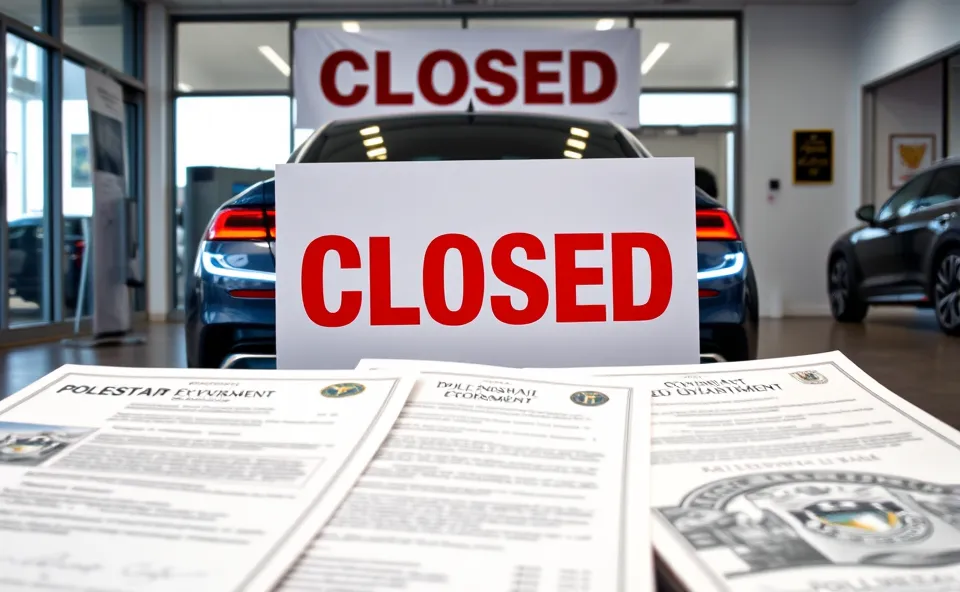
A sudden roadblock for Polestar in the American market
Imagine you are a business owner who has spent years building a reputation. You have invested millions of dollars into a beautiful new showroom, hired a team of expert technicians, and prepared your inventory for the next big wave of buyers. You are ready to sell the next generation of high end vehicles, but suddenly, a new set of rules makes your entire business model look like a massive gamble. This is exactly the situation facing many people involved with Polestar right now.
The problem is not that people do not want these cars. In fact, the vehicles are sleek, fast, and technologically advanced. The issue is a growing tension between international trade and national security. A recent US tech ban and shifting legal landscapes have created a massive headache for electric car dealerships that were hoping to make Polestar a cornerstone of their business. Instead of a smooth rollout, these businesses are hitting a wall of red tape and political uncertainty.
At its core, the issue is about where the technology inside the car comes from. While Polestar is a Swedish brand, it has deep connections to Chinese automotive giants. As the US federal government decision makers look more closely at how data is handled in modern vehicles, cars that rely on Chinese software or hardware are falling under intense scrutiny. This has led to a situation where dealers are hesitant to stock cars that might eventually be banned or restricted by new laws.
This is not just a minor delay. It is a fundamental shift in how cars are sold and regulated. For many, it feels like the rug is being pulled out from under the electric car market US consumers have been working so hard to build. We are seeing a moment where technology, politics, and commerce are colliding in a way that could change the automotive landscape forever.
Why everyone is talking about this right now
You might be wondering why this is suddenly the talk of the tech and business world. It is because we are witnessing a massive turning point in the global economy. For a long time, the goal was global integration. Companies built parts in one country, assembled them in another, and sold them everywhere. But that era is shifting toward a more fragmented approach where security and local control matter more than efficiency.
The reason this is trending is simple. The cars we drive are no longer just mechanical machines. They are essentially giant, rolling computers. They collect data, they connect to the internet, and they use complex software to navigate and manage energy. Because of this, the conversation around Chinese technology restrictions has moved from our smartphones and laptops directly into our driveways. People are realizing that the “tech war” is no longer just about gadgets, but about the very tools we use to move through the world.
Furthermore, the timing is critical. As the transition to electric vehicles accelerates, the competition is fiercer than ever. Every major car manufacturer is fighting for a slice of the market. When a major player like Polestar faces these kinds of hurdles, it sends a shockwave through the entire industry. Investors, dealers, and even regular car buyers are watching closely to see how the government handles these security concerns versus the need for technological progress.
The roots of the tension and the software problem
To understand why this is happening, we have to look at the history of how these companies are built. Polestar operates in a complex web of international partnerships. While it has Swedish roots, its relationship with Geely, a massive Chinese automotive group, is central to its identity. This connection is what allows Polestar to scale quickly and offer high tech features at competitive prices. However, that same connection is exactly what has triggered the current Polestar sales ban fears.
The crux of the matter is data security. The US federal government decision to scrutinize connected vehicles stems from a fear that software built by foreign entities could potentially collect sensitive information. This could include location data, voice recordings, or even the habits of the people driving the cars. When the government looks at the source code and the hardware components, they are looking for any possible vulnerability that could be exploited.
This is not just about one brand. It is about a broader movement toward regulatory compliance EVs. The government wants to ensure that every piece of tech in a vehicle complies with strict national security standards. For brands with strong ties to China, this means a much higher level of scrutiny and a much higher cost of doing business in the United States. The goal is to create a digital perimeter around the country, and unfortunately, many modern, connected cars are currently sitting right on the edge of that perimeter.
The heavy price of uncertainty for dealers and consumers
When we talk about the automotive industry impact, we often think about big factories or global CEOs. But the real pain is felt by the local electric car dealerships. For a dealer, buying inventory is a massive financial commitment. They sign contracts, they lease space, and they invest in specialized tools to fix electric motors and high voltage batteries.
The current situation creates an enormous dealer investment risk. If a dealer spends millions of dollars preparing to sell Polestar vehicles, and then a new law makes those vehicles impossible to sell or service, that dealer could face bankruptcy. This uncertainty is making many owners think twice about bringing new, foreign tied brands into their showrooms. They are choosing the “safe” route, which often means sticking with established brands that have already cleared the regulatory hurdles.
This creates a ripple effect that hits the consumer too. Here is how it impacts the average person:
- Reduced Choice: If dealers are afraid to stock certain brands, consumers have fewer options when looking for a high quality electric vehicle.
- Higher Prices: As competition decreases and compliance costs rise, the price of EVs may stay higher for longer.
- Slower Innovation: If companies are too afraid of regulatory backlash, they might slow down the rollout of new, exciting technologies in the US market.
- Market Fragmentation: We might end up with two different worlds of technology, one for the US and one for the rest of the world, which makes global progress much harder.
The EV dealership struggles are not just about losing sales today. They are about the fear of building a business on a foundation that might be legislated away tomorrow. This atmosphere of caution is a major drag on the momentum of the entire electric vehicle revolution.
Looking ahead at the road to recovery
So, where does this all go from here? It is unlikely that the tension between the US and China over technology will disappear anytime soon. In fact, we should expect the rules to get even more specific. The era of “move fast and break things” in the automotive world is being replaced by an era of “move carefully and document everything.”
For brands like Polestar, the path forward likely involves a strategy of decoupling. This means they may need to move more of their software development and data management to Western based servers and teams. They might need to prove, beyond a shadow of a doubt, that their technology is transparent and secure. This will be expensive and time consuming, but it might be the only way to regain the trust of both the government and the dealers.
For the electric car market US, we will likely see a surge in domestic tech solutions. Companies that can provide secure, locally compliant software will become the most valuable players in the game. We are moving toward a future where the “brains” of the car are just as important as the engine, and where where that brain was made is a major selling point.
While the current situation feels like a setback, it might actually lead to a more robust and secure industry in the long run. By forcing companies to address these security concerns now, the industry is building a foundation that can withstand the digital threats of the future. It is a bumpy road, but it is the one we are currently traveling.
Common questions about the Polestar situation
How does the US tech ban affect Polestar sales?
The US tech ban creates uncertainty regarding the legality and security of the software used in Polestar vehicles. This makes electric car dealerships very hesitant to invest in the brand because they fear the cars might face future restrictions or be unable to meet strict regulatory compliance EVs standards.
Why are electric car dealerships struggling with these brands?
The main issue is dealer investment risk. Dealers spend huge amounts of money on infrastructure and inventory. If a brand faces a Polestar sales ban or sudden legal changes due to Chinese technology restrictions, the dealers could lose their entire investment without being able to sell the cars.
What is the role of the US federal government in this?
The US federal government decision is driven by national security concerns. They want to ensure that the data collected by connected vehicles is not accessible by foreign entities. This scrutiny is a major part of the current automotive industry impact as companies try to navigate new rules.
Will this change the electric car market US consumers see?
Yes, it will likely lead to fewer choices in the short term as dealers play it safe. However, it may also push the industry to develop more secure, locally controlled technology, which could eventually lead to a more stable and trusted electric car market US environment.
Is this only about Polestar or all Chinese linked brands?
While Polestar is currently a major example, the issue applies to any brand that relies heavily on Chinese software or hardware. The focus on Chinese technology restrictions means any company with significant ties to that region will face higher levels of investigation and compliance requirements in the United States.











