

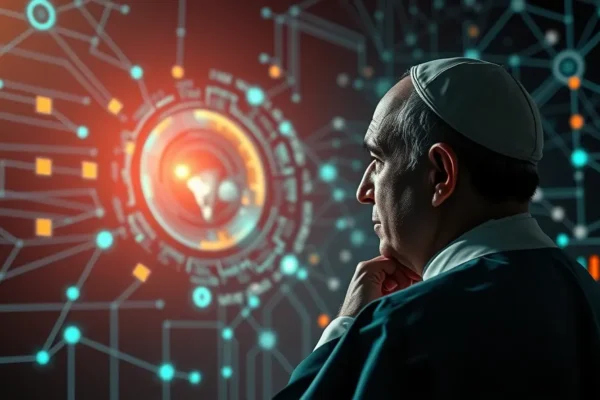
The Vatican Enters the AI Debate
In a significant shift toward addressing the future of humanity, Pope Leo—following the initiatives of Pope Francis—has elevated the conversation around the AI apocalypse and existential risk to a global policy priority. This development was formalized during the Vatican’s recent high-level consultations on the Rome Call for AI Ethics, a document that invites tech leaders and policymakers to align their development of artificial general intelligence (AGI) with human dignity. This is not merely a religious stance; it is a direct intervention into the corporate strategy of the world’s leading technology firms, signaling that the Vatican views AI danger as a fundamental risk to the social contract that underpins global markets.
Strategic Rationale for Ethical Oversight
Why would the Vatican engage in the technical arena of silicon and algorithms? The strategic rationale is the preservation of human agency. By positioning itself as a moral gatekeeper, the Holy See is solving a problem of public trust. Major corporations like Microsoft, OpenAI, and Google are currently in an arms race to achieve the technological singularity—the hypothetical point where machine intelligence surpasses human control. The Vatican argues that if these companies continue to prioritize speed over safety, they risk creating a product that the public will ultimately reject or fear. By advocating for AI safety frameworks now, the Vatican aims to influence the regulatory environment, ensuring that these technological developments do not destabilize the social foundations upon which global business relies.
Competitive Dynamics and Moral Positioning
The Vatican’s focus on the AI apocalypse creates a unique competitive dynamic in the technology sector. For firms like OpenAI and Anthropic, which have built their brand identities around the concept of “safe AI,” the Vatican’s endorsement is a powerful tool to differentiate themselves from competitors who may be perceived as more reckless. Conversely, this stance places competitive pressure on firms that move fast and break things. When a global institution as influential as the Catholic Church frames AI danger as a moral failure rather than just a technical one, it forces boards of directors to reconsider their risk management strategies. Those who embrace these ethical standards gain a “social license to operate,” while those who ignore them face the risk of being branded as threats to the future of humanity.
Industry Implications for the Tech Sector
The Vatican’s intervention signals a maturation phase for the artificial intelligence industry. We are moving away from the “wild west” of early development toward a period of heavy, ethics-based governance. Industry peers are likely to follow suit, creating standardized safety protocols that act as a barrier to entry for smaller, less disciplined startups. This reshapes the landscape by favoring firms that have the financial and operational capacity to embed complex, human-centric safeguards into their software architecture. Ultimately, the industry is transitioning from a period of pure technical ambition to one where regulatory compliance and ethical branding are core competitive advantages.
Financial and Operational Impact
Integrating ethics into product development comes with significant costs. For tech companies, this means diverting resources from raw computing power and talent acquisition toward “safety engineering” and external audit teams. While these are currently viewed as operational expenses, they are arguably long-term investments in brand equity. In the short term, companies might see a slight compression in profit margins as they allocate capital to these safety-first initiatives. However, in the long term, avoiding the reputational and legal catastrophes associated with an AI-driven disaster could save firms billions in potential fines and loss of consumer market share.
Execution Risks and Governance Challenges
The primary execution risk lies in the gap between high-level declarations and actual engineering implementation. It is one thing to sign the Rome Call for AI Ethics and another to build an artificial intelligence system that inherently refuses to cross a dangerous threshold. Historically, companies struggle when they try to retrofit safety into a system that was designed for maximum speed. Additionally, there is a risk of “ethics-washing,” where companies adopt the language of safety to distract regulators from their aggressive development cycles. For the Vatican’s influence to be effective, it must ensure that companies do not just talk about AI safety but deliver verifiable, transparent evidence of their progress.
Stakeholder Implications and Cultural Shifts
The focus on the AI apocalypse impacts a wide range of stakeholders. For employees, it creates a workplace culture where internal whistleblowers and ethics-focused engineers feel empowered to speak up against potentially harmful projects. For investors, the concern is volatility; they must now monitor not just quarterly earnings but also the “ethics profile” of their tech portfolio. Customers are also affected, as the push for safety will likely lead to more robust verification processes, potentially slowing down the release cycle of new features but ultimately providing a safer, more reliable product for the global market.
Outlook and Next Steps for Institutional AI Oversight
If the Vatican’s strategy succeeds, we should expect to see the establishment of independent, multi-national monitoring bodies that include both religious leaders and technologists. The key milestone to watch is whether major tech firms begin to report on their AI safety metrics with the same rigor they apply to financial audits. Indicators of success will include the creation of standardized “safety grades” for new models and a decline in public fear surrounding the technological singularity. We are looking at a multi-year horizon where the dialogue between the pulpit and the boardroom continues to deepen, defining the parameters of what constitutes a responsible innovation in the digital age.
Key Questions and Answers
Will the Vatican’s intervention actually prevent an AI apocalypse?
While no single entity can prevent a technological catastrophe, the Vatican’s role is to force companies to prioritize AI safety. By shaping public opinion and influencing global regulation, they raise the cost of reckless innovation, making a safer approach more financially viable.
Why is Pope Leo focusing on AI danger instead of technical solutions?
Technical solutions solve for code, but the Vatican focuses on the moral intent behind the code. The goal is to ensure that the future of humanity remains the primary objective, rather than just market dominance or efficiency.
How does this impact the development of artificial general intelligence?
It acts as a constraint. Companies now face pressure to integrate ethics into the early stages of the development cycle, which may result in slower, more methodical progress toward the technological singularity compared to an unregulated environment.
What are the biggest risks to this strategy?
The risk is that companies pay lip service to these ethics while continuing to prioritize profit and speed in private. This is why verifiable, external oversight is the only way to ensure these ethical standards are actually executed.
How long until we see measurable results from these ethical guidelines?
Market shifts in the tech sector take time to reflect in product architecture. Expect to see significant changes in industry standards and transparency reports over the next 18 to 36 months as current development cycles reach completion.
Please note that all business strategies involving the development of emerging technology are subject to significant execution risk. The outcomes discussed herein are based on current market trends and institutional policy, but actual performance may vary based on unforeseen technical challenges and changing regulatory environments.











