

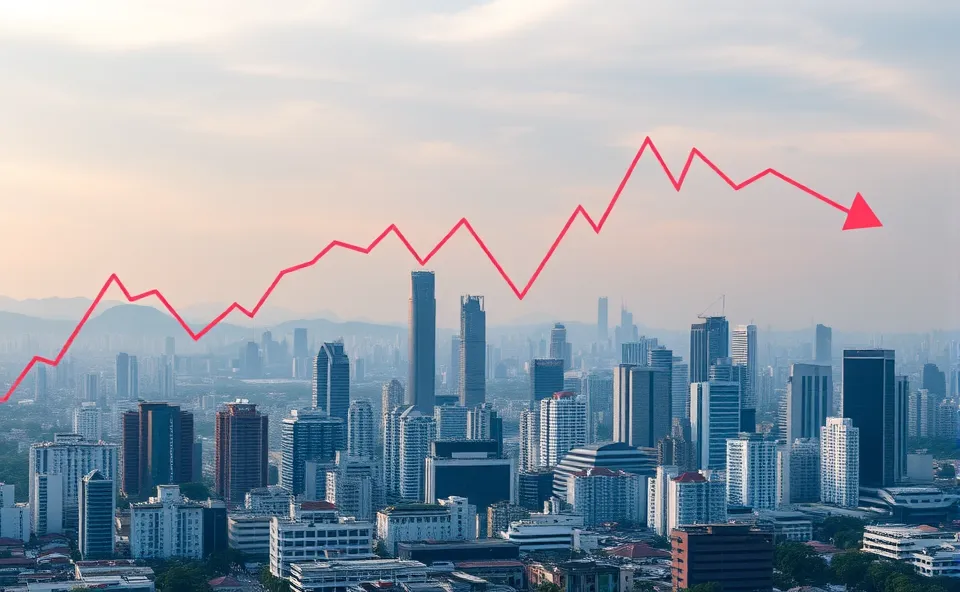
A Closer Look at Prabowo’s Economic Game Plan
So, you’ve probably heard the buzz around Prabowo Subianto and his economic strategies for Indonesia. It’s a topic that’s got a lot of people talking, especially those watching the Indonesian markets closely. Essentially, Prabowo’s approach leans heavily on what we call populist policies. Think of it as focusing on popular, often short-term, benefits for the masses, aiming to win over a broad base of support. While this might sound good on the surface, the real question is what kind of ripple effect these kinds of presidential policies could have on Indonesia’s financial landscape. We’re talking about potential shifts that could impact everything from the Indonesia stock market to the broader Indonesia economy.
Why All the Fuss Right Now?
It’s no coincidence that discussions about Prabowo’s economic plans are heating up. This is the period right after an election, a crucial time when a new leader’s vision starts to take shape and become clearer. Investors, businesses, and everyday Indonesians are all trying to get a handle on what the future holds. They’re dissecting every announcement, every hint of fiscal policy, trying to understand the direction the country is heading. This intense focus stems from a desire to anticipate the economic doom-loop scenario that some analysts are concerned about. It’s about trying to connect the dots between campaign promises and the practical realities of running a large, dynamic economy like Indonesia.
Setting the Stage for Today’s Economy
To really understand the current concerns, it helps to look back a bit. Indonesia has made significant strides in recent decades, transforming into a key emerging market. Its economy has been growing, attracting foreign investment, and improving the lives of many. However, like many developing nations, it faces ongoing challenges. There’s always a balancing act between driving growth, managing debt, and ensuring social welfare. Previous administrations have navigated these complexities with varying degrees of success. Now, with Prabowo taking the helm, there’s a renewed spotlight on how his specific blend of populist policies will interact with the existing economic framework. The question isn’t just about new ideas, but how those ideas will be implemented within the existing realities of global finance and domestic needs. This context is crucial for grasping the potential investment risk involved.
The Potential Domino Effect: A ‘Doom-Loop’ Scenario
This is where things get interesting, and frankly, a little concerning for some. The worry is that Prabowo’s populist policies could inadvertently create what’s known as an economic doom-loop. Let’s break down what that means. Imagine the government decides to significantly increase spending, perhaps on ambitious social programs or large infrastructure projects, without a clear plan for funding it through taxes or sustainable borrowing. This could lead to a budget deficit, meaning the government spends more than it earns. To cover this gap, it might have to borrow more money, both domestically and internationally. This increased borrowing drives up demand for loans, potentially pushing up interest rates. Higher interest rates make it more expensive for businesses to borrow and invest, slowing down economic growth. It also makes it more expensive for the government to service its existing debt, leading to even higher deficits and more borrowing. This is the “loop” – a cycle where increased government spending leads to higher debt, which leads to higher interest rates, which slows the economy, which further strains government finances, and so on.
This scenario has several potential consequences for Indonesian markets:
- Increased Investment Risk: As the government’s debt burden grows and economic uncertainty rises, foreign investors might become hesitant to put their money into Indonesia. They might see it as a riskier market, leading to capital flight – money moving out of the country.
- Weakening Currency: If foreign investment dries up and the country needs to import more goods due to a struggling domestic economy, the Indonesian Rupiah could weaken against other currencies. This makes imports more expensive, fueling inflation.
- Inflationary Pressures: Higher import costs and potentially a surge in government spending without a corresponding increase in goods and services can lead to rising prices for everyday items.
- Sluggish Indonesia Stock Market: A combination of slower economic growth, higher interest rates, and investor uncertainty often translates to a less vibrant stock market. Companies may struggle to grow their profits, leading to lower stock valuations.
- Reduced Financial Stability: The cumulative effect of these factors can erode the overall financial stability of the nation, making it harder to plan for the long term and respond to future economic shocks.
It’s important to remember that this is a potential scenario, a “what if” analysis based on economic principles. The actual outcome depends on many factors, including the specific details of Prabowo’s policies, how they are implemented, and how the global economic environment plays out.
Navigating the Path Ahead
Looking forward, the key for Indonesia will be the government’s ability to balance its populist promises with fiscal prudence. Can Prabowo’s administration find ways to fund its initiatives without overburdening the national debt? Will they focus on policies that boost productivity and long-term growth, rather than just immediate consumption? A smart approach might involve attracting more domestic savings, encouraging private sector investment, and ensuring that government spending is efficient and targeted. The success of the Indonesia economy will hinge on this delicate balancing act. The global financial community will be watching closely to see how these presidential policies translate into concrete actions and their impact on the nation’s financial stability.
Frequently Asked Questions
What are the main concerns about Prabowo’s populist policies for Indonesian markets?
The primary concern is the potential for these policies to lead to an economic doom-loop, where increased government spending, potentially unfunded, could lead to higher debt, rising interest rates, slower economic growth, and a weaker currency, impacting the Indonesia stock market and the broader Indonesia economy.
How could increased government spending affect the Indonesia economy?
If government spending rises significantly without a corresponding increase in revenue, it can lead to larger budget deficits. This might necessitate more borrowing, which can increase interest rates, making it more expensive for businesses to invest and potentially slowing down overall economic activity.
What is the ‘economic doom-loop’ in simple terms for emerging markets like Indonesia?
An economic doom-loop occurs when a cycle of negative financial events feeds on itself. For Indonesia, it could start with high government spending leading to more debt, then higher interest rates, which stifles growth, leading to even greater financial strain and making it harder to escape the cycle.
What does investment risk mean in the context of Prabowo’s presidential policies?
Investment risk refers to the possibility that investors might lose money or not get the returns they expect. If Prabowo’s policies are perceived as increasing the national debt or creating economic instability, it can make Indonesia a riskier place for both domestic and foreign investors, potentially leading to less capital flowing into the country.
How might the Indonesia stock market react to populist fiscal policy?
A populist fiscal policy that leads to concerns about government debt or future economic growth can make the Indonesia stock market more volatile. Investors might become more cautious, leading to lower stock prices if they anticipate slower corporate earnings or a less favorable economic environment.











