

A New Way to Keep Your AI Budget From Spiraling
If your office is anything like the rest of the professional world, you have probably noticed that generative AI is everywhere. From the marketing team using tools to draft copy to developers using AI coding assistants, these subscriptions are popping up on company credit cards faster than anyone can track. While these tools make us faster, they have created a massive headache for leadership teams trying to figure out where all the money is going.
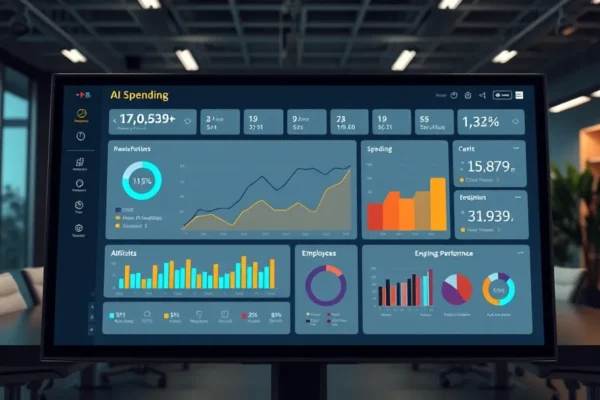
Rippling just stepped into this chaotic environment with a new feature called the AI Spend Console. It is designed to act as a central hub for business leaders to see exactly who is paying for what. Instead of finding out at the end of the quarter that your team spent thousands on overlapping AI subscriptions, you can now see the entire picture in real time. It is a practical move to bring order to the Wild West of corporate software spending.
Why Everyone Is Scrambling to Track AI Costs Right Now
The rush to use AI has been so fast that most companies skipped the step of setting up a formal strategy for buying these tools. When ChatGPT, Claude, and specialized coding or design assistants first hit the scene, many employees simply signed up on their own. They put the monthly cost on a corporate card and got to work. It seemed like a small expense at the time, but those small costs add up quickly.
Companies are now waking up to a reality where they might be paying for ten different accounts for the same software across three different departments. It is not just about the raw dollars, either. It is about security and knowing who has access to company data. As generative AI costs continue to climb, business leaders are realizing that they have lost control. They are searching for better AI budget management tools because they want to support innovation without burning through their entire operational budget on duplicate tools that nobody is actually using.
The Shift from Free Tools to Professional Subscriptions
To understand why this is such a big deal, we have to look at how we got here. A year or two ago, most AI tools were either free or just cheap trials. Adoption was low-risk and low-cost. As these platforms became more powerful, they moved to enterprise-level pricing models. Suddenly, a simple AI writing tool costs hundreds of dollars per user every year.
In the past, managing software investment was easier because there were only a few big players like Microsoft or Salesforce. You had a central IT team that approved every single purchase. Today, the barrier to entry is almost zero. Anyone with a browser can purchase a subscription. This shift has turned what used to be a central IT function into a fragmented mess. Managers are now struggling to oversee software investment because they cannot see the hidden subscriptions their teams are signing up for in the background.
What This Means for Managers and Employee ROI
For a manager, the Rippling AI Spend Console is more than just a list of expenses. It is a way to measure the actual impact of these tools. If you can see that a team is spending five hundred dollars a month on an AI tool but their output has not actually increased, you have a clear sign that you need to rethink that investment. This is effectively an employee ROI tool that allows you to connect the cost of the software to the performance of the team.
This approach changes the conversation from one of restriction to one of efficiency. Instead of simply saying no to new tools, managers can look at the data. If they see that a tool is genuinely helping employees move faster, they can invest in it confidently. If they see wasted money, they can prune those costs. It empowers managers to make smart decisions rather than guessing based on vague reports.
How Workplace AI Adoption Will Change Moving Forward
Looking ahead, we are likely to see a shift toward centralized, data-driven AI purchasing. The days of employees signing up for random AI services on a whim are probably coming to an end. Businesses will likely adopt a hybrid model where there is a clear list of approved tools, but also a simple way to request new ones. The goal will be to balance the need for speed with the need for financial health.
As these tracking tools become more common, the focus will move from simply buying AI to proving that it works. We will see companies evaluating their software stack much more frequently. It will no longer be enough to just have a tool; you will need to show that it is worth the monthly subscription fee. This maturity in corporate AI strategy is a healthy sign for the industry. It means we are moving out of the experimental phase and into a phase where AI is treated as a serious, measurable business asset.
Common Questions About Managing AI Spending
What exactly is the AI Spend Console?
The AI Spend Console is a feature designed to provide visibility into all AI-related software subscriptions within a company. It helps leadership monitor AI budget management by identifying which teams are using which tools and how much those tools are costing the business every month.
Why are companies struggling with high generative AI costs?
Many companies are dealing with “shadow IT” where employees sign up for various AI services without central approval. These small monthly subscriptions often go unnoticed until they aggregate into significant costs, making it difficult to maintain a clear software investment strategy.
How does this tool help measure employee ROI?
By providing a clear view of where AI spending is allocated, managers can compare the cost of these subscriptions against team productivity. This helps leaders see if the software is actually providing value or if the money would be better spent elsewhere, acting as a valuable employee ROI tool.
Is AI spend tracking becoming a standard business practice?
Yes, as workplace AI adoption continues to grow, businesses are treating AI subscriptions like any other enterprise software. Accurate SaaS spend tracking is becoming necessary to ensure that budgets are being used effectively and that the company is not paying for redundant services.
What should managers do to improve their corporate AI strategy?
Managers should start by gaining full visibility into their current software stack. Once they know exactly what tools are in use, they can set clear budgets and establish a process for testing and approving new AI tools to ensure they align with broader business goals.











