

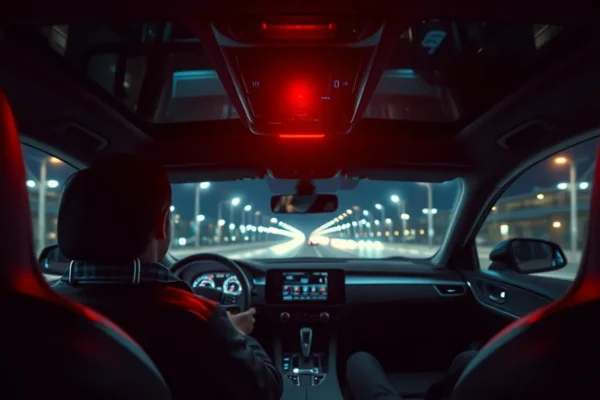
What Exactly Are Cabin Cameras in Robotaxis?
Imagine stepping into a car where there is no driver, no steering wheel to hold, and no one to tell you to buckle up. That is the world of robotaxis and driverless cabs. But if you look closely at the ceiling or the dashboard, you will likely spot a small lens staring back at you. These are interior surveillance cameras.
Companies like Waymo and Tesla use this surveillance technology to keep an eye on what is happening inside the vehicle. The main goal is safety. Since there is no human driver to stop a passenger from vaping, making a mess, or having a medical emergency, the car needs a way to “see” the passengers. For the everyday user, this means your ride is monitored by AI and, occasionally, a remote human operator.
You should care about this because it changes the car from a private bubble into a monitored space. While it makes the ride safer and more efficient, it also means your movements and expressions are being turned into passenger data.
How This Technology Works in Your Daily Life
Using a driverless cab feels a bit like using a high-tech elevator. You request the ride via an app, the car arrives, and you hop in. Here is how the cabin monitoring actually plays out in real scenarios:
- The Private Conversation: Imagine you are taking a Waymo to the airport and you need to have a sensitive phone call about a medical issue or a work secret. In a traditional taxi, the driver might overhear you. In a robotaxi, there is no driver, but the sensor technology is still active. You might feel a bit awkward knowing a camera is recording your gestures and reactions.
- The Messy Passenger: If someone spills a large soda or decides to treat the backseat like a trash can, the camera catches it. This allows the company to charge a cleaning fee, much like a hotel would. It feels like having a digital chaperone that ensures the car stays clean for the next person.
- The Safety Alert: If you are using a Tesla with its internal camera, the car monitors if you are paying attention to the road. If you start scrolling on your phone while the car is in a semi-autonomous mode, the system will beep to warn you. It works like a digital nudge to keep you focused.
Who Should Embrace Driverless Cabs?
Best for: Tech lovers and commuters who prioritize convenience and speed over total privacy. If you love the idea of a “mobile office” where you can relax without chatting with a driver, this is for you.
Good for: People who feel safer knowing there is a recorded log of their journey. For solo travelers or people riding late at night, the knowledge that a company is monitoring the cabin can provide a sense of security.
Skip if: You are highly sensitive about data privacy or feel anxious being recorded. If the idea of your facial expressions being analyzed by an algorithm feels “creepy” rather than helpful, you might prefer a traditional ride-share or your own car.
Comparing Robotaxis to Traditional Rides
When we look at autonomous vehicles versus a standard Uber or Lyft, the trade-off is mostly between human unpredictability and digital surveillance.
In a human-driven cab, your privacy is subject to the driver’s discretion. They might not be recording you, but they are watching you. With robotaxis, the surveillance is systematic and stored on servers. Waymo and Tesla have much more sophisticated data collection methods than a human driver ever could.
In terms of value, driverless cabs are often priced similarly to premium ride-shares. You aren’t necessarily paying more for the tech, but you are “paying” with your data. The benefit is a consistent experience with no awkward small talk and a higher standard of vehicle cleanliness.
Getting Started and the Learning Curve
The “setup” for using a driverless cab is incredibly simple. For Waymo, you just download the app, verify your identity, and call a car. For Tesla owners, the cabin camera is already there when you buy the car.
There is almost no learning curve because the technology is designed to be invisible. You don’t need to calibrate sensors or manage settings. The biggest “hurdle” is the mental shift. It takes a few rides to stop looking for the driver and to get used to the feeling of being watched by a camera. Most users find it intuitive, though some report a slight feeling of nervousness during their first few trips.
The Real-World Pros
- Increased Passenger Safety: If an accident happens, the internal footage provides a clear record of what occurred, which is vital for insurance and legal reasons.
- Accountability: Cameras discourage passengers from damaging the interior or behaving aggressively, leading to cleaner and safer cars for everyone.
- Emergency Response: If a passenger collapses or has a medical crisis, remote operators can see the situation and call 911 immediately.
- Better Driver Focus: In Tesla vehicles, the camera prevents “autopilot laziness” by ensuring the driver is actually looking at the road.
The Real-World Cons and Limitations
- Privacy Erosion: You are essentially being recorded in a private space. There is no “off switch” for the cameras when you are a passenger in a robotaxi.
- Data Security Risks: Any passenger data stored on a server is a potential target for hackers. A breach could lead to private videos of passengers being leaked.
- Algorithmic Mistakes: AI can misinterpret human behavior. A passenger leaning over to pick up a dropped bag might be flagged as “suspicious behavior” by an automated system.
- The “Creep” Factor: Many users report feeling a lack of autonomy and a sense of being watched, which can make the ride feel less relaxing.
Price, Value, and Affordability
As of 2024, the cost of a ride in a robotaxi is generally competitive with Uber or Lyft, often ranging from a few dollars for short trips to twenty dollars or more for longer commutes. There is no “subscription” to use the cameras; they are a built-in part of the service.
For Tesla owners, the automotive security and monitoring features are bundled into the price of the vehicle. The value proposition here is safety and convenience. If you value your time and want a seamless ride, the cost is fair. However, if you view your privacy as a high-value asset, the “hidden cost” of this technology may feel too steep.
The Final Verdict: Should You Ride?
Whether you should use robotaxis depends entirely on your personal boundary with technology. If you are someone who already uses smart speakers in your home and a smartphone in your pocket, the cabin cameras in a driverless cab won’t feel like a big leap. They offer a futuristic, clean, and safe way to get around town.
However, if you are wary of big tech companies collecting more data on your daily movements, you should stick to traditional transport. For most people, the trade-off of a bit of privacy for a lot of convenience is worth it. The best use case for this tech is the daily city commute where efficiency is king.
Common Questions About Driverless Cabs
Do these cameras record my audio?
Most autonomous vehicles focus on visual data, but some may record audio for safety or incident reporting. Always check the company’s latest privacy policy in the app.
Where is my passenger data stored?
Data is typically sent to the company’s secure cloud servers. Waymo and Tesla use this data to improve their AI and for security audits.
Can I cover the camera with a sticker?
In a robotaxi, this is generally not allowed and may result in the ride being canceled, as the company requires cabin monitoring for safety and insurance reasons.
Is it safer than a human driver?
Many users find driverless cabs safer because they don’t get tired or distracted, though the lack of a human to handle “weird” road situations is still a concern for some.
Who can see the footage of my ride?
Usually, only automated systems see the footage. Human employees typically only review clips if there is a reported accident, a cleaning issue, or a safety alert.
Product prices and availability vary by region. Verify current pricing before purchase











