

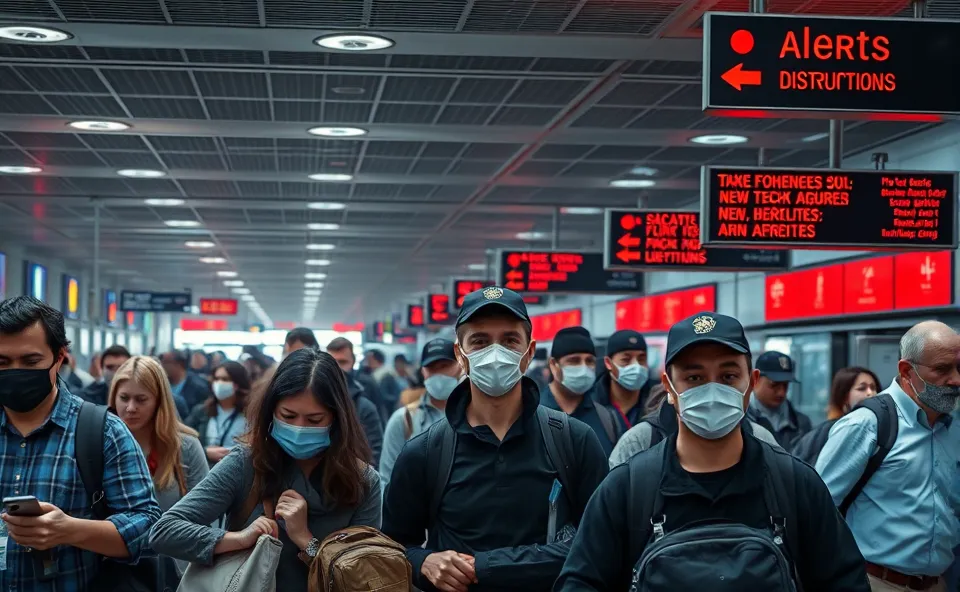
A Looming Storm Over Italy’s Gateway to the World
If you are planning a trip to Italy this summer, you might want to pay close attention to the news coming out of the major transit hubs. Rome airports are currently sounding a massive alarm. The warning is clear and quite unsettling. There is a real possibility of a summer disaster if the current issues surrounding EU border controls are not addressed immediately.
At the heart of this problem is a massive mismatch between the number of people trying to fly and the way we process them at the border. We are talking about a situation where the systems meant to make travel faster could actually become the very thing that brings everything to a standstill. To prevent total airport chaos, officials are even considering a radical move: the temporary suspension of biometric checks to keep the lines moving.
This is not just a minor inconvenience for a few travelers. It is a systemic issue that touches on security, technology, and the massive economic engine of European tourism. When the main entry points to a country start to struggle, the ripple effects are felt everywhere. For now, the message from airport management is one of caution. They are preparing for a season where the sheer volume of summer travel might overwhelm the very regulations designed to keep us safe and organized.
Why Everyone Is Worried About the Summer Rush
You might be wondering why this is suddenly the talk of the town. The reason is quite simple. We are approaching the peak of the holiday season. For millions of people, summer is the time to explore the Mediterranean, visit historical sites, and enjoy the Italian sun. This means passenger numbers are expected to skyrocket in the coming months.
People are searching for answers because they want to know if their hard-earned vacations will be ruined by massive delays. In the past, we have seen how even a small hiccup in airport operations can lead to hours of waiting and missed connections. Now, with the added layer of complex EU border controls, the stakes are much higher. The news is trending because it directly affects the plans, budgets, and stress levels of travelers worldwide.
There is also a growing concern about the reliability of the technology we use. We have been told for years that digital solutions would make everything seamless. However, as we approach this summer, the reality is looking a bit more complicated. People want to know if the biometric checks that are supposed to save time will instead become a bottleneck that leads to travel disruption across the entire continent.
The Complex Reality of Modern Border Security
To understand why this is happening, we have to look back at how much travel technology has changed. Over the last decade, the European Union has pushed for much tighter and more digitalized border security. The goal was to create a smoother, more secure way to manage who enters the Schengen Area. This led to the widespread implementation of biometric checks, which use facial recognition and other digital data to verify identities quickly.
On paper, this sounds perfect. A quick scan of your face, a digital match against your passport, and you are through the gate. It is efficient and reduces the need for manual inspections by border officers. However, this transition has come with significant growing pains. The systems rely on a delicate balance of high-speed internet, advanced hardware, and seamless integration between different national databases.
The problem arises when you combine these high-tech systems with massive crowds. During the height of summer travel, the hardware can struggle to keep up, or the software can experience lag. When one machine fails or a scan takes too long, it creates a queue. That queue then grows into a line, and that line eventually turns into a crowd that spills out into the terminal. The tension between strict EU regulations and the practical reality of moving millions of people through a physical space is where the current crisis lives.
The High Cost of Travel Disruption
When we talk about airport chaos, it is easy to focus only on the frustration of standing in a long line. But if we look at this from a broader perspective, the impact is much deeper. This is a significant issue for the economy and the travel industry at large.
For travelers, the impact is immediate. You face the risk of missing flights, losing money on pre-booked tours, and dealing with the immense stress of uncertainty. For airlines, the consequences are financial. When flights are delayed due to border control issues, it disrupts their entire schedule. This leads to higher fuel consumption as planes wait on the tarmac, increased staffing costs to deal with angry passengers, and potential compensation claims. It is a logistical and financial nightmare.
From a business and market perspective, the implications are even wider. The tourism industry in Italy and much of Europe relies on the efficiency of these hubs. If Rome airports become known for delays and chaos, it could impact future travel patterns. Businesses that depend on tourism, from local hotels to transportation services, all feel the impact when travel becomes unreliable. Furthermore, the debate over whether to implement a border suspension highlights a difficult choice for airport management. Do they prioritize high-tech security or the smooth flow of commerce and people? This decision has massive implications for how we view the value of automated technology in critical infrastructure.
- Economic Impact: Delays lead to lost revenue for airlines and service providers.
- Operational Impact: Airport management must scramble to reallocate staff and resources.
- Consumer Impact: Travelers face increased costs and significant emotional stress.
- Technological Impact: There is a growing debate over the reliability of current biometric systems.
Looking Ahead to the Future of Travel
So, where does this leave us? We are at a crossroads in how we manage international borders. One path involves doubling down on technology. This would mean massive investments in faster hardware, more robust software, and better training for staff to handle tech failures. If the EU can refine its regulations and ensure that the technology can handle the sheer volume of passenger numbers, the dream of seamless travel might actually become a reality.
The other path is more cautious. We might see more frequent calls for a temporary border suspension during peak periods. This would mean going back to more manual, human-led checks to ensure that the flow of people does not stop. While this might be slower in a perfect world, it offers a level of reliability that current digital systems sometimes lack during high-pressure moments.
In the near term, we should expect a period of trial and error. Airport management will likely be testing different ways to balance security with speed. Travelers should prepare for a summer of potential unpredictability. The goal for the industry is to find a middle ground where security does not come at the expense of efficiency. Whether through better tech or smarter human management, the way we cross borders is about to undergo a very important test.
Frequently Asked Questions
How will Rome airports handle the summer travel rush?
Management is currently exploring several options, including the potential for a temporary border suspension of certain biometric checks. The goal is to prevent massive queues and ensure that passenger numbers do not lead to total airport chaos during the peak season.
What is the main reason for the proposed border suspension?
The primary reason is to avoid major travel disruption. By temporarily moving away from some complex biometric checks, authorities hope to speed up the processing of travelers and prevent the bottlenecks that often occur when high volumes of people arrive at once.
Will EU border controls cause travel disruption for everyone?
While not everyone will experience it, anyone traveling through major hubs like Rome during the summer is at a higher risk. The complexity of current EU regulations and the reliance on digital systems mean that even small delays can ripple through the entire airport system.
How does airport management balance security and speed?
This is a constant struggle. Airport management must follow strict EU regulations regarding security while also trying to maintain a smooth flow of passengers. They do this by balancing the use of advanced technology with the availability of manual check options to prevent total gridlock.
Are biometric checks reliable during periods of high passenger numbers?
Biometric checks are designed to be fast, but they can struggle when passenger numbers reach extreme levels. Technical glitches, hardware limitations, and the sheer volume of data being processed can lead to delays, which is why officials are considering alternative methods for the summer.











