

Russia’s Economy: What the Lights Tell Us
So, you’ve probably heard a lot about the Russian economy lately, with official reports often painting a picture of resilience. But what if I told you there’s another way to look at it, a way that suggests things might not be as rosy as they seem? It turns out, by looking at something as simple as the lights on at night, experts are seeing a different story unfold, one of a shrinking Russian economy. This isn’t about guesswork; it’s about using clever alternate GDP gauges to understand the real economic slowdown.
Why Everyone’s Talking About This Now
The conversation is heating up because the disconnect between official claims and these alternative indicators is becoming harder to ignore. People are searching for answers because they want to understand the true impact of the Ukraine war on Russia’s economic health. Are the official GDP figures telling the whole story, or is something more significant happening beneath the surface? The recent analysis from Sweden, for instance, has brought this fascinating contrast into sharp focus, leading many to question the reliability of the proclaimed economic stability. It’s a trending topic because it touches on global stability, international relations, and the very real consequences of conflict on national economies.
A Look Back: The Foundations of the Debate
To understand where we are, we need a little background. For years, Russia’s economy has been heavily reliant on its vast natural resources, particularly oil and gas. This reliance has always made it vulnerable to fluctuations in global energy prices. When prices are high, the economy often appears strong. However, when international sanctions were imposed following the annexation of Crimea and, more recently, the full scale invasion of Ukraine, the economic landscape shifted dramatically. These sanctions aimed to cripple key sectors of the Russian economy, impacting trade, finance, and access to technology. Despite these pressures, official Russian statistics have often shown a surprisingly optimistic picture, with GDP figures sometimes indicating growth or a less severe contraction than many expected. This is where the need for alternate GDP gauges arises. Analysts have had to find ways to peer through the official data, seeking more independent and less politically influenced measures of economic activity. Nighttime luminosity is one such powerful tool.
The Glow of the Economy: What Nighttime Lights Reveal
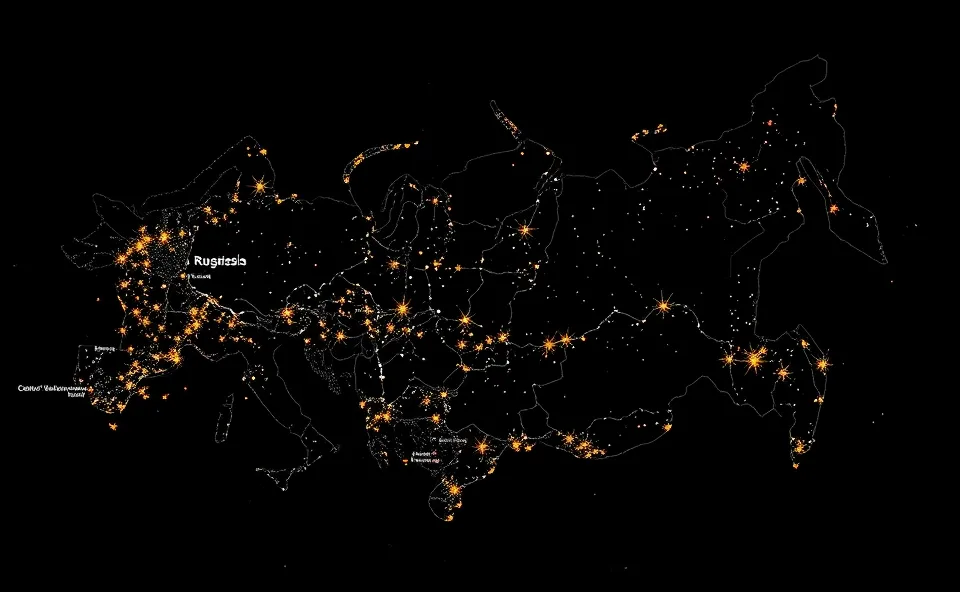
Let’s dive into the fascinating part: the nighttime luminosity data. Think about it this way, when businesses are booming, factories are running, and people are generally active, cities glow brighter at night. More lights are on. Conversely, when economic activity slows down, factories might power down, businesses might scale back, and people may conserve energy. This translates into a dimmer glow. Several studies, including the recent Swedish analysis, have used satellite imagery of nighttime lights across Russia. What they’ve found is telling. While official GDP figures might show a modest contraction or even slight growth in some periods, the nighttime luminosity data often points to a more significant economic slowdown. This divergence suggests that the official numbers might not be fully capturing the extent of the economic contraction. It’s like looking at the facade of a building and then checking its structural integrity from the inside; the latter often reveals a more accurate picture. Russia inflation has also been a persistent issue, further complicating the economic picture for everyday citizens and businesses alike. The Ukraine war impact is undeniably multifaceted, and economic indicators are a crucial part of understanding its reach.
What This Means for Us and the World
This discrepancy between official claims and alternative indicators has real world implications. For businesses operating within or looking to engage with Russia, it raises questions about market stability and long term viability. If the true economic slowdown is more severe than reported, investment decisions become riskier. For the global economy, a significant contraction in Russia, even if partially masked, can have ripple effects, particularly in energy markets and supply chains. It also impacts our understanding of the effectiveness of sanctions and the broader geopolitical landscape. For consumers, it means potential volatility in prices for goods that rely on Russian exports, including energy. The alarm bells ringing among some elites within Russia also suggest a growing awareness of the underlying economic challenges, even if public discourse is managed. This economic slowdown is not just a number; it affects people’s livelihoods, technological development, and international trade dynamics.
Looking Ahead: What Comes Next?
Predicting the future of any economy is tricky, but we can infer potential trajectories based on current trends. If the nighttime luminosity data accurately reflects a deeper economic contraction than publicly acknowledged, Russia’s path forward could involve a prolonged period of economic adjustment. This might mean continued reliance on oil and gas revenues, but with diminished capacity due to sanctions and potentially lower global demand for certain commodities. We could see further efforts to reorient trade towards non Western partners. The ongoing effects of sanctions will continue to shape technological advancement and industrial capacity. Russia inflation might remain a persistent challenge, impacting domestic purchasing power. The extent of the economic slowdown will also influence the government’s ability to fund domestic programs and military expenditures. It’s a complex dance between resource wealth, international pressure, and internal economic realities. The narrative around the Russian economy is likely to remain dynamic, with continuous scrutiny of both official data and alternative economic gauges.
Frequently Asked Questions About the Russian Economy
What is the primary concern regarding the Russian economy’s official GDP figures?
The primary concern is that official GDP figures may not accurately reflect the true state of the Russian economy. Alternate GDP gauges, like nighttime luminosity, suggest a more significant economic contraction than reported.
How does nighttime luminosity serve as an alternate GDP gauge for Russia?
Nighttime luminosity, measured by satellite imagery, can indicate economic activity. Brighter lights suggest more industrial and commercial operations, while dimmer lights can signal an economic slowdown or contraction, providing an independent view of the Russian economy.
What is the impact of the Ukraine war on the Russian economy according to various analyses?
The Ukraine war’s impact on the Russian economy is substantial. While official data might suggest resilience, many economists point to factors like sanctions and reduced trade leading to a significant economic slowdown and potential GDP contraction.
What are some of the underlying factors contributing to the potential GDP contraction in Russia?
Key factors include international sanctions, reduced access to Western markets and technology, shifts in global energy demand, and the general disruption caused by ongoing conflict. These contribute to a challenging environment for the Russian economy.
How do countries like Sweden analyze Russia’s economic situation beyond official reports?
Countries like Sweden often employ sophisticated economic analysis, utilizing a range of indicators. This can include examining trade data, capital flows, industrial output, and non traditional metrics such as nighttime luminosity to gain a more comprehensive understanding of the Russian economy and its GDP contraction.











