

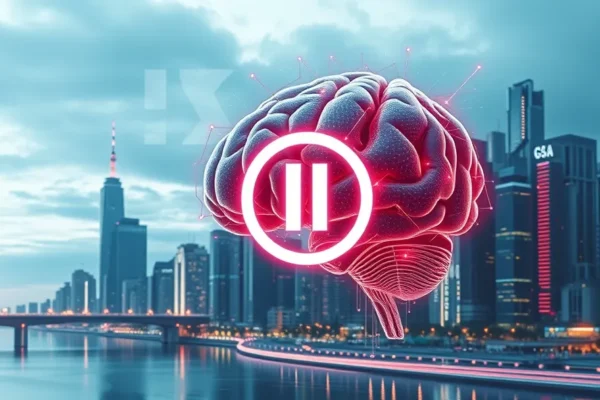
The AI Slowdown Idea: What Sam Altman Is Talking About
You’ve probably heard some buzz about Sam Altman, the guy in charge of OpenAI, suggesting we hit the brakes on artificial intelligence development. It sounds a bit counterintuitive, right? We’re living in a time of incredible AI progress, with new tools and capabilities popping up constantly. Yet, Altman, a major player in this field, is raising a flag, saying maybe we should pump the brakes a little. He’s not talking about stopping AI entirely, but more about taking a thoughtful pause to make sure we’re heading in the right direction. It’s a complex idea that touches on the very heart of how we’re building this powerful technology.
Why Are We Talking About AI Pace Right Now?
This discussion is trending because the pace of AI development has reached a point where many, including those at the forefront like Altman, are feeling a sense of urgency. The rapid advancements in artificial intelligence are exciting, but they also bring up big questions about safety, ethics, and societal impact. When a leader of a company like OpenAI, which is driving much of this innovation, suggests a slowdown, it forces everyone to pay attention. It signals that the tech industry itself is grappling with the implications of its own creations. This isn’t just abstract tech talk; it’s about real-world consequences that are starting to feel very present.
A Little Background on the AI Journey
To understand why this is such a big deal, we need a quick look back. Artificial intelligence has been a dream for decades, but it’s only in the last few years that we’ve seen truly transformative leaps. Powerful language models that can write, code, and converse have become commonplace. Image generators can create art from simple text prompts. These breakthroughs, while amazing, are happening incredibly fast. OpenAI, with its development of models like GPT, has been at the center of this revolution. The company and its leaders are deeply aware of the potential and the pitfalls of creating increasingly sophisticated AI. Altman’s proposal stems from this deep involvement and a desire to ensure that AI development progresses responsibly, keeping AI safety and ethical considerations at the forefront.
What Does This Mean for All of Us?
The idea of an AI slowdown has far-reaching implications. For everyday users, it might mean a slightly less dizzying pace of new AI features. Think about it this way: instead of getting a new, mind-blowing AI tool every week, the rollout might be more measured. This extra time could be crucial for developers and researchers to focus on critical aspects like:
- Ensuring AI systems are fair and don’t perpetuate biases.
- Building in stronger safeguards against misuse.
- Understanding the long-term societal impacts of widespread AI adoption.
- Developing clearer AI regulation frameworks.
For businesses, it’s an opportunity to catch up and integrate existing AI technologies more thoughtfully. Instead of a constant scramble to adopt the latest and greatest, companies can focus on making current AI solutions work best for them, ethically and effectively. From a technology standpoint, a slowdown could shift the focus from pure innovation speed to refining existing AI models, making them more robust, secure, and understandable. It’s about building a more solid foundation for future AI development, rather than just building higher and faster.
What’s Next on the AI Horizon?
Sam Altman’s call for a potential pause in AI development isn’t a rigid mandate, but rather a proposal for a period of focused work on safety and societal alignment. What could happen next? It’s likely to spark more conversations and collaborations within the tech industry and with governments worldwide. We might see:
- Increased investment in AI safety research.
- More open discussions about AI ethics and governance.
- A potential for voluntary pauses or moratoriums on certain types of AI development, especially those that carry higher risks.
- A greater emphasis on international cooperation to set global standards for AI development and deployment.
This isn’t about stopping progress, but about guiding it. The goal is to ensure that as artificial intelligence becomes more integrated into our lives, it does so in a way that benefits humanity, prioritizing AI ethics and long-term well-being over unchecked innovation speed.
Frequently Asked Questions About AI Development Debates
What is Sam Altman’s main concern regarding AI development?
Sam Altman’s primary concern is that the rapid pace of AI development might be outpacing our ability to understand and manage its potential risks. He has highlighted the need for careful consideration of AI safety and the societal impact of advanced artificial intelligence.
Why is there a debate about slowing down AI development?
The debate arises from the significant capabilities that modern AI systems possess and the potential for unintended consequences. As artificial intelligence becomes more powerful, there’s a growing discussion about ensuring ethical AI, preventing misuse, and establishing appropriate AI regulation to guide its growth.
What is OpenAI’s role in the AI development discussion?
OpenAI, a leading organization in artificial intelligence research, plays a crucial role. As a developer of advanced AI models, its leaders, including Sam Altman, are at the forefront of understanding both the potential and the challenges, making their input on the AI pace and safety vital.
How might a slowdown in AI development affect the tech industry?
A slowdown could lead to a greater focus on AI ethics, AI safety, and responsible deployment within the tech industry. It might encourage deeper research into AI regulation and ensure that innovation speed doesn’t compromise the careful integration of artificial intelligence into society.
What are the potential benefits of considering a pause or slowdown in AI development?
Considering a pause or slowdown can provide critical time for society to adapt, develop robust AI safety measures, implement effective AI regulation, and ensure that the trajectory of artificial intelligence development aligns with human values and long-term interests, fostering a more responsible approach to AI ethics.











