

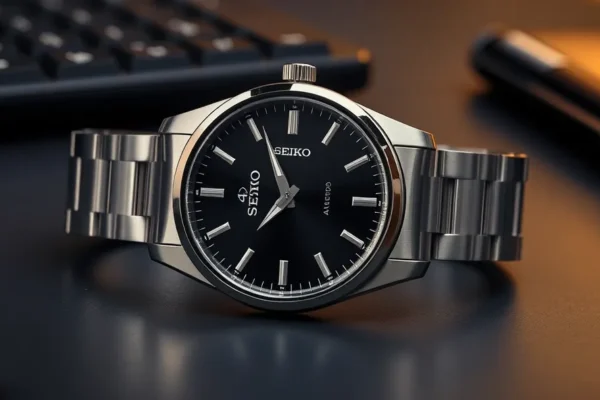
Understanding the Value of Durable Goods
Before looking at a specific item like a watch, it is important to understand a financial concept called durable goods. A durable good is a product that does not wear out quickly and yields utility over a long period of time, typically defined as lasting three years or more. Think of it like a high quality winter coat compared to a paper coffee cup. The coffee cup is a consumable; you use it once and throw it away. The coat is a durable good; you buy it once, and if you take care of it, it serves you for a decade.
Understanding the difference between consumables and durable goods helps you make better spending decisions. When you buy a consumable, you are paying for a temporary experience. When you buy a durable good, you are making a small investment in a tool that reduces your need to spend money on that same item in the future. For many people, choosing a reliable everyday watch is a way to avoid the cycle of buying cheap, disposable electronics that break every few months.
How an Automatic Watch and PVD Coating Work
To understand the value of the Seiko 5, we first need to understand the mechanism. This is an automatic watch, which means it does not rely on a battery. Instead, it uses a Seiko automatic movement. Imagine a small weighted rotor inside the watch that spins every time you move your wrist. This spinning motion winds a spring, which stores energy and keeps the gears turning.
Think of it like a mechanical wind up toy that never stops as long as someone is playing with it. Because there is no battery to replace, the ongoing maintenance cost is significantly lower than a quartz watch. If you wear the watch daily, it stays powered by your own kinetic energy.
Another key feature is the black PVD finish. PVD stands for Physical Vapor Deposition. In simple terms, imagine a vacuum chamber where a hard metal is turned into a vapor and then bonded to the surface of the watch. This is not like paint, which can chip or peel. It is more like a microscopic layer of armor. For someone who needs a durable men’s wrist watch for daily activities, this coating prevents scratches and wear, extending the life of the product and maintaining its aesthetic value over time.
Why Choosing an Affordable Luxury Watch Matters
From a financial perspective, the decision to buy a luxury timepiece often comes down to a calculation called cost per wear. This is a simple formula: you take the total price of the item and divide it by the number of times you use it. If you buy a cheap watch for 50 dollars that breaks in six months, your cost per wear is high because you must replace it frequently.
If you purchase an affordable luxury watch like the Seiko 5, which is built to last for years, your cost per wear drops significantly. For example, if a watch costs 300 dollars and you wear it every day for five years, the cost is only about 16 cents per day. This is where the financial benefit of quality manifests. By spending more upfront on a durable item, you actually spend less over the long term.
This approach benefits the consumer who wants the prestige and functionality of a high end piece without the extreme price tag of a luxury brand that may cost thousands of dollars. However, the downside is the initial output of cash. For someone on a very tight budget, the higher upfront cost of a durable good can be a barrier, even if it saves money in the long run.
The Evolution of the Seiko 5 Line
The Seiko 5 has a long history of democratizing the world of mechanical watches. Originally, automatic movements were reserved for the wealthy. In the mid 20th century, Seiko aimed to create a watch that provided five key attributes: automatic winding, a day and date display, water resistance, a recessed crown, and a durable case.
This shifted the market by proving that a reliable automatic watch did not have to be a massive financial investment. Over time, these watches transitioned from being simple tools to being recognized as entry level luxury timepieces. According to industry trends in horology, there has been a resurgence of interest in mechanical watches among younger generations who are moving away from smartwatches that become obsolete every two years. This trend is driven by a desire for longevity and a rejection of planned obsolescence, which is the industrial practice of designing products to break so consumers must buy new ones.
Practical Implications of Current Amazon Watch Deals
When you see a deal, such as the current 230 dollar discount on the Seiko 5 at Amazon, it is important to evaluate it through the lens of value rather than just price. A discount is only a saving if the item is something you actually need and if the quality justifies the remaining cost.
A common misconception is that a large discount means the product is low quality. In the case of the Seiko 5, the discount is often a result of inventory management or promotional cycles rather than a drop in manufacturing standards. When evaluating this deal, consider these two actionable insights:
- Compare the MSRP to the Market Price: Look at what other retailers are charging. If the Amazon watch deals are significantly lower than the average market price, the value proposition is stronger.
- Assess the Utility: Because the black PVD watch is versatile, it can serve as both a formal piece and an everyday watch. This versatility increases its value because it replaces the need to own multiple different watches for different occasions.
Related Financial Concepts to Explore
Understanding the value of a watch connects to several other financial ideas. First is the concept of depreciation. Most consumer electronics, like smartphones, depreciate rapidly, meaning they lose value almost immediately after purchase. While most watches also depreciate, high quality mechanical watches tend to hold their value better than digital ones.
Secondly, this relates to opportunity cost. Opportunity cost is the loss of potential gain from other alternatives when one alternative is chosen. By spending money on a durable watch now, you are giving up the ability to spend that money elsewhere. However, if that purchase prevents you from buying three cheaper watches over the next three years, the opportunity cost is actually lowered.
Understanding these principles helps you navigate not just watch shopping, but any purchase of a luxury or durable good.
Common Questions About the Seiko 5 and Watch Value
Is the Seiko 5 a good automatic watch for a beginner?
Yes, it is widely considered one of the best entry points because it introduces the user to a Seiko automatic movement without requiring a massive financial commitment. It provides a balance of reliability and prestige.
Does a black PVD watch scratch easily?
The PVD coating is significantly harder than standard polished steel, making it very durable for a men’s wrist watch. While no material is completely scratch proof, PVD is designed to withstand the rigors of daily wear.
Are Amazon watch deals generally a safe way to buy luxury timepieces?
Amazon is a reputable platform, but buyers should always check that the seller is either Amazon itself or an authorized Seiko dealer to ensure the warranty remains valid.
Why is an automatic watch better than a battery powered one?
From a financial and environmental perspective, automatic watches are sustainable because they do not require disposable batteries. They are also often viewed as more timeless pieces of craftsmanship.
What is the difference between an affordable luxury watch and a budget watch?
A budget watch focuses on the lowest possible price and often uses disposable parts. An affordable luxury watch, like the Seiko 5, focuses on a balance of high quality materials and accessibility, ensuring the item lasts for years.
Disclaimer: This is educational content intended to explain financial concepts such as durable goods and cost per wear; it is not personal financial advice. Financial situations vary by individual, and you should consult a professional financial advisor for personal spending and investment decisions. Financial outcomes and the resale value of consumer goods vary based on market conditions and individual care of the item.











