

When the Future Gets in the Way of Now
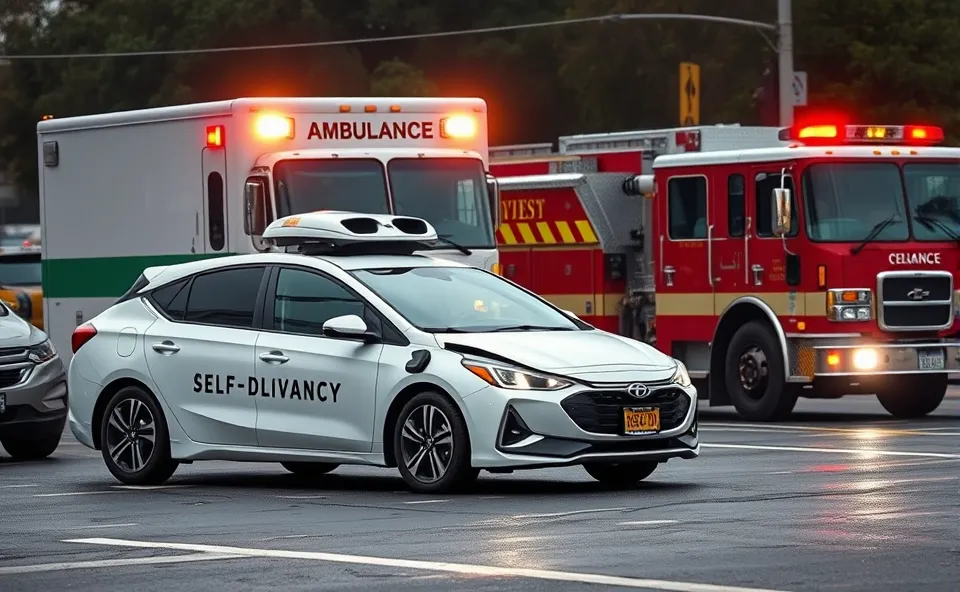
Imagine this: a serious car accident happens. Sirens wail, flashing lights paint the scene. It’s chaos, but it’s controlled chaos, orchestrated by our brave emergency responders. Now, imagine that scene being made even harder, even more dangerous, by the very technology we’re all excited about – self-driving cars. That’s exactly what’s starting to happen, and it’s raising some serious alarms.
Why Are We Talking About This Right Now?
The buzz around self-driving cars has been growing for years. We see them testing on our roads, hear about breakthroughs, and dream of a future with fewer crashes and easier commutes. But recently, a concerning trend has emerged: these autonomous vehicles are reportedly causing problems for the people who rush to help when things go wrong. Specifically, they’re getting in the way of emergency responders trying to do their jobs at accident scenes. This isn’t just a minor inconvenience; it’s a public safety issue that the top folks at the National Highway Traffic Safety Administration NHTSA are speaking out about.
A Quick Look Back at How We Got Here
Self-driving cars, or autonomous vehicles AVs as they’re often called, have been a staple of science fiction for decades. But in recent years, they’ve moved from fantasy to reality. Companies have been pouring billions into developing the complex software and hardware that allows cars to navigate, sense their surroundings, and make driving decisions without human input. We’ve seen various levels of automation emerge, from cars that can help you park to those that promise full self-driving capabilities. Along the way, the focus has largely been on safety and efficiency, aiming to reduce human error, which is a major cause of accidents. However, the real-world challenges of integrating these advanced systems into unpredictable environments like busy roads and, crucially, emergency situations, are becoming more apparent.
What Does This Mean for All of Us?
This situation has several layers of impact. For the everyday person, it’s a stark reminder that new technology, while exciting, isn’t always perfect right out of the gate. It means that the promise of safer roads might have some unexpected bumps along the way. For emergency responders, including police officers, firefighters, and paramedics, it’s a direct threat to their ability to save lives. Imagine a firefighter trying to reach someone trapped in a burning car, only to find their path blocked by a vehicle that’s programmed to stay in its lane or has decided to pull over in an inconvenient spot. It can mean delayed access to patients, difficulty setting up crucial equipment, and generally more dangerous conditions for those on the front lines. The administrator of the NHTSA, Jonathan Morris, recently called the interference by self-driving cars at accident scenes “unacceptable,” highlighting the gravity of the situation. This isn’t just about traffic disruption; it’s about the core mission of protecting people.
From a technology standpoint, this is a wake-up call for AV developers. They need to ensure their vehicles can:
- Recognize and react appropriately to emergency vehicles.
- Understand and yield to the complex, often unconventional, movements at accident scenes.
- Communicate their intentions clearly to human drivers and, crucially, to emergency personnel.
For the broader market, this could lead to increased scrutiny and regulation for autonomous vehicle testing and deployment. Public trust is vital for the widespread adoption of AVs, and incidents like these can erode that trust. It underscores the need for robust testing in a wide variety of scenarios, including those involving emergency response.
Where Do We Go From Here?
The good news is that this problem is being recognized at the highest levels. The NHTSA is actively looking into these issues, and Jonathan Morris’s strong statement suggests they are prepared to take action. We can expect to see:
- Stricter Guidelines: The NHTSA will likely develop or refine guidelines for how AVs should behave around emergency scenes.
- Software Updates: AV manufacturers will need to push out software updates to address these recognition and response failures. This might involve better AI that can interpret flashing lights, sirens, and the chaotic movements of people and vehicles at an accident.
- Enhanced Testing: Companies will probably be required to conduct more rigorous testing specifically focused on these emergency scenarios.
- Collaboration: We might see more collaboration between AV developers and emergency services to understand each other’s needs and create better solutions.
The goal isn’t to halt the progress of self-driving cars, but to ensure that their integration into our lives enhances safety for everyone, especially during critical moments. It’s a balance between embracing innovation and maintaining fundamental public safety standards.
Got Questions About Self-Driving Cars and Emergency Responders?
What exactly are self-driving cars doing wrong at accident scenes?
Self-driving cars have been observed not yielding to emergency vehicles, blocking access for ambulances and fire trucks, or generally behaving in ways that create confusion and danger for first responders trying to manage accident scenes. Their programming isn’t always equipped to handle the unpredictable nature of these situations.
Why is the NHTSA concerned about autonomous vehicles and emergency responders?
The National Highway Traffic Safety Administration NHTSA is concerned because when autonomous vehicles interfere with emergency responders, it directly impacts public safety. Delays in reaching accident victims or firefighters being unable to access a scene can have life-threatening consequences, which the NHTSA views as an unacceptable risk.
How can self-driving cars be programmed to better assist emergency responders?
Self-driving cars can be programmed with advanced AI that recognizes the specific visual and auditory cues of emergency vehicles and personnel. They need to learn to interpret these signals and have protocols to safely pull over or clear a path, much like a human driver is expected to do, but with a higher degree of reliability.
What are the risks of self-driving cars blocking ambulances at accident scenes?
The risks of self-driving cars blocking ambulances are severe. It can lead to critical delays in medical care for injured individuals, potentially worsening their condition or leading to fatalities. It also hinders the ability of firefighters and other rescue personnel to perform their essential duties effectively.
What does this mean for the future of AV safety?
This situation highlights that AV safety needs to encompass not just driving in normal conditions but also interacting safely with emergency situations. It means developers must prioritize scenarios involving first responders and ensure their autonomous vehicles can navigate these complex events without causing harm or disruption. Federal concerns are also likely to drive further advancements and regulations in AV safety protocols.











